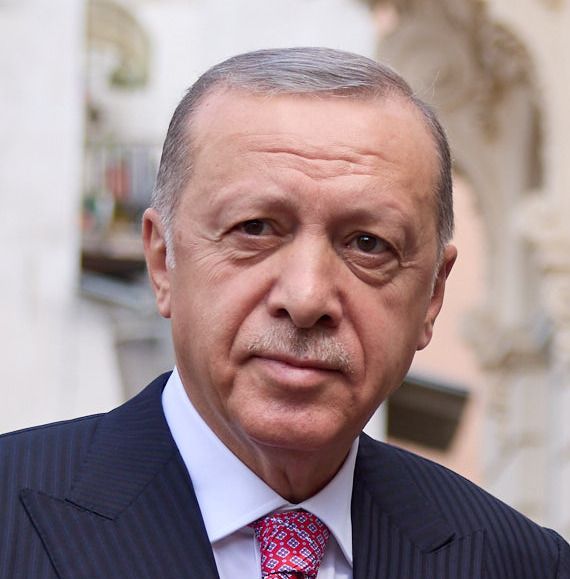
26 Feb 1954 – Present)
Recep Tayyip Erdoğan is one of the most prominent and influential figures in modern Turkish politics. Serving as both Prime Minister (2003–2014) and President (2014–present), Erdoğan has shaped Turkey’s political landscape for over two decades and remains a polarising yet central figure in the country’s governance.
Early Life and Childhood
Erdoğan was born on 26 February 1954 in Kasımpaşa, a working-class neighbourhood in Istanbul. He was the fourth of eight children in his family. His father, Ahmet Erdoğan, was a coast guard officer, and his mother, Tenzile Erdoğan, was a homemaker. Growing up in a modest household, Erdoğan experienced a disciplined upbringing, learning the value of hard work from an early age.
He attended local primary and secondary schools in Istanbul and later enrolled at the Istanbul Imam Hatip School, a religious vocational high school. This education gave him a strong grounding in both Islamic studies and secular subjects. He later studied economics and business administration at Marmara University, preparing him for a future in both business and politics.
Character, Personality & Early Influences
Erdoğan is known for his tenacity, strong will, and ability to connect with people from diverse backgrounds. He is disciplined, politically shrewd, and highly pragmatic. Early in life, he was influenced by local mentors, community leaders, and the challenges of growing up in a working-class neighbourhood, which helped shape his populist and pragmatic political style.
He also built close relationships during his youth in Istanbul and through his early political activism, forming connections with community leaders and local politicians that would later help launch his political career.
Political Career & Achievements
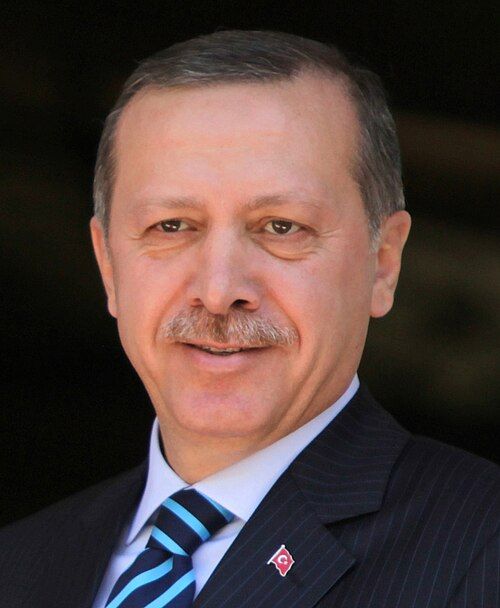
Erdoğan’s rise in Turkish politics was steady and calculated, marked by several key milestones:
- Mayor of Istanbul (1994–1998)
Erdoğan first gained national prominence as the mayor of Istanbul. His tenure was notable for urban improvements, infrastructure projects, and efforts to modernise the city while maintaining a focus on social welfare programs. - Founding the AK Party (2001)
After a brief political ban following his imprisonment for reciting a controversial poem in 1998, Erdoğan co-founded the Justice and Development Party (AK Party) in 2001. The party promoted economic reform, conservative social policies, and greater public engagement in politics. - Prime Minister of Turkey (2003–2014)
During his 11 years as Prime Minister, Erdoğan oversaw substantial economic growth, infrastructure projects, and reforms in healthcare and education. He strengthened Turkey’s role in regional and global politics, balancing Western relationships with a focus on national sovereignty and influence in the Middle East. - President of Turkey (2014–Present)
Erdoğan became Turkey’s first directly elected president in 2014. Since then, he has overseen a shift to a presidential system of government following a 2017 referendum, consolidating executive powers and streamlining decision-making processes. His tenure has included major infrastructure projects, economic initiatives, and a focus on foreign policy leadership. - International Role & Recognition
Erdoğan has positioned Turkey as a key player in the Middle East, Eastern Europe, and beyond, often serving as a mediator in regional conflicts. His leadership has made Turkey a focal point in discussions on migration, trade, and security.
Daily Presence & Political Influence
Erdoğan’s presence in Turkey is highly visible:
- Portraits and banners appear across government buildings, public offices, and city centres.
- His speeches and policies dominate media coverage, and his party maintains significant grassroots engagement.
- National infrastructure and economic programs under his government have left a tangible mark on urban and rural areas alike.
Legacy & Contemporary Views
Erdoğan remains a divisive yet undeniable figure in Turkish politics. He has garnered both significant support and criticism domestically and internationally. His supporters credit him with economic growth, infrastructure development, and political stability, while critics argue that Turkey has become more authoritarian under his leadership.
However, despite criticisms in the Western press, Erdoğan is elected by the people of Turkey. While the country may be more authoritarian than some Western nations, daily life in most Turkish cities remains remarkably safe: walking around at night, even in large urban centres, rarely involves the fear of theft, mugging, or violent crime.
Whether one supports him or not, Erdoğan’s government is the elected government of Turkey — a fact that underscores his enduring political influence.
Summary
Recep Tayyip Erdoğan (1954–Present) rose from humble beginnings in Istanbul to become one of Turkey’s most influential leaders. From Mayor of Istanbul to President, he has shaped the country’s domestic policies, economy, and foreign relations over two decades. Europe says Turkey’s elections are orderly but the campaign environment is uneven because pro-government media dominate coverage. It argues this is a problem of state influence over the press, whereas Western cases like Murdoch’s are seen as private media concentration, not government control. Whether it’s hypocrisy or justified depends on perspective — both sides have arguments to make.




Leave a Reply