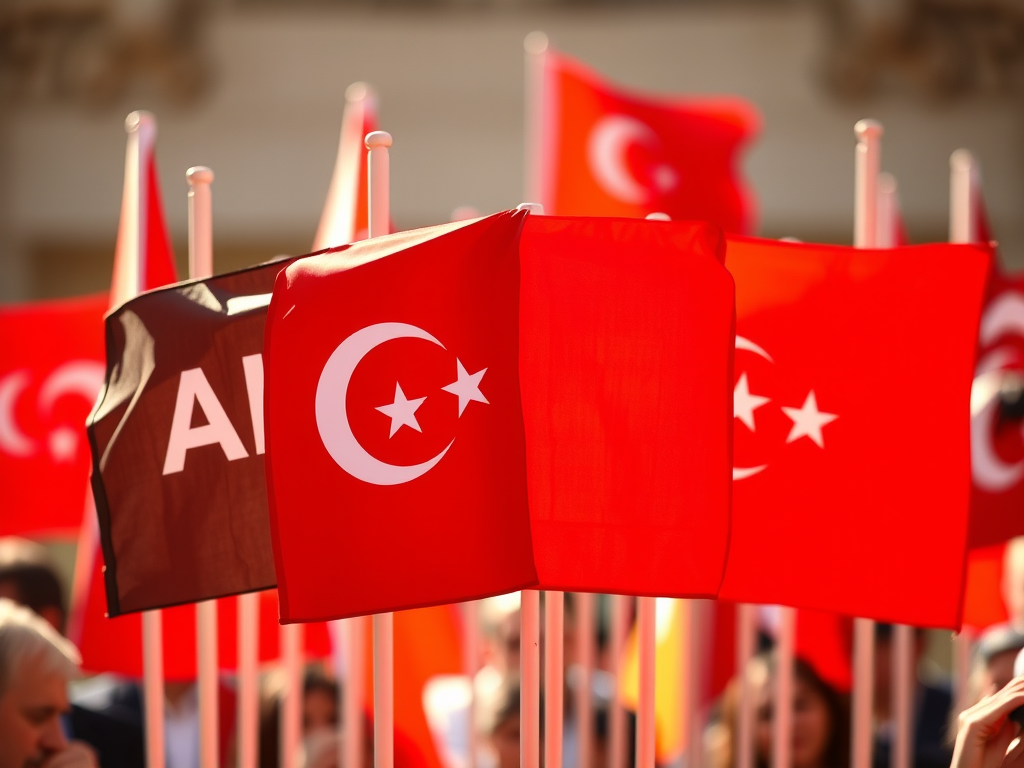
Justice and Development Party (AKP) / Adalet ve Kalkınma Partisi
- Leader: Recep Tayyip Erdoğan
- Ideology / Position: The AKP is generally considered right-wing, with a mix of national conservatism, social conservatism, and a “conservative-democratic” identity. They also emphasise religious, economic, and institutional stability.
- Main Campaigning Issues: The AKP often campaigns on economic development, strong central governance, infrastructure projects, conservative social values, and national identity. It also emphasises Turkey’s geopolitical role and the importance of maintaining stability.
- Role: The AKP has been the ruling party for many years, shaping much of modern Turkish politics.
- Website: akparti.org.tr
Republican People’s Party (CHP) / Cumhuriyet Halk Partisi
- Leader: Özgür Özel
- Ideology / Position: The CHP is centre-left, historically rooted in Kemalism (secularism, republicanism, nationalism), and social democracy. It positions itself as a pro-European, moderniser party committed to civil liberties and institutional checks and balances.
- Main Campaigning Issues: The CHP campaigns on restoring rule of law, strengthening parliamentary democracy, defending secularism, improving social welfare, and advocating greater transparency in government.
- Role: It is the main opposition party in Turkey, with a long historical legacy as the party founded by Atatürk.
- Website: chp.org.tr
Nationalist Movement Party (MHP) / Milliyetçi Hareket Partisi
- Leader: Devlet Bahçeli
- Ideology / Position: The MHP is strongly nationalist and typically placed on the right or right‑wing. It is known for its “Ülkücü” tradition (Turkish nationalist idealism) and emphasises national unity, security, and Turkish identity.
- Main Campaigning Issues: MHP campaigns on national sovereignty, combating separatism, preserving Turkish culture, and supporting a strong, secure state. It often aligns with conservative and security-focused policies.
- Role: It is a long-established nationalist party and has been an ally in electoral coalitions.
- Website: mhp.org.tr
Good Party / İYİ Parti
- Leader: Müsavat Dervişoğlu
- Ideology / Position: The Good Party is centre-right, combining Turkish nationalism, Kemalist secularism, and moderate conservatism. It was established by former nationalists who broke off from the MHP.
- Main Campaigning Issues: The party emphasises strengthening democratic institutions, restoring a more balanced parliamentary system, judicial reform, and civic nationalism. It also speaks to voters unhappy with both the dominant conservative bloc and hardline nationalists.
- Role: It is seen as a key opposition party, particularly for centre-right nationalists and voters who want a more moderate alternative to the AKP or MHP.
- Website: https://iyiparti.org.tr/
People’s Democratic Party (HDP) / Halkların Demokratik Partisi
- Leaders: Co-chair system — historically Cahit Kırkazak and Sultan Özcan
- Ideology / Position: The HDP is left-wing, focusing on participatory democracy, minority rights (especially for Kurds), feminism, environmentalism, and social justice.
- Main Campaigning Issues: The HDP campaigns strongly on ethnic minority rights, democratic reform, local self-governance, gender equality, and a more inclusive, pluralistic Turkey. It challenges centralisation and traditional nationalist narratives.
- Role: The party is influential in parts of Turkey with large Kurdish populations, but also appeals to a broad progressive base.
- Website: hdp.org.tr
Felicity Party / Saadet Partisi
- Leader: Mahmut Arıkan
- Ideology / Position: The Saadet Party is right-wing, with a strongly Islamist orientation. It draws on political Islam and traditional values, promoting a conservative social agenda.
- Main Campaigning Issues: Saadet emphasises moral and ethical governance, social justice in line with religious values, anti-corruption, and a socially conservative way of life.
- Role: It appeals to voters who feel that Turkey’s religious and moral values should play a stronger role in governance — especially among more conservative and pious citizens.
- Website: saadet.org.tr
Conclusion
Turkey’s party system is diverse, reflecting a wide spectrum of ideologies—from social democracy and secular nationalism to conservative Islamism and minority-rights activism. While the AKP remains dominant in much of national politics, other parties like CHP, MHP, İYİ, HDP, and Saadet play significant and very different roles, offering voters distinct visions for Turkey’s future.




Leave a Reply