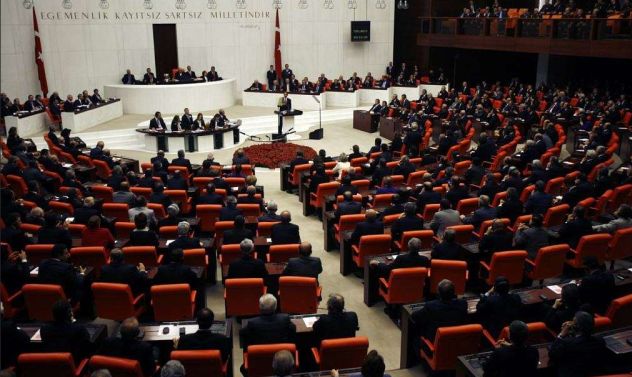
Origins of the Turkish Parliament
The Turkish Grand National Assembly (Türkiye Büyük Millet Meclisi, TBMM) was established on 23 April 1920 during the Turkish War of Independence. This body emerged in Ankara as the sovereign parliament of the emerging Turkish state, asserting national will in defiance of the occupying Allied forces after World War I. The founding of TBMM was a crucial step in dismantling the remnants of the Ottoman imperial system, and it became the legislative core of the Republic of Turkey when the republic was proclaimed on 29 October 1923.
Key National Leaders Since the Establishment of the Republic
- Mustafa Kemal Atatürk (1881–1938)
Founder of the Republic of Turkey and its first President (1923–1938). He led sweeping reforms: secularism, education, legal and language modernisation, and centralised a modern, republican state. Atatürk died in office. - İsmet İnönü (1884–1973)
Second President (1938–1950), previously a close associate of Atatürk and his prime minister. He preserved many of Atatürk’s reforms, managed Turkey through World War II neutrality, and laid foundations for multi-party democracy. - Celâl Bayar (1883–1986)
Third President (1950–1960). Bayar came from the Democrat Party and presided during a period of significant economic and political change. He was overthrown in the 1960 military coup and later imprisoned. - Cemal Gürsel (1894–1966)
Fourth President (1960–1966). He came to power after the 1960 coup, previously a general. His presidency sought to stabilise the country and restore civilian rule. - Cevdet Sunay (1899–1982)
Fifth President (1966–1973). A former Chief of Staff of the Turkish Armed Forces, his presidency was marked by political turbulence and rising social unrest. - Fahri Korutürk (1903–1987)
Sixth President (1973–1980). A former admiral and diplomat, Korutürk’s tenure was relatively moderate. - Kenan Evren (1917–2015)
Seventh President (1982–1989), first coming to power as head of the 1980 military coup. He drafted a new constitution and ruled under a military‑backed regime. - Turgut Özal (1927–1993)
Eighth President (1989–1993). Previously served as Prime Minister and was a driving force for liberal economic reforms, modernisation, and opening the Turkish economy to global markets. Died in office. - Süleyman Demirel (1924–2015)
Ninth President (1993–2000). A veteran politician and many-times prime minister before his presidency. His era saw coalition governments, economic crises, and growing political pluralism. - Ahmet Necdet Sezer (born 1941)
Tenth President (2000–2007). A former judge and constitutional court president, he emphasised rule of law and secularism. - Abdullah Gül (born 1950)
Eleventh President (2007–2014). One of the founding members of the AKP, Gül’s presidency was stabilising and conciliatory. - Recep Tayyip Erdoğan (born 1954)
Twelfth (and current) President (since 2014). Under his leadership, in a referendum in April 2017, Turkey approved a major constitutional reform that abolished the office of Prime Minister and created a powerful executive presidency. The reforms transferred most executive powers from parliament to the president, including appointment of ministers and high-level officials, rule by decree, and control over the judiciary. In the June 2018 election, Erdoğan was re-elected under the new system. The shift marked a turning point: the Prime Minister role became largely obsolete, and executive authority is now highly centralised in the presidency.
The 2017‑2018 Constitutional Change: What It Meant
In April 2017, Turkish voters approved constitutional amendments that fundamentally reshaped the government. These changes transformed Turkey from a parliamentary system into a presidential system. Key features include:
- The Prime Minister’s office was abolished.
- The President became both head of state and head of government.
- The President gained authority to appoint and dismiss ministers, issue executive decrees, and make key judicial appointments.
- Parliamentary powers were curtailed: for instance, parliament can no longer vote a confidence motion, and its ability to question ministers was greatly weakened.
These reforms went into force after Erdoğan was re-elected in June 2018 and inaugurated in July 2018. The system change has concentrated executive authority in the presidency, reducing the traditional checks and balances that existed under the parliamentary system.
Summary
Since the formation of the Turkish Parliament in 1920 and the proclamation of the Republic in 1923, Turkey has had a series of significant leaders — ranging from revolutionary founders to military rulers, and modern elected presidents. The major shift in 2017–18 redefined the balance of power in Turkey, making the presidency the central executive authority. Understanding these leaders and constitutional transformations is essential to grasp the current structure of Turkish governance.




Leave a Reply