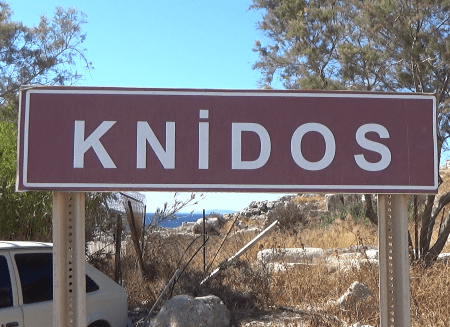
Knidos or Cnidus is an ancient Greek city in the region of what would have been known as Caria. Situated on the Datça peninsula, it is just 35km from the town of Datça. This is about a 45 minute drive. The ancient city of Knidos is built along a causeway that has two natural harbours. The causeway connects the mainland to an island. The arhitectural ruins are strewn across a fairly wide area and some extensive restoration has taken place.
This once prosperous Dorian port city dates back to 400 BC. There are 4 kilometres of city walls and two theatres with a seating capcity of 5,000 and 20,000 people. This would have been one of the most important cities of Caria. Knidos was known for its art, science and culture, the famous astrologist and mathmatician Eudoksus, Euryphon the physician and artists Polygnotos and Sotratos are all said to have lived here. Knidos would have been an impressive and very important trading city and naval base. The walls on the outskirts of the city would have provided a defensive shield against attacks.
Knidos was described by the historian Strabo as the city that was built for the goddess Aphrodite. In fact there would have been a large statue of her here at one time but sadly only the plinth remains. The original statue is thought to have been sent to Constantinople to the Palace of Lausus which was burned down in 475 AD and destroyed. The location of Knidos by the crystal clear waters of the seas where the Aegean and Mediterranean meet, with its natural beauty and olive trees, the island landscapes, all make this an exceptionally pleasant place to visit and explore. Many yachts arrive at this location during the summer months and make use the tranquility of the local harbour where it is used as a base from which to explore the coastline.
The ruins are scattered and some walking is required. Many of the ancient artifacts that would have come from Knidos can be found in musuems overseas. British arachaeolgist Charles Newton was here from 1857 to 1859 carried out some extensive excavations and many of the artificats from Knidos can be found in the British Museum in London. At the time these artifacts were not considered to have any value and it is unfortunate that they were allowed to leave Turkey in the first place. Their rightful home would have been here at Knidos.
There is plenty to see here and plenty of car parking space. There are toilet facilities and a restaurant that is open duing the summer months.
Knidos (ya da Cnidus), antik çağda Karia olarak bilinen bölgede kurulmuş eski bir Yunan kentidir. Datça Yarımadası’nda yer alır ve Datça ilçe merkezine sadece 35 km uzaklıktadır. Bu mesafe arabayla yaklaşık 45 dakika sürer. Antik Knidos kenti, iki doğal limanı olan bir geçit (yol) boyunca kurulmuştur. Bu geçit, anakara ile bir adayı birbirine bağlar. Kalıntılar geniş bir alana yayılmıştır ve bazı bölümlerde önemli restorasyon çalışmaları yapılmıştır.
Knidos, M.Ö. 400 yıllarına uzanan zengin bir Dorlular liman kentiydi. Şehir, 4 kilometrelik surlarla çevriliydi. Ayrıca biri 5.000, diğeri 20.000 kişilik olmak üzere iki tiyatro bulunmaktaydı. Karia’nın en önemli şehirlerinden biri olduğu düşünülmektedir. Sanat, bilim ve kültür açısından çok gelişmişti. Ünlü gökbilimci ve matematikçi Eudoksus, doktor Euryphon ve sanatçılar Polygnotos ile Sotratos burada yaşamıştır. Knidos, hem ticaret hem de donanma açısından çok önemli bir merkezdi. Şehri çevreleyen surlar, olası saldırılara karşı koruma sağlıyordu.
Tarihçi Strabon, Knidos’u “Tanrıça Afrodit için kurulmuş şehir” olarak tanımlar. Burada bir zamanlar büyük bir Afrodit heykeli vardı, ancak günümüzde sadece kaidesi kalmıştır. Heykelin, İstanbul’daki Lausus Sarayı’na götürüldüğü, ancak 475 yılında çıkan bir yangında yok olduğu düşünülüyor.
Knidos’un bulunduğu yer, Ege ve Akdeniz’in birleştiği noktada, zeytin ağaçları ve adalarla çevrili doğal güzelliğe sahip kristal berraklığında denizlerin kıyısındadır. Bu güzellikleriyle ziyaret etmeye ve keşfetmeye değer bir yerdir. Yaz aylarında çok sayıda yat buraya demir atar ve limanı, çevre kıyıları gezmek için üs olarak kullanır.
Antik kalıntılar dağınık bir alana yayılmıştır ve gezmek için yürümek gerekir. Knidos’tan çıkarılan birçok eser günümüzde yurt dışındaki müzelerde sergilenmektedir. İngiliz arkeolog Charles Newton, 1857-1859 yılları arasında burada kazılar yapmış ve birçok eseri Londra’daki British Museum’a götürmüştür. O dönemde bu eserlerin değersiz olduğu düşünülmüş, bu nedenle Türkiye’den çıkarılmalarına izin verilmiştir. Oysa bu eserlerin gerçek yeri, Knidos olmalıydı.
Knidos’ta gezilecek çok yer vardır. Geniş bir otopark, tuvaletler ve yaz aylarında açık olan bir restoran da bulunmaktadır.




Leave a Reply