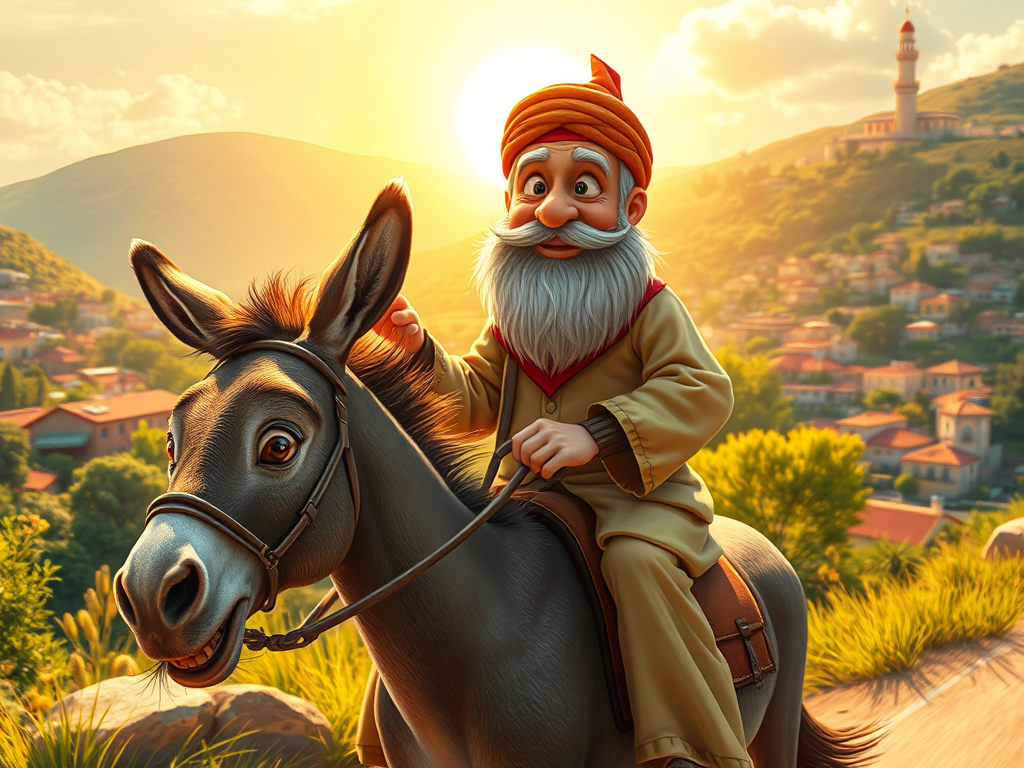
Turkey’s Wisest Fool, Funniest Philosopher, and Accidental Life Coach
Nasreddin Hodja, the beloved folk hero of Turkey and much of the Middle East and Central Asia, is a man who managed to become famous for being both incredibly wise and utterly ridiculous — often at the same time. If philosophy, comedy, and mild chaos had a child, that child would be Nasreddin Hodja.
A Man of Mystery (Mainly Because No One Knows Exactly When He Lived)
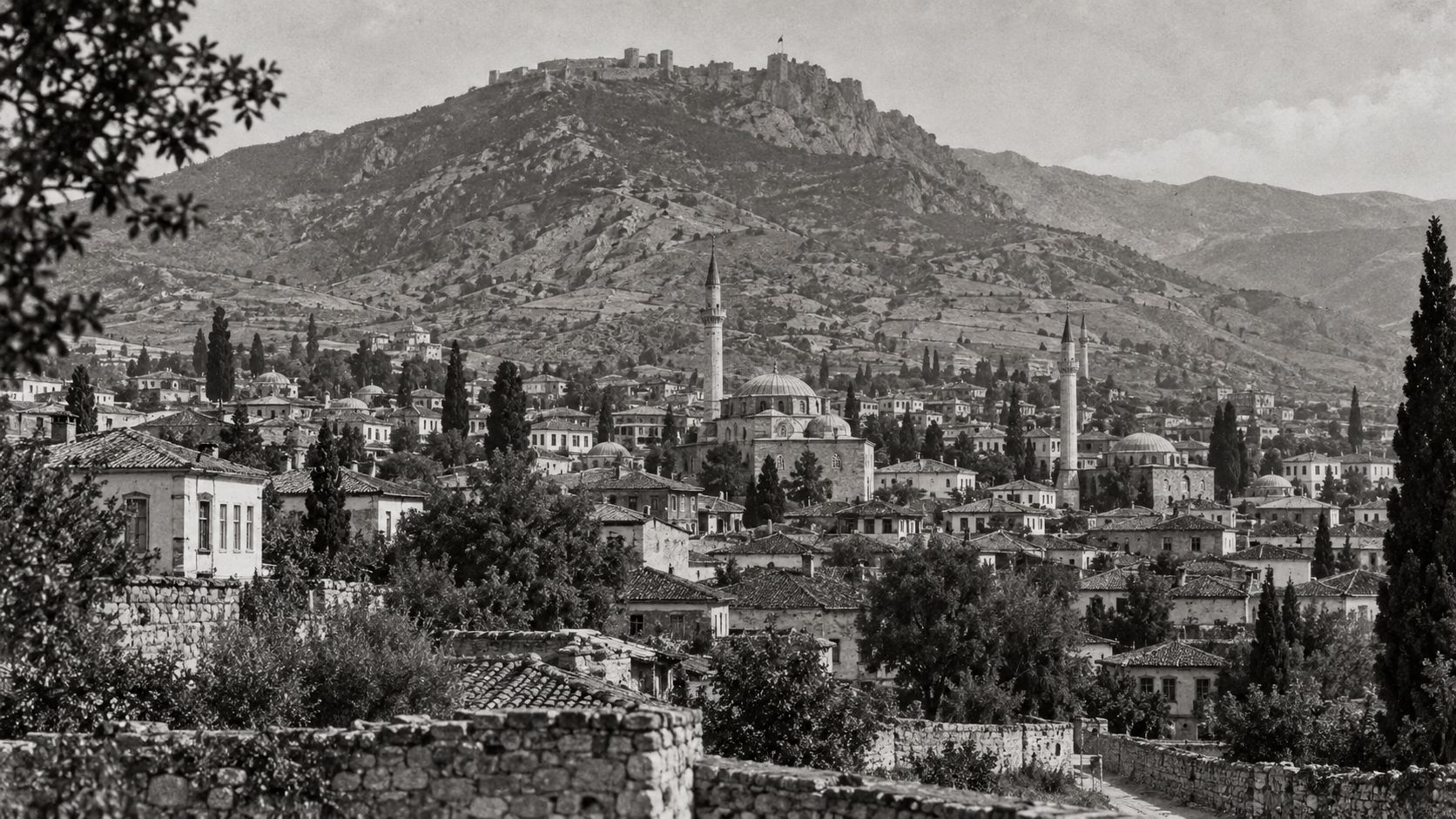
Historians generally agree that Nasreddin Hodja lived during the 13th century, possibly in the region of Akşehir in modern-day Turkey. Beyond that, everything else is up for debate. Was he a scholar? A village imam? A travelling philosopher? A man who simply enjoyed confusing people for sport? The answer is very likely: yes.
His stories have been passed down through centuries of oral tradition, which means they have been edited, embellished, rearranged, and possibly improved by generations of storytellers who could not resist adding an extra punchline.
Wisdom Wrapped in Nonsense (Or the Other Way Around)
Nasreddin Hodja’s tales usually feature him riding his donkey either backwards or sideways — not because he didn’t know how to ride properly, but because it made passers-by question their life choices.
His stories follow a simple formula:
- Something perfectly ordinary happens.
- Nasreddin Hodja makes it extremely unordinary.
- At the end, you’re left either laughing, thinking, or deeply confused — sometimes all three.
For example, when asked why he was riding his donkey backwards, he replied:
“Well, I’m not riding backwards. The donkey is facing the wrong way.”
This is peak Nasreddin logic: technically wrong, yet spiritually correct.
A Folk Hero Who Evolved Through the Centuries (Unlike His Donkey)
Over time, Hodja’s tales have crossed borders, languages, and cultures. In some places he’s known as Molla Nasreddin, in others as Nasruddin or simply “that funny wise guy with the questionable decisions.”
Different regions added their own flavours to his stories:
- Some emphasised his humour.
- Others focused on his moral wisdom.
- A few turned him into a trickster who merrily outwitted greedy merchants, arrogant officials, and anyone who underestimated a man riding a donkey backwards.
Despite these variations, the essence of the character remained: he is the everyman philosopher, the person who can make you laugh at life’s absurdities while teaching you a lesson you didn’t know you needed.
When He’s Most Popular: Always
Nasreddin Hodja is a cultural icon who never really goes out of fashion. His stories are told:
- In schools, usually to teach children morals disguised as mischief.
- At festivals, especially the annual International Akşehir Nasreddin Hodja Festival, where people gather to celebrate humour, culture, and the art of politely messing with each other.
- By grandparents, who have mastered the art of perfect timing, maximum exaggeration, and the dramatic pause before the joke’s twist.
- On the internet, where his stories continue to thrive — proving that truly good humour is timeless, donkey positions included.
Where His Legacy Lives On: Everywhere Stories Are Told
Hodja’s tales circulate across Turkey, Central Asia, the Middle East, the Balkans, and even parts of China. You’ll find him in children’s books, scholarly works, cartoons, comedy shows, and the occasional meme explaining why someone’s poor decision-making is actually part of a larger philosophical plan.
His legendary tomb in Akşehir is a popular attraction — famous for its locked door, which has no walls. Whether this was a symbolic architectural choice or just a brilliant prank remains a matter of debate.
A Final Word from the Hodja (Probably)
If Nasreddin Hodja were alive today, he’d likely tell us something wise, puzzling, and hilarious like:
“Learn from your mistakes… but try not to make the same mistake too many times, or people will start thinking it’s a strategy.”
His stories endure because they remind us to laugh at ourselves, question the obvious, and approach life with a curious mind and a healthy appreciation for absurdity.






Leave a Reply