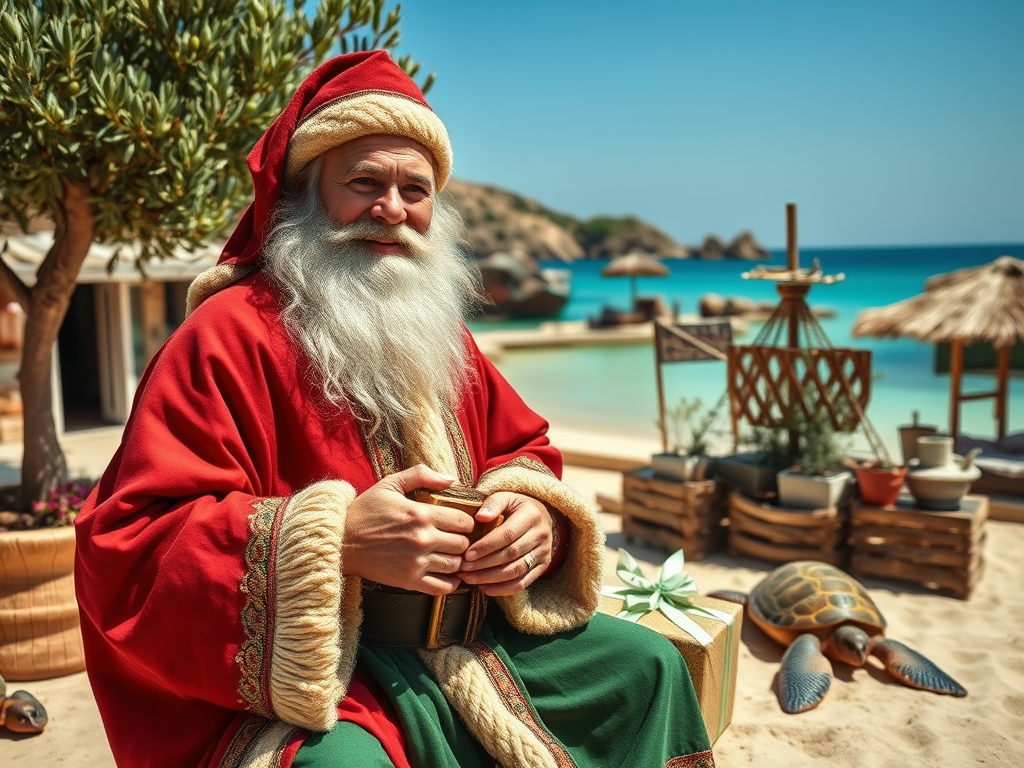
St Nicholas: The Turkish Father Christmas You Didn’t Know You Knew
Most people imagine Father Christmas living in the North Pole, surrounded by reindeer with questionable work hours and elves who really should unionise. But the truth — and this may shock you — is that Father Christmas was actually born in Turkey. Yes, sunny, olive-grown, kebab-rich Turkey. Suddenly the beard makes sense: the man was trying to avoid sunburn.
The Real St Nicholas: Born in the Land of Beaches, Not Snowdrifts

St Nicholas was born around the year 270 in Patara, a Lycian port city on Turkey’s Mediterranean coast. Today, Patara is famous for its long sandy beach, sea turtles, and tourists desperately trying to photograph both without falling into the dunes.
Young Nicholas grew up in a wealthy family but quickly developed a habit of giving things away — a character trait parents usually discourage in children but which turned out well for global culture. After his parents’ death, he inherited a fortune and did what any future saint would do: he proceeded to give it to the poor, secretly, at night, and almost always in the most dramatic way possible.
Most famously, he threw bags of gold through a window to save three sisters from being sold into slavery. Legend says the bags landed in their stockings, which were hung by the fire to dry. And just like that, the entire Western world has been hanging up socks for 1,700 years.
How We Got from Turkish Bishop to Jolly Gift-Giver

St Nicholas eventually became the Bishop of Myra (modern-day Demre), known for miracle-working, generosity, and probably for being the only bishop who could genuinely say, “I understand poverty — I did it voluntarily.”
Over the centuries, his reputation snowballed. He became the patron saint of:
- sailors
- the poor
- merchants
- children
- travellers
- bankers
- thieves (yes, really)
- and Russia
— a one-man patronage superstore.
By the Middle Ages, people across Europe were celebrating St Nicholas Day with gift-giving, sweets, and mild chaos. When these traditions eventually mixed with northern folklore, something interesting happened…
The Man in Green: Before the Red Suit

Before Coca-Cola dipped Father Christmas in red in the 1930s (no, they didn’t invent him, they simply gave him better branding), he was usually depicted wearing:
- green,
- brown,
- blue,
- or whatever colour medieval artists had lying around.
In Britain especially, Father Christmas wore green and represented midwinter, feasting, merriment, and the general encouragement to have “just one more mince pie”, a message we still take very seriously.
Combine the British Father Christmas with the Dutch Sinterklaas, add a sprinkle of American PR, and eventually the jolly, red-suited icon emerged — still secretly Turkish, but now with more snow, more ho-ho-ho, and fewer theological responsibilities.
Where to Find St Nicholas in Turkey Today
If you’d like to pay homage to the original Father Christmas in his true homeland, Turkey offers several sites with surprisingly Christmassy credentials — minus the reindeer.
1. Patara – His Birthplace
A gorgeous stretch of Mediterranean coastline with ancient ruins, dunes, and the faint whisper of, “This is where Santa was born… and he didn’t even need central heating.”
Visitors can explore the ancient theatre, the restored Parliament building, and the beach where turtles still lay their eggs.
2. Demre (Myra) – His Hometown and Bishopric
This is where the magic happened. Demre hosts:
- The Church of St Nicholas, a fascinating Byzantine complex where the saint served as bishop.
- His original sarcophagus, sadly emptied by relic-hunters centuries ago — proving that even in medieval times, tourists took souvenirs they weren’t supposed to.
The church is decorated with frescoes of St Nicholas looking extremely serious for a man whose legacy now includes chimneys and reindeer.
3. The Rock-Cut Tombs and Myra Ruins
Nearby, the impressive Lycian cliff tombs and a Roman theatre complete the “ancient wonderland” vibe. It’s not explicitly Santa-related, but it gives excellent photos and a sense of the world he knew.
4. Antalya Museum
Many original artefacts from the Church of St Nicholas — frescoes, sarcophagi pieces, and relics — are preserved here.
An excellent stop if you want to experience St Nicholas’ history indoors, with air-conditioning and no risk of heatstroke.
From Mediterranean Saint to Global Icon
So next time someone mentions the North Pole, you can politely (or smugly) inform them:
- Father Christmas was born in Turkey,
- originally wore green,
- performed secret acts of kindness at night,
- and became the world’s most beloved gift-giver long before reindeer became involved.
St Nicholas may have swapped Lycian sandals for snow boots in modern imagination, but Turkey remains the true birthplace of the man behind the myth.




Leave a Reply