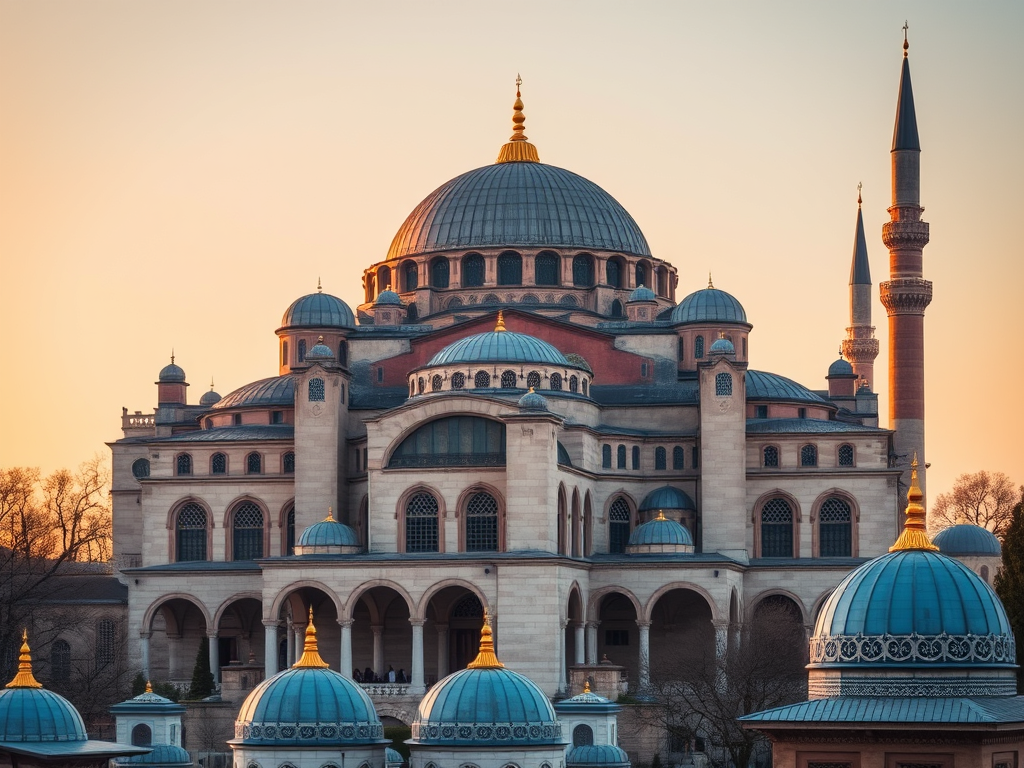
The Hagia Sophia Mosque in Istanbul stands as one of the world’s most extraordinary architectural and cultural landmarks, attracting millions of visitors each year. Located in the historic Sultanahmet district, opposite the Blue Mosque and close to the ancient Hippodrome, it occupies a central place in the heart of old Istanbul. Its vast dome dominates the skyline, a symbol of the city’s long and complex history as the meeting point between East and West.
Originally built in 537 AD under the Byzantine Emperor Justinian I, the Hagia Sophia was the largest church in the Christian world for almost a thousand years. Its immense dome, mosaics, and marble pillars made it a masterpiece of Byzantine architecture. When the Ottomans conquered Constantinople in 1453, Sultan Mehmed II converted it into a mosque, adding minarets and Islamic calligraphy while preserving many of its Christian artworks beneath layers of plaster. In 1935, it became a museum under the secular Republic of Turkey, allowing visitors from around the world to admire both its Christian and Islamic heritage.
In 2020, the Hagia Sophia was once again designated as a mosque and reopened for Muslim worship. Today, the main prayer hall is reserved for religious purposes and is open only to those coming to pray. This decision was made out of respect for its current status as an active place of worship. However, visitors can still experience the magnificence of the building by entering the upper galleries, which are open to tourists for an entrance fee. From there, it is possible to view the breathtaking mosaics depicting Christ, the Virgin Mary, and other Christian figures, which were uncovered and carefully restored during its time as a museum.
To gain a deeper understanding of the Hagia Sophia’s remarkable transformation through the centuries, it is highly recommended that visitors first stop at the Hagia Sophia History Museum located just across the road. This modern and interactive museum offers a detailed presentation of the site’s long journey from Byzantine cathedral to Ottoman mosque and finally to its present form. It provides valuable historical context and enhances the experience of seeing the real structure afterwards.
The Hagia Sophia Mosque remains one of the top attractions in Istanbul, embodying the layers of history, culture, and faith that make the city so unique. Whether admired for its engineering brilliance, its spiritual significance, or its artistic treasures, it continues to inspire awe and reverence in all who step through its doors.
İstanbul’daki Ayasofya Camii, dünyanın en olağanüstü mimari ve kültürel simgelerinden biri olarak her yıl milyonlarca ziyaretçiyi kendine çekmektedir. Tarihi Sultanahmet semtinde, Mavi Cami’nin tam karşısında ve antik Hipodrom’un yakınında yer alan yapı, eski İstanbul’un kalbinde merkezi bir konuma sahiptir. Devasa kubbesi, Doğu ile Batı’nın kesiştiği noktada yer alan şehrin uzun ve karmaşık tarihinin bir sembolü olarak gökyüzüne hükmeder.
Ayasofya, Bizans İmparatoru I. Justinianus tarafından 537 yılında inşa ettirilmiş olup, neredeyse bin yıl boyunca Hristiyan dünyasının en büyük kilisesi olarak kalmıştır. Görkemli kubbesi, mozaikleri ve mermer sütunlarıyla Bizans mimarisinin bir başyapıtı olarak kabul edilir. 1453 yılında Osmanlıların İstanbul’u fethetmesiyle birlikte, Sultan II. Mehmet yapıyı camiye dönüştürmüş; minareler, İslami hat süslemeleri eklemiş, ancak birçok Hristiyan eseri de sıva tabakaları altında korumuştur. 1935 yılında, Türkiye Cumhuriyeti’nin laikleşme döneminde müzeye dönüştürülmüş ve dünyanın dört bir yanından gelen ziyaretçilere hem Hristiyan hem de İslami mirasını hayranlıkla görme fırsatı sunmuştur.
2020 yılında Ayasofya yeniden cami statüsüne alınarak Müslüman ibadetine açılmıştır. Günümüzde ana ibadet alanı yalnızca dini amaçlarla kullanılmakta ve sadece namaz kılmak isteyenlere açıktır. Bu karar, yapının aktif bir ibadethane olarak mevcut statüsüne saygı göstermek amacıyla alınmıştır. Ancak ziyaretçiler, giriş ücreti karşılığında üst galerilere çıkarak yapının ihtişamını deneyimleme fırsatına sahiptir. Bu galerilerden, müze döneminde ortaya çıkarılıp özenle restore edilen Hz. İsa, Meryem Ana ve diğer Hristiyan figürlerini betimleyen muhteşem mozaikler görülebilir.
Ayasofya’nın yüzyıllar boyunca geçirdiği olağanüstü dönüşümü daha iyi anlamak isteyen ziyaretçilere, öncelikle hemen yolun karşısında yer alan Ayasofya Tarih Müzesi’ni ziyaret etmeleri tavsiye edilir. Bu modern ve etkileşimli müze, yapının Bizans katedrali olarak başladığı yolculuktan Osmanlı camisinin görkemine ve bugünkü haline kadar olan uzun tarihini ayrıntılı bir şekilde sunar. Ziyaretçilere değerli bir tarihsel perspektif kazandırarak, sonrasında gerçek yapıyı görme deneyimini daha anlamlı hale getirir.
Ayasofya Camii, İstanbul’un en önemli turistik yerlerinden biri olmaya devam etmektedir. Şehrin eşsizliğini oluşturan tarih, kültür ve inanç katmanlarını bünyesinde barındırır. Mühendislik harikası yapısıyla, manevi önemiyle veya sanatsal zenginlikleriyle hayranlık uyandırmaya devam eden bu eşsiz eser, kapılarından içeri giren herkeste derin bir etki bırakır.



Leave a Reply