Meerschaum (Lületaşı) in Turkey — production, where it’s found, and resources in Eskişehir
Meerschaum — called lületaşı in Turkish and scientifically sepiolite — is a soft, lightweight, porous magnesium-silicate mineral prized worldwide for carving (most famously into tobacco-pipe bowls), jewellery and small sculptures. Turkey, and especially the Eskişehir region, is the historical and modern heart of meerschaum production: commercially workable deposits and the traditional carving craft are concentrated there, and the stone is an important local cultural and economic resource.
Where it’s found
The highest-quality, commercially workable nodules of meerschaum are found almost exclusively in the plains and villages around Eskişehir (north-central Anatolia). Important mining areas surround small villages such as Sepetçi, Margı, Söğütçük, Başören, Ağapınar, Gökçedağ and nearby localities; historically the deposits have been worked with shafts and short horizontal galleries to extract nodular masses buried in Pliocene alluvial deposits. Although sepiolite occurs in other countries, the Eskişehir deposits are famous for their purity and the size/quality of nodules used for carving.
How it’s produced (mining → carving → finished goods)
- Extraction — Meerschaum is normally mined from shallow to moderate-depth shafts and tunnels in alluvial/near-surface deposits. Miners extract nodules (sometimes called “lumps” or “yumurca”) by hand using simple tools; historically this has been a small-scale, labour-intensive activity. The freshly-dug stone is soft and workable.
- Sorting & drying — Nodules are graded for size and internal quality. Freshly mined meerschaum is soft and must be cured/dried (sun drying or low heat) to harden enough for careful carving. Larger, defect-free nodules are most highly valued because a single good nodule can yield an entire pipe bowl or detailed figure.
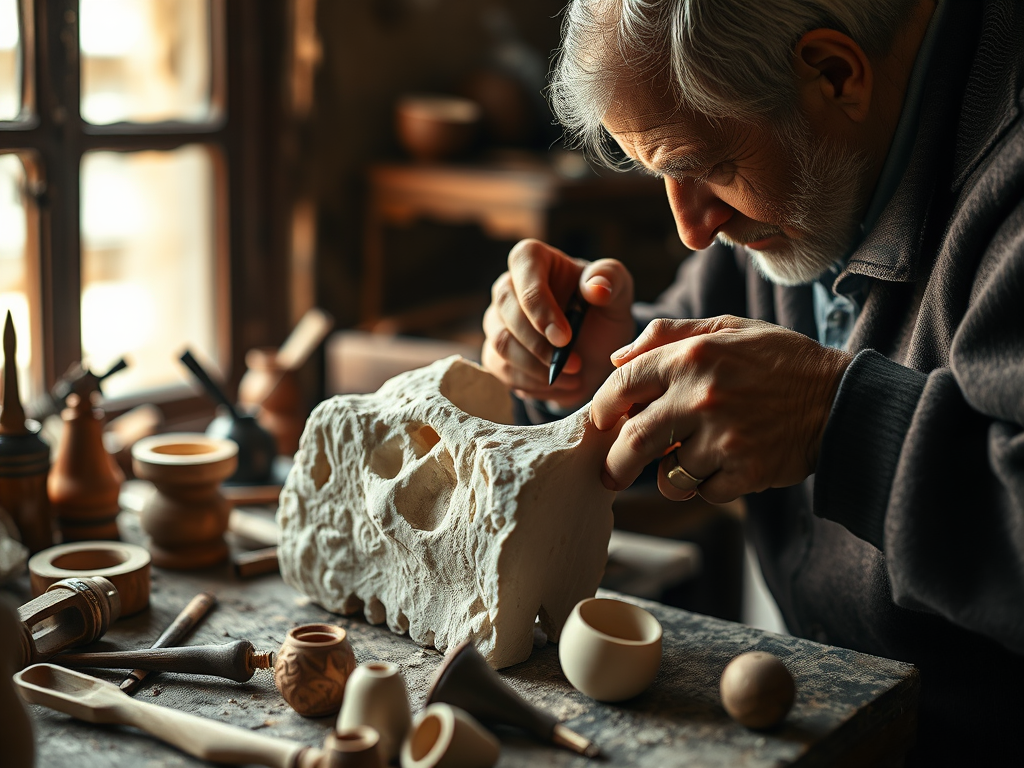
- Carving & finishing — Skilled artisans (Eskişehir is famous for multi-generation lületaşı families and master–apprentice workshops) carve the soft stone with chisels and files; after carving the piece is gently dried and sometimes sealed, polished or mounted (e.g., with amber-like stems). Because the material is naturally porous, it develops a characteristic warm patina over time and use — one reason meerschaum pipes are prized. The carving tradition is concentrated in Odunpazarı and adjacent craft quarters in Eskişehir.
Cultural & economic importance
Lületaşı is often called Eskişehir’s “white gold” or “deniz köpüğü” (sea-foam) and is a major element of local handicraft tourism. The city hosts craft fairs, festivals and a dedicated Lületaşı (Meerschaum) Museum that showcases carved pipes, jewellery and historical pieces; many shops and ateliers in Odunpazarı sell finished meerschaum objects to visitors. Beyond tourism, the raw mineral has industrial uses (e.g., absorbents, filters) but the carved handicraft market remains the most visible.
Environmental & social notes
Mining is traditionally low-tech and small-scale, which helps preserve craft quality but raises challenges: safe working conditions, mine reclamation and sustaining the craft as younger generations move to other jobs. Local and academic work has modelled the deposits and discussed sustainable extraction and value-adding through local carving workshops and tourism promotion.
Useful Eskişehir websites about meerschaum (lületaşı)
Below are Eskişehir-focused websites and pages where you can read more, find museums, local workshops, and contact points for the craft and tourism offices. (Official/local pages are listed first for reliability.)
- Odunpazarı Municipality — Lületaşı (Meerschaum) Museum (Lületaşı Müzesi) — museum page & visiting info (Odunpazarı hosts the main public collection and exhibitions).
- Eskişehir Provincial Directorate of Culture & Tourism — Lületaşı / Museum listing — official cultural tourism entry for the museum and craft locations in the city. Eskisehir KTB
(İl Kültür ve Turizm Müdürlüğü — Lületaşı) - Wikipedia — Lületaşı / Eskişehir Meerschaum Museum — concise overview of the mineral, its Turkish name and the museum’s existence. Wikipedia+1
- Regional academic / research articles (DergiPark) — studies on meerschaum/sepiolite in Turkey — geological and socio-economic research on deposits and their importance. Useful if you want scholarly background on formation, reserves and local impact. DergiPark+1
- GIA / Gems & Gemology — “Meerschaum from Eskisehir Province” — mineralogical and gemological perspective on the origin and qualities of Eskişehir sepiolite. Good technical background. GIA
- Local news & culture pieces (examples) — feature stories and interviews about lületaşı craftsmen and Odunpazarı ateliers (local press and cultural sites). These highlight contemporary craft life and festivals. Halkbank Kültür ve Yaşam
- Travel/tourist guides (e.g., Turkey Travel Planner, TripAdvisor entries for Lületaşı Müzesi) — practical visitor information and descriptions of mines and workshops reachable from Eskişehir. Useful for planning visits to ateliers or the museum. Turkey Travel Planner



Leave a Reply