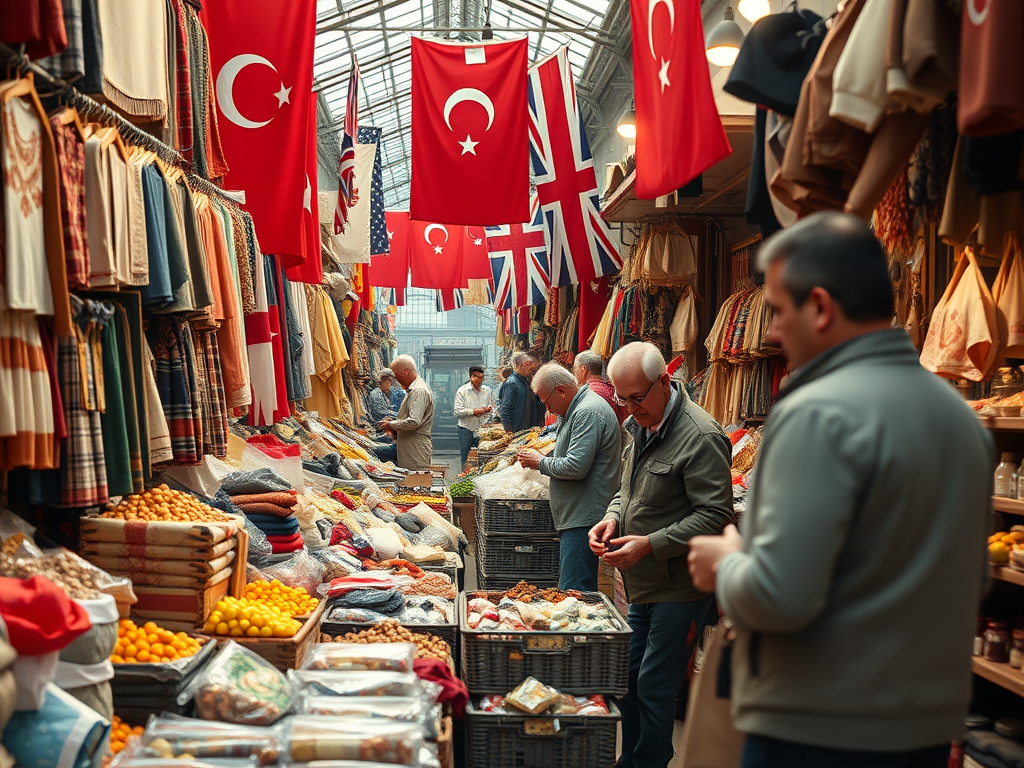
Exporting Goods from Turkey to the United Kingdom: A Practical Guide
Exporting from Turkey to the UK is a compelling opportunity. Turkey is a major manufacturer of vehicles, textiles, machinery, food products and homewares, and the UK offers a large, well-paying market for many of those goods. This guide explains what you need to do: from finding suppliers, navigating paperwork, understanding tax and customs, to establishing contacts when you don’t speak Turkish. It also covers Turkey’s export strengths and where opportunities might be available.
Trade Context
The UK–Turkey Trade Agreement is in force. That means many Turkish-origin goods can qualify for reduced or zero UK import duty if they meet the agreement’s origin rules. Even with the trade agreement, you must still complete UK import declarations, pay or account for import VAT, and any tariffs that apply for goods that don’t meet the origin rules.
Step-by-Step: What You Must Do
1) Find and Qualify Suppliers in Turkey
Start with verified supplier directories, marketplaces and trade associations: for example, BuyFromTurkey (https://buyfromturkey.co), the Türkiye Exporters Assembly (TİM) (https://www.tim.org.tr/en/), and the Turkish Ministry of Trade (https://www.trade.gov.tr/). Meet suppliers by video, request factory photos, samples, references and audit reports where possible.
2) Agree Commercial Terms
Agree Incoterms that clarify who pays freight, insurance, customs clearance, etc. Common choices are EXW (buyer does everything from the factory), FOB (seller loads onto vessel), or CIF/Delivered terms for turnkey delivery. Ask for a pro-forma invoice with clear product description, HS code (tariff classification), unit values, weight and origin.
3) Check for Licences, Certificates or Testing
Some goods (food, plants, animal products, chemicals, medical devices, toys, electronics) require certificates such as phytosanitary, veterinary, health, CE-type tests or UK conformity marks. Verify UK rules and Turkish export controls early. Use the Turkish Ministry of Trade’s “Customs Formalities” page (https://www.trade.gov.tr/customs-formalities) to check export regulations in Turkey.
4) Agree Origin & Preference Paperwork (if you want reduced duty)
If you want the preferential tariff under the UK–Turkey Trade Agreement, ensure the goods qualify as Turkish origin and that the exporter can provide the required evidence. Under the agreement, goods must meet the origin rules and you should receive a proper “statement of origin” on the invoice. See the UK government guidance: https://www.gov.uk/guidance/summary-of-the-uk-turkey-trade-agreement
5) Turkish Export Formalities (what the Turkish exporter or agent does)
The exporter in Turkey prepares the export customs declaration and obtains any required approvals from the relevant exporters’ association or ministry depending on the product. Typical documents include: commercial invoice, packing list, export customs declaration, bill of lading or airway bill, certificate of origin or origin statement, and any product-specific certificates.
6) Choose Shipping & Freight Forwarder / Customs Agent
Use an experienced freight forwarder who handles Turkey→UK routes. They will advise on the best mode (sea, air, road), transit times, export packing, pick-up and Turkish customs exit formalities, plus the UK import declaration if agreed in your Incoterm. For non-Turkish speakers it is extremely helpful to use a forwarder or local buying agent who communicates in English.
7) UK Import Formalities (what the UK importer does)
You as UK importer (or your agent) must have a UK EORI number. Check you have one via the UK government service. You must submit an import declaration to UK Customs (HMRC). If you are claiming preferential tariff under the UK–Turkey agreement, include the origin statement or other required evidence. Import VAT is normally payable on arrival. UK VAT-registered businesses may be able to reclaim import VAT via their VAT return. Tariff (customs duty) is calculated on the commodity’s tariff code (HS code) and the applicable rate (either UK Global Tariff or preferential rate under the trade agreement).
Essential Documents (Short List)
- Commercial invoice (with origin statement if claiming duty relief)
- Packing list
- Bill of lading / Sea waybill or Air waybill
- Export customs declaration (Turkish “Gümrük Beyannamesi”)
- Certificate or proof of origin (statement on invoice or formal certificate)
- Any product-specific certificates (phytosanitary, veterinary, health, testing)
- Insurance certificate (if required by Incoterm)
Tax & Duty — What You Need to Know
- Import duty: You use the UK Global Tariff as the baseline. If your goods qualify under the UK–Turkey Trade Agreement, you may pay reduced duties or zero duty. Check the commodity’s HS code and whether the preferential origin rules apply.
- Import VAT: Charged by HMRC on imports. UK businesses VAT registered can often reclaim import VAT on their VAT return (subject to normal VAT rules).
- Customs procedures & valuation: Customs duty is calculated on the “customs value” (normally invoice value plus certain costs). Ensure invoices and declared values match supporting documents.
Tips for Non-Turkish Speakers
- Use English-speaking freight forwarders and customs brokers: they handle paperwork, translations and act as local representatives.
- Hire a buying agent or sourcing agent in Turkey who inspects factories, negotiates and handles quality control. Ask for references and sample inspection reports.
- Work with exporters that have English websites or international sales staff — many Turkish exporters are used to export markets and provide English-speaking contact.
- Translate key documents (commercial invoice, specification sheets) into English and keep bilingual files for customs and quality control.
- If possible, visit a trade fair in Turkey or do a video-factory tour — face time builds trust quickly.
How to Establish Contacts and Verify Suppliers
Start with trade associations and chambers: for example the Türkiye Exporters Assembly (TİM) at https://www.tim.org.tr/en/ is the umbrella organisation for Turkish exports. Trade and statistical institutions can provide lists of verified exporters. Use marketplaces and B2B directories such as BuyFromTurkey (https://buyfromturkey.co) for initial supplier leads, but always perform your own due diligence: request names of past export buyers or inspection reports. Freight forwarders, customs brokers and lawyers in Turkey often know reliable exporters and will vet paperwork (HS codes, origin statement, export licences). Finally, ask for samples and independent inspection (for example via third-party inspection companies) before shipping large orders.
Advisory & Government Websites to Bookmark
- UK Government – Trade with Turkey: https://www.gov.uk/guidance/summary-of-the-uk-turkey-trade-agreement
- Türkiye Exporters Assembly (TİM): https://www.tim.org.tr/en/
- Turkish Ministry of Trade (Export & Customs Formalities): https://www.trade.gov.tr/
- BuyFromTurkey: https://buyfromturkey.co/
- Turkish export customs formalities page: https://www.trade.gov.tr/customs-formalities
Turkey’s Main Export Strengths & Opportunity Areas
Turkey’s large export sectors include automotive & vehicle parts; machinery and electrical equipment; textiles & apparel; agriculture & food (nuts, dried fruit, fresh produce, processed foods); housewares, ceramics and furniture. These reflect recent trade data and sector reports.
Strong opportunity areas for UK importers include:
- Quick-turn apparel and home textiles (near-market manufacturing),
- Specialist processed foods suited to premium UK shelves (dried fruit, specialty olive oils, confectionery),
- Automotive aftermarket parts,
- Niche machinery/components where Turkish producers offer a price/lead-time advantage,
- Supply chain opportunities (OEM sub-suppliers, contract manufacturing).
Final Checklist for Your First Export from Turkey to the UK
- Confirm supplier credentials, request samples and factory references.
- Agree Incoterm and responsibilities for shipping and customs.
- Confirm HS code, determine tariff and whether preferential origin applies.
- Ensure exporter can provide required origin statement or certificate.
- Arrange freight forwarder and choose mode (sea/air/road).
- Exporter files Turkish export declaration and secures necessary approvals.
- UK importer (or agent) has UK EORI, files import declaration, and arranges VAT/duty payment.
- Inspect goods on arrival and keep full documentation for audits.
Useful Next Steps
Check the pages listed above now. Engage a UK customs broker (for your first import) and a Turkish freight forwarder. Begin conversations with potential Turkish suppliers—especially those accustomed to English-language export work. If you like, I can also help you by drafting a sample commercial invoice template and checklist tailored to a specific product category (for example textiles or processed food), or run a quick check on probable HS tariff codes for a product of your choice.







Leave a Reply