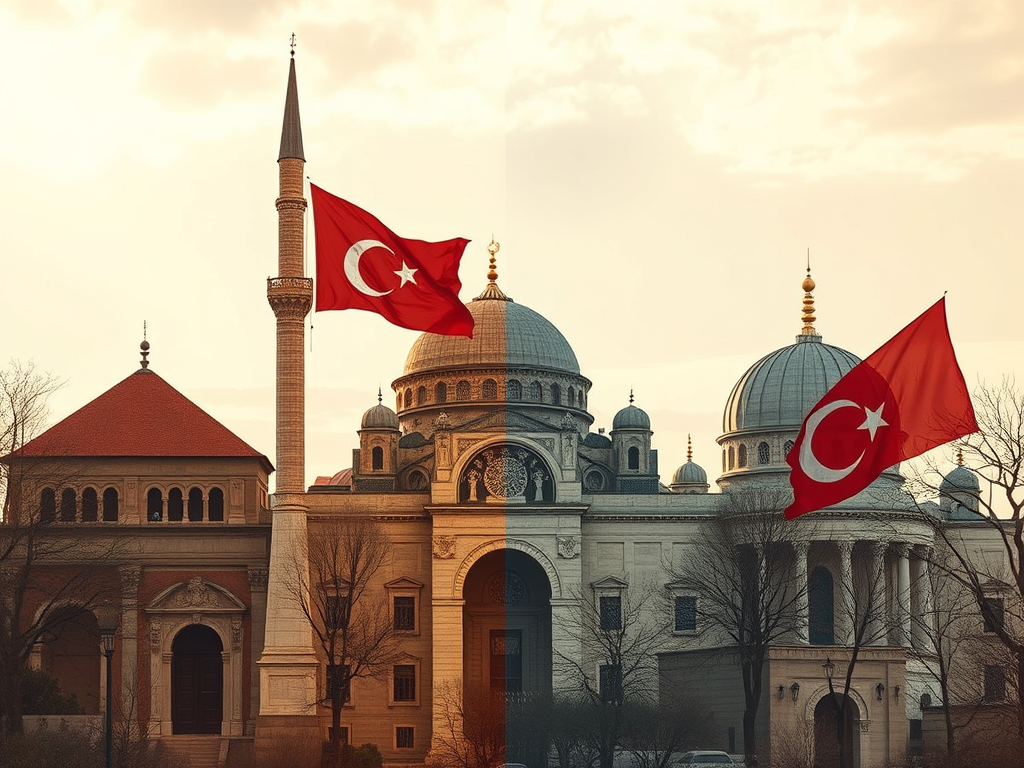
Put into Perspective
Turkey occupies a unique position as a country bridging Europe and Asia, combining a rich history, strategic importance, and complex social and political dynamics. Discussions about human rights in Turkey often attract attention in Western media, but it is important to understand the full context and the country’s perspective.
Turkey’s Human Rights Framework
Turkey is a democratic republic with a constitution that guarantees civil liberties such as freedom of expression, assembly, and religion. It is a member of the Council of Europe and a signatory to international human rights treaties. Turkey has institutions and mechanisms designed to protect human rights, including courts, ombudsmen, and civil society organisations.
However, the country faces ongoing challenges. Certain laws and regulations, particularly those designed to preserve public order and national security, can limit freedoms in ways that appear stricter than in liberal Western democracies. Turkey also contends with internal political tension, terrorism threats, and social divisions, which influence its enforcement of rights.
Common Criticisms and Misunderstandings
Western media often highlights issues such as:
- Restrictions on press freedom
- Arrests of journalists or political opponents
- Limits on public demonstrations or protests
While these concerns may have some merit, reporting is sometimes contextualised inadequately. Turkey’s authorities argue that many measures are designed to preserve national security, prevent terrorism, and maintain public order in a country that has experienced multiple security threats, internal conflicts, and attempted coups.
Comparing Turkey to Western Countries
Turkey is more authoritarian in certain aspects than liberal European countries or the USA, particularly when it comes to public order, censorship, or political dissent. However, this is often a reflection of historical, cultural, and regional factors.
- Citizens in Turkey generally accept a greater degree of state involvement in law enforcement and societal norms than in some Western countries.
- Social values are different: public behaviour, family norms, and political expression are not as liberal or relaxed as in parts of Europe or North America.
- This sense of order contributes to stability and security, but it can be misinterpreted as outright suppression if examined without local context.
Turkey’s Perspective
Turkish authorities frequently point out that:
- Security and order are prioritised to protect citizens from terrorism and organised crime.
- The country faces unusual pressures, such as hosting millions of refugees, regional instability, and ongoing geopolitical conflicts.
- Judicial and legal reforms are ongoing, including efforts to improve rights protections, digital freedoms, and access to justice.
Turkey stresses that human rights cannot be considered in isolation from national security, cultural norms, and social cohesion. Policies that appear restrictive to outsiders are often justified internally as necessary for public safety and stability.
Human Rights Achievements
Despite criticisms, Turkey has made notable progress in certain areas:
- Gender equality initiatives and legal protections for women’s rights.
- Legal reforms in child protection and domestic violence.
- Expanded access to healthcare, education, and social services for vulnerable populations, including refugees.
- Programs to support freedom of religion and minority rights, within the framework of public order.
Balancing Criticism and Context
It is fair to recognise that Turkey’s human rights record differs from Western liberal democracies. Some restrictions are genuine concerns for international observers. At the same time:
- Turkey’s approach prioritises stability, security, and social cohesion.
- Policies must be understood within regional security challenges, migration pressures, and historical context.
- Western media coverage can occasionally oversimplify or ignore local realities, creating a perception that Turkey is wholly repressive when the reality is more nuanced.
Conclusion
Human rights in Turkey are a complex, evolving issue. While the country has areas for improvement, particularly in press freedom and political expression, it also has strong motivations for maintaining public order, security, and social stability. Understanding Turkey requires recognising its context, values, and challenges, rather than applying a purely Western liberal lens.
Turkey continues to work on reforms while balancing its internal needs with international expectations — a delicate task in a country at the crossroads of Europe, the Middle East, and Asia.




Leave a Reply