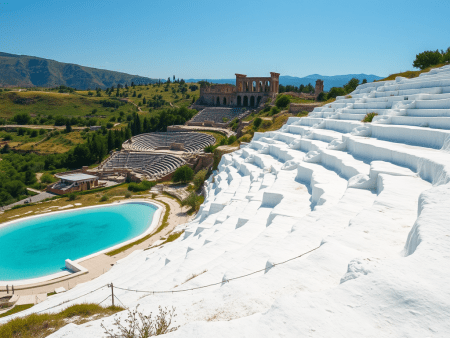
Pamukkale, meaning “cotton castle” is one of the most famous sites in Turkey. It is popular with tourists all year round. The carbonate mineral which which is deposited by the hot thermal spring waters, forms a white deposit, which cascades over the terraces to form this world famous natural phenomenon.
Situated just 17 km from the city of Denizli, this was once the site of the ancient Greek city of Hierapolis ( Holy City ). This site has been visited for thousands of years. The magical lure of inviting pools of warm water are still as much of a draw today. This amazing natural wonder of Pamukkale along with the ancient site of Hierapolis, have been recognised as a UNESCO World Heritage site since 1988.
Visitors to Pamukkale will get the chance to sit in the warm clay bottomed pools and to admire the view of the landscape before them. There is also a pool where you can swim among the ancient Roman ruins. Pamukkale is served by 17 hot springs with varying temperatures that converge on this site.
When I first visited Pamukkale in the early eighties there was evidence of damage caused by hotels diverting the hot springs for their own use. The travertine terraces at the top of the site have been closed off to tourists due to damage and careful management of the site which has helped to restore it.
Heirapolis has been around as a thermal spa since the 2nd century. Pamukkale had been an important healing and Christian city for hundreds of years. The volcanic activity under the ground forced carbon dioxide into a cave which was called Plutonium or “Place of the God of Pluto”. It was used for religious purposes.
The actual ruins of Hierapolis are located on the top of the terraces. You will find a museum, ancient amphitheatre and plenty of Roman ruins. There is a lot to explore here. The Cleopatra pools with their enticing green waters were actually artificially created but the bottom of the pools are littered with Roman ruins.
The ancient ruins of Laodicea should be on your list of places to visit. Just 6 km from Pamukkale ( Hierapolis ), it gets nowhere near the kind of numbers of tourists as Hierapolis, but it has amphitheatres, an Aogra wall, large stone columns, and plenty of informationa and ruins to look around.
45 minutes away ( 44 km from Pamukkale ) are the Kaklik Caves, a kind of underground version of Pamukkale. Definitely worth it if you have the time.
Pamukkale, Türkçeye birebir çevrildiğinde “Pamuk Kale” anlamına gelir ve Türkiye’nin en ünlü doğal güzelliklerinden biridir. Yıl boyunca hem yerli hem yabancı turistlerin ilgisini çeken bu bölge, sıcak termal suların taşıdığı kalsiyum karbonat mineralleri sayesinde oluşan bembeyaz travertenleriyle dünya çapında tanınır.
Denizli il merkezine sadece 17 km uzaklıkta bulunan bu doğa harikası, antik çağlarda Hierapolis (Kutsal Şehir) olarak bilinen antik kentin bulunduğu yerdir. Binlerce yıldır insanlar burayı hem şifalı sularından faydalanmak hem de manzaranın tadını çıkarmak için ziyaret etmektedir. Pamukkale ve Hierapolis, 1988 yılından bu yana UNESCO Dünya Mirası Listesi’nde yer almaktadır.
Ziyaretçiler burada sıcak, kil tabanlı havuzlara oturup manzaranın keyfini çıkarabilirler. Ayrıca, antik Roma kalıntıları arasında yüzebileceğiniz özel bir havuz da bulunmaktadır. Pamukkale’de farklı sıcaklıklarda 17 termal kaynak yer almakta ve bunlar travertenlerin oluştuğu bölgeye akmaktadır.
1980’li yılların başında bölge ilk kez ziyaret edildiğinde, bazı otellerin sıcak su kaynaklarını kendi tesislerine yönlendirmesi sonucu travertenlerde zarar oluştuğu görülmüştü. Bu durum sonrasında önlemler alınmış, bazı traverten alanları ziyaretçilere kapatılmış ve bölge dikkatli şekilde korunarak eski güzelliğine kavuşturulmuştur.
Hierapolis, 2. yüzyıldan beri bir termal tedavi ve inanç merkezi olarak bilinir. Yüzyıllar boyunca hem şifa hem de dini amaçlarla kullanılan bir yer olmuştur. Bölgede yer alan Plutonium Mağarası, yer altındaki volkanik faaliyetler nedeniyle oluşan karbondioksit gazı ile doludur ve antik dönemde tanrı Pluto’ya adanmış kutsal bir alan olarak kabul edilirdi.
Hierapolis’in kalıntıları travertenlerin tepe kısmında yer alır. Burada bir müze, antik tiyatro ve pek çok Roma dönemi kalıntısı bulunur. Yine burada yer alan ve yeşil sularıyla dikkat çeken Kleopatra Havuzları, yapay olarak oluşturulmuş olmasına rağmen, tabanında antik Roma sütunları ve taşlar yer almaktadır.
Pamukkale’ye çok yakın bir diğer antik şehir ise Laodikeia’dır. Hierapolis’e sadece 6 km mesafede olan bu antik kent, daha az turist çeker ancak iki tiyatro, agora duvarı, büyük taş sütunlar ve detaylı bilgi panoları ile oldukça etkileyicidir.
Eğer zamanınız varsa, Pamukkale’ye yaklaşık 45 dakika (44 km) uzaklıktaki Kaklık Mağarası da ziyaret edilmeye değerdir. Burası adeta yer altındaki bir Pamukkale görünümündedir ve farklı bir doğal güzellik sunar.




Leave a Reply