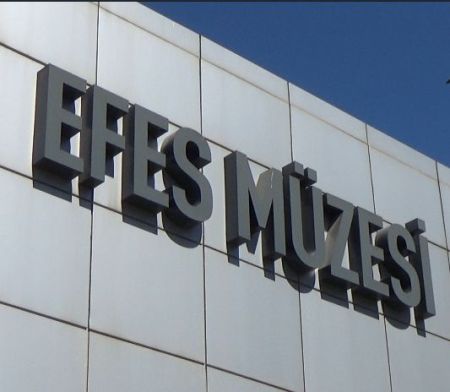
The Ephesus Archaeological Museum, or Efes Museum in Turkish, is best visited prior to going to any of the local archaelogical sites. It is located at the start of the main highway to Ephesus and near the Temple of Artemis by the Tourism Office.
Many of the statues, stones, and artifacts from nearby Ephesus can be found here. The Greek Goddess Artemis, known for her many breasts, is an example of what has been recovered from nearby ruins. Artemis was the Goddess of wild animals and the hunt, and also for chastity and childbirth. She is referred to as Diana by the Romans.
The musuem is sectioned off into different themed areas such as the Hall of Fountains, The Hall of Gladiators and the Hall of Artemis. The museum is home to over 60,000 exhibits. The two statues of Artemis, mosaics, frescoes, columns and statues from around the various archaelogical sites are presented with both English and Turkish descriptions.
Much of what was found in the early excavations of the ruins around Selcuk, was taken to the British Museum or Vienna depending on who was responsible for excavations at the time. For example, in 1869, a British Railway Engineer by the name of John Turtle Wood is credited with having discovered the remains of the Temple of Artemis, laying underground some 20 feet or some 6 metres under silted sandy ground. Sponsored by the British Museum until 1874, he was able to locate and find some very important statues and archaeological pieces that are now housed in hall 82 in the British Museum in London.
Housed in the Neue Burg in Vienna, there is another collection. This time as a result of the efforts of Otto Benndorf, Professor of Classical Archeology at the University of Vienna who would go on to become the first director of the excavations at Ephesus. The Austrian Archaeological Institute has been present at Ephesus since 1895 to the present day. Many items found were taken to Vienna before a ban on exports came into effect in 1907.
The Ephesus Museum at Selcuk was established in 1983. It was closed for several years for renovation purposes before being re opened again in 2015. The building houses Jewellery, coins, statues, fresco pieces, daily tools and weapons from the Roman and Greek era. The artifacts come from Ephesus, The Temple of Artemis and other ancient archaeological sites in the region.
There is a gift shop and cafe area in the museum and the museum is open every day of the year from 8 am to 5 pm.
Efes Arkeoloji Müzesi, Selçuk’taki antik kentlere gitmeden önce ziyaret edilmesi önerilen bir müzedir. Efes yolu üzerinde, Artemis Tapınağı ve Turizm Ofisi yakınlarında yer alır.
Müze, Efes antik kentinden çıkarılan pek çok heykel, taş ve esere ev sahipliği yapmaktadır. Özellikle çok memeli tasviriyle tanınan Yunan Tanrıçası Artemis heykelleri dikkat çeker. Artemis, vahşi doğa, avcılık, bekâret ve doğum tanrıçasıydı. Roma mitolojisinde ise Diana olarak bilinir.
Müze, farklı tematik salonlara ayrılmıştır. Örneğin: Çeşmeler Salonu, Gladyatörler Salonu.Artemis Salonu
Toplamda 60.000’den fazla eser sergilenmektedir. İki önemli Artemis heykeli, mozaikler, freskler, sütunlar ve çeşitli heykeller, Türkçe ve İngilizce açıklamalarla birlikte sunulmaktadır.
Efes ve çevresindeki kazılarda bulunan eserlerin bir kısmı, 1869 yılında İngiliz mühendis John Turtle Wood tarafından keşfedilen Artemis Tapınağı kalıntılarıyla birlikte British Museum’a gönderilmiştir. Wood, İngiliz Müzesi’nin desteğiyle 1874 yılına kadar önemli eserler çıkarmıştır. Bugün bu eserlerin bazıları, Londra’daki British Museum’da “Hall 82” bölümünde sergilenmektedir.
Viyana’daki Neue Burg Müzesi’nde de birçok Efes eseri sergilenmektedir. Bu eserler, Viyana Üniversitesi Klasik Arkeoloji Profesörü Otto Benndorf tarafından yürütülen kazılar sırasında toplanmıştır. Avusturya Arkeoloji Enstitüsü, 1895’ten günümüze kadar Efes’te faaliyet göstermektedir. 1907 yılında antik eserlerin yurtdışına çıkarılması yasaklanmadan önce birçok önemli parça Viyana’ya götürülmüştür.
Selçuk’taki Efes Müzesi, 1983 yılında açılmış, daha sonra birkaç yıl süren tadilatın ardından 2015 yılında tekrar hizmete girmiştir. Müze binasında; takılar, sikkeler, heykeller, fresk parçaları, günlük eşyalar ve Roma ile Yunan dönemlerine ait silahlar sergilenmektedir. Eserlerin çoğu; Efes, Artemis Tapınağı ve çevredeki antik kentlerden getirilmiştir.
Müze içerisinde hediyelik eşya dükkanı ve kafe alanı da bulunmaktadır. Müze, yılın her günü sabah 08:00 ile akşam 17:00 saatleri arasında ziyarete açıktır.




Leave a Reply