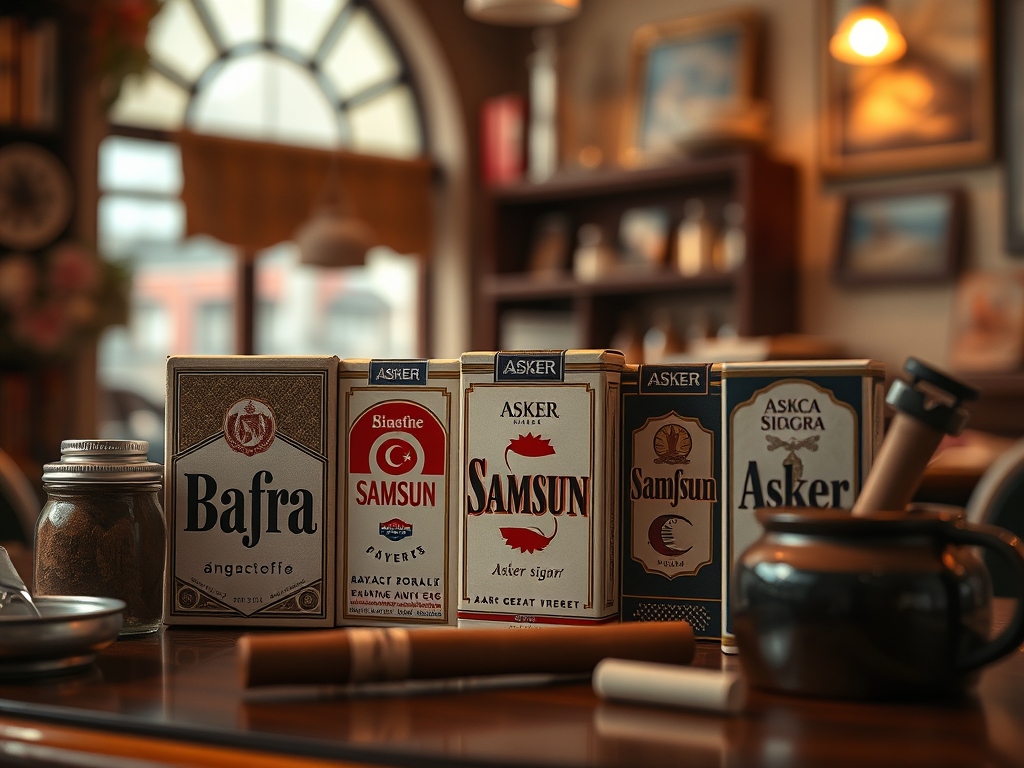
The Golden Age of Turkish Cigarettes
The Rise of the Turkish Tobacco Empire
Once upon not so long ago — say mid-20th century Turkey — smoking was everywhere. Back then, if you weren’t lighting up, people suspected you of being either very polite or just very boring. The backbone of that era’s tutti-frutti smoke culture was Tekel, the legendary state-owned monopoly, which ran virtually all tobacco and cigarette production in Türkiye.
Long before that, the heart of Turkish tobacco cultivation lay in regions like Bafra, Samsun, and the Black Sea coast more broadly. Bafra tobacco, in particular, has a storied history: as early as 1835, Bafra-grown tobacco was shipped by boat to Istanbul — and even exported through British and Austrian merchants. The qualities of Samsun tobacco leaf — slow-burning, sweet, somewhat velvet-like — made it a favorite for blending.
Famous Names from the Smoking Parlors of Yesteryear
Back in the day, Turkey had its own roster of beloved cigarette brands — far more colorful than just “Marlboro or nothing.” Among the household names were:
- Bafra — a cheap, often unfiltered classic; many older smokers remember starting with Bafra.
- Samsun (e.g., Samsun 216) — drawn from that aromatic Samsun tobacco leaf heritage.
- Maltepe — another Tekel-era staple, often mentioned alongside Samsun and Bafra.
- Asker Sigara — literally “Soldier Cigarettes,” a nostalgic nickname for the brand many soldiers smoked; popular among recruits and veterans alike.
- Silahlar Kuvvetler — a military-themed brand often smoked by members of the armed forces or fans of that aesthetic; paired in nostalgia with Asker Sigara.
- Tekel 2000 and Tekel 2001 — more “modern” blends from the Tekel lineup; after privatization, these lived on under BAT.
There were many others — Tekel had a rich portfolio, including legacy names like Birinci and Hisar, but Bafra, Samsun, Maltepe, Asker Sigara, and Silahlar Kuvvetler were among the most iconic.
What Happened to All Those Brands? The Decline of the Turkish Tobacco Monolith
Fast-forward from smoky cafés of the 1970s and 1980s, and things started to change dramatically:
- Privatization of Tekel
In 2008, British American Tobacco (BAT) bought the tobacco division of Tekel. This marked a turning point: a symbol of national-pride brands going under foreign ownership. - Factory Closures
Several Tekel factories were shut down after the take-over. Production of some classic domestic blends dwindled. - Changing Tastes & Blends
Over time, consumers shifted from all-Turkish-leaf blends to American-style ones, and price-sensitive smokers started rolling their own. - Loss of Heritage
As foreign multinationals (BAT, Philip Morris, Japan Tobacco, etc.) muscled in, many nostalgic national brands lost their original character. Only memories, museums, and occasional boutique releases preserved the legacy.
The New Smoke Bosses: Foreign Firms Move In
These days, the Turkish cigarette market is dominated by global giants:
- Philip Morris International (PMI) holds about 49% of the Turkish market.
- Japan Tobacco (JT) is around 29% share.
- Other big names like BAT, Imperial, and KT&G fill out the rest.
The smoking scene has gone from “local monopoly with character” to “international conglomerates with mass-appeal blends.”
Smoking Costs: Cheaper Than Europe!
A pack of cigarettes in Turkey costs between 80 and 140 TL (~€1.60–€2.85). Compare that to €8–€13 in most of Western Europe. Despite taxes, smoking is still dramatically cheaper in Turkey.
- High taxes exist, but mid-tier brands remain affordable.
- Many smokers switch to rolling tobacco for cost-efficiency.
- Illicit trade also keeps prices lower for some.
Where Things Stand Now: Smoker’s Paradise or Fiscal Smoke Cloud?
- Over 19 million daily smokers remain in Türkiye.
- Traditional brands like Bafra, Samsun, Maltepe, Asker Sigara, and Silahlar Kuvvetler persist in memory and sometimes on shelves, but multinational blends dominate.
- Tobacco remains a key source of government revenue, but the romantic “smoke-filled cafés of yore” have faded.
A Humorous (But Slightly Sad) Moral
Once upon a time, almost everyone in Turkey had a cigarette dangling from their lips — from tea-drinking aunties to serious grandpas in their fez. They puffed on Bafra, Samsun, Maltepe, Asker Sigara, or Silahlar Kuvvetler: names that carried the scent of Turkish soil, sun-cured leaves, and generations of habit.
Now, the scene is different. Big global tobacco companies call the shots, old brands are weaker or gone, and smoking is less a national ritual and more a commercial product. It’s cheaper than Europe, yes — but the magic of “that old familiar Turkish cigarette” has largely puffed away into nostalgia.




Leave a Reply