Ottoman History
Origins and Formation

The Ottoman Empire began as a small frontier principality in north-western Anatolia during the late 13th century. It was founded by Osman I, a leader of a Turkic group known as the Oghuz Turks, who had settled in the region after earlier migrations from Central Asia. Osman inherited leadership from his father, Ertuğrul, whose tribe had been granted land around the town of Söğüt by the Seljuk authorities.
From this modest beginning, Osman’s followers — many of them frontier warriors — carried out campaigns against weakening Byzantine territories. As Byzantine control collapsed in various regions, Osman’s principality expanded steadily. A significant early triumph was the Ottoman victory near Bapheus, which strengthened Osman’s position and attracted more warriors to his cause. The name “Ottoman” derives from the Arabic form of Osman’s name.
Key Early Leaders and Expansion
Following Osman’s death, his son Orhan continued the conquests and captured the important city of Bursa in 1326. This event marked a turning point: Bursa became the first major Ottoman capital and a centre of administration, commerce, and culture.

Under subsequent rulers, the Ottomans pushed further into both Anatolia and the Balkans. Murad I consolidated power in Europe and expanded into Thrace, while Bayezid I centralised authority and further strengthened state institutions. Although the empire suffered a temporary setback after the Battle of Ankara in 1402, it soon recovered and resumed its steady advance.
The Capitals of the Ottoman Empire
Bursa — The First Major Capital

After its capture, Bursa became the political and cultural heart of the early Ottoman state. The city’s strategic location allowed the Ottomans to control north-western Anatolia and exert increasing pressure on Byzantium. Bursa also became a centre for silk production, trade, and architecture, with early Ottoman sultans buried there.
Edirne — The European Centre

As Ottoman influence spread into Europe, Edirne (formerly Adrianople) became the new capital during the mid-14th century. From this base, the Ottomans launched campaigns deeper into the Balkans, securing territories in present-day Greece, Bulgaria, North Macedonia, Serbia, and beyond. Edirne became a thriving hub of administration and military planning.
Constantinople — The Imperial Capital
The most significant milestone came in 1453, when Mehmed II captured Constantinople, ending the Byzantine Empire. The city was transformed into the Ottoman capital and renamed Istanbul over time. Mehmet the Conqueror revitalised the city by encouraging migration, restoring infrastructure, and establishing it as a centre of imperial administration.
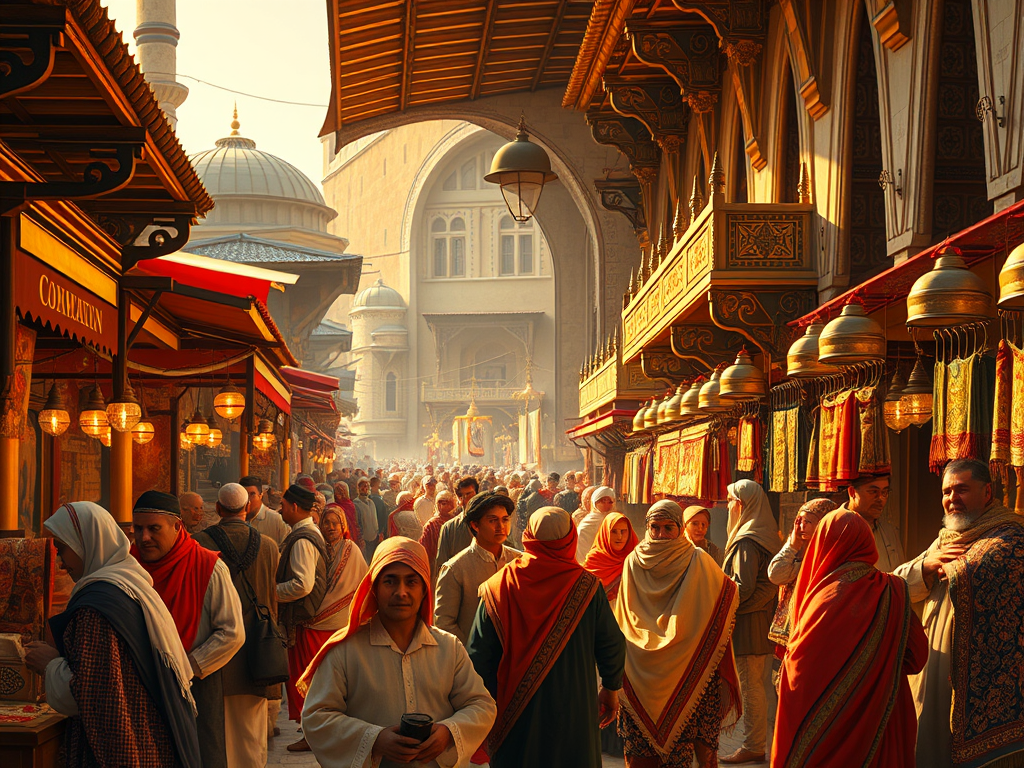
Constantinople remained the Ottoman capital for almost five centuries. It became one of the most diverse and cosmopolitan cities in the world, home to Muslims, Christians, Jews, merchants, artisans, diplomats, and scholars from across three continents. Its location at the intersection of Europe and Asia gave the empire immense political and economic influence.
The Height and Legacy of the Empire

At its peak, the Ottoman Empire controlled a vast region stretching from Central Europe to North Africa and the Arabian Peninsula. Its longevity — more than 600 years — was supported by flexible governance, efficient administrative systems, religious tolerance in many periods, and a powerful military structure, including the elite Janissary corps.
Ottoman architecture, law, culinary traditions, and art left a lasting imprint on the Middle East, the Balkans, and Anatolia. The empire also played a major role in trade and diplomacy between East and West.
The Ottoman Empire eventually declined due to internal challenges, military defeats, nationalist movements, and external pressures. After the First World War, the empire was dissolved and abolished in 1922, paving the way for the founding of the modern Republic of Turkey.



Leave a Reply