The white pearl of Turkish gatherings — an affectionate, fact-filled romp through its history
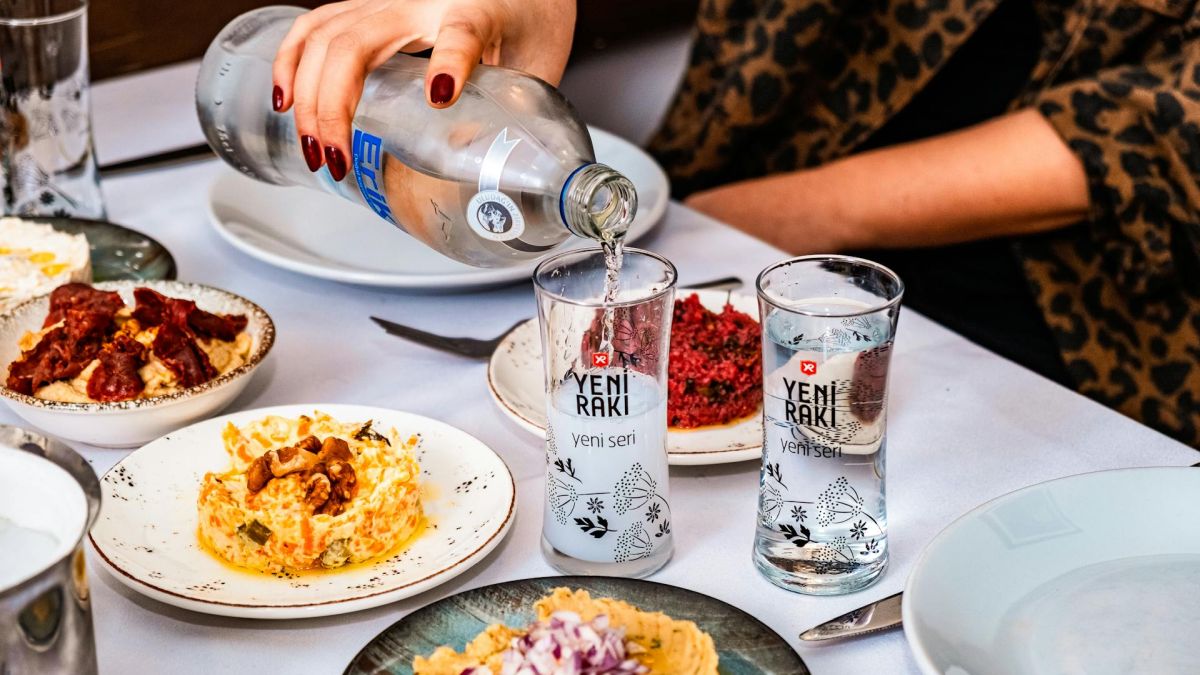
If you’ve ever been invited to a Turkish table where the conversation loosens and the songs get louder after the main course, you’ve probably met rakı: clear as a confession when poured, milky as myth when water’s added, and stubbornly persuasive in its insistence on being shared. Revered by older generations for turning barbecues into epics and family meals into small festivals, rakı is more than a drink — it is a social ritual, a chemistry experiment and, occasionally, the cause of tomorrow’s sore head and brilliant memory in equal measure.
A short history that keeps getting longer
Pinning down a single origin for rakı is like trying to arrest a cloud: it has cousins and ancestors across the eastern Mediterranean and its story is braided with empire, monasteries, vineyards and tavern talk. The first written mentions of a spirit resembling rakı appear in Ottoman travel literature — the famous traveller Evliya Çelebi noted such drinks in the early 17th century — but the craft of distilling grape-based spirits in Anatolia goes back far earlier, entwined with the region’s long winemaking history. Over centuries, home distillation gradually gave way to factory production and, eventually, to branded bottles.
In the Ottoman era, spirits were largely produced locally by families, monasteries and small meyhanes (taverns). A significant step towards industrial-scale rakı came in the 20th century with state involvement: Tekel (the state tobacco and alcoholic beverages monopoly) played a formative role in organising production in the early Republican era and the legacy of those factories still colours how many Turks think of authenticity today. Modern corporate players such as Mey (and international successors like Diageo in parts of the sector) trace their histories back through these state structures.
How rakı is made (the short, tasty version)
At its simplest rakı is suma (a grape distillate) that is re-distilled with aniseed. In plain steps:
- Grapes (or sometimes dried grapes/raisins or even figs in local specialities) are fermented into wine or fermented mash.
- The ferment is distilled to make suma — a raw grape spirit.
- That suma is distilled again, together with aniseed (Pimpinella anisum), usually in copper stills, producing the fragrant, high-strength spirit we call rakı.
- The distillate may be rested and blended, the alcohol adjusted and the liquid bottled at 40–50% ABV depending on the style. When cold water is added, the anise oils emulsify and the clear spirit turns cloudy — the toilette de lion, or “lion’s milk”.
Why does it louche (go milky)? Because anethole — the aromatic oil from aniseed — is soluble in alcohol but not nearly as soluble in water. Add water and the oil forms a fine suspension, scattering light and producing the characteristic opalescent white.
The rakı table: etiquette, meze and memories
For many Turkish families — especially older generations — rakı is inseparable from the rakı sofrası: a low, extended table of mezes (small dishes), a slowly consumed bottle, stilted toasts and the inevitable cycle of stories. In summer, a charcoal barbecue might finish with a tray of melon and cheese and, before the plates are cleared, someone fetches the rakı with ice and a carafe of chilled water. Glasses are filled slowly, conversation slows and grows more intimate, and the evening is measured not in minutes but in convivialities. These memories — of aunts complaining about a nephew’s haircut, of fishermen’s tall tales, of a grandfather singing an old Anatolian tune — are as much part of rakı’s appeal as its flavour. (If you’re reading as a non-drinker: rakı is a social Wi-Fi; it gets everyone connected.)
Rakı vs ouzo (and other aniseed cousins)
Across the Mediterranean there’s a whole family of anise-flavoured spirits: ouzo (Greece), pastis (France), arak/araq (Levant), sambuca (Italy) and grappa/tsipouro variants in the Balkans. How does rakı compare?
- Base material: Rakı is traditionally grape-based (suma), like ouzo and arak, whereas pastis is usually neutral spirit with anise flavouring. Some regional rakıs were historically made from figs.
- Production: Rakı is often distilled twice and usually incorporates suma re-distilled with anise; ouzo is typically distilled with aromatics or flavoured afterwards. The copper-still, fractional distillation approach gives rakı its particular richness.
- Alc./strength and mouthfeel: Rakı tends to be served at higher ABV (commonly 40–50%) and is prized for a bold, vinosity under the anise, whereas ouzo can feel a touch lighter and more herbal (although generalisations are slippery here).
- Cultural role: Both rakı and ouzo are social drinks, ritualised with food and song, but rakı’s identity is very specifically Turkish — the rakı sofrası is almost a cultural artefact in its own right.
A few rakı anecdotes (because history loves a good anecdote)
- The phrase aslan sütü (“lion’s milk”) is a colloquial fondness: rakı is strong, but dignified — the milk of the brave.
- In the early Republican era, state regulation of production (the İnhisar/TEKEL system) meant that many regions drank the same “official” rakı; later, local producers and private brands reintroduced regional variety.
- The rakı glass is tiny. It’s not drama — it’s concentration. Sip, savour, talk, refill. Repeat.
How older generations remember rakı
If you listen to older Turks talk about rakı they’ll seldom speak about it as a solitary indulgence. It is memory-thick: a bottle brought to a family barbecue that stretched into sunset, rakı poured after a marriage feast to steady nerves and remove the floral aftertaste of an overcooked dessert, neighbours slipping into each other’s homes for a single glass that became three hours of confessions. For many, rakı is a condiment for recollection — a sensory shortcut to the past.
Top 10 rakı producers in Turkey (with Tekel placed first, as requested)
Below is a friendly, user-requested list of notable producers. “Tekel” is placed first here as the historic and culturally authoritative producer many Turks still name when they think of authentic rakı; the modern marketplace features private companies and brands that grew from or sit alongside that legacy. Where helpful, I’ve added a short descriptor. (This list blends historic importance, popularity and recognisable brands — not a rigorous market share ranking.)
- TEKEL — The historical state monopoly that organised and standardised much of Turkey’s early 20th-century rakı production; Tekel’s factories and reputation shaped the idea of “authentic” rakı for generations. (Today the sector has been privatised and reorganised; Tekel’s legacy remains culturally central.)
- Yeni Rakı (Mey/Diageo heritage) — The most widely recognised commercial rakı brand; a fixture on many tables. yeniraki.com
- Tekirdağ Rakısı (Mey) — Hails from the Tekirdağ region and is famed for a balanced, classic style. Taste Turkey
- Efe Rakı — Known for introducing “fresh-grape” styles and a range that appeals to both tradition and modern tastes.
- Altınbaş — A brand often cited for robust, traditional expressions (popular among connoisseurs).
- İzmir Rakısı — Represents Aegean character: a fresher, more coastal palate.
- Beylerbeyi / Beyler — Boutique and regionally celebrated rakı-makers with a loyal following.
- Kulüp / Sarı Zeybek (and similar regional labels) — Popular mid-market brands often praised for value and tradition.
- Sümer / Hünkar — Traditional-style producers with niche lines and limited editions.
- Smaller craft and regional distillers — Turkey’s artisan rakı producers (including local fig and fresh-grape varieties) increasingly populate the market and deserve a slot on any top-10 list for innovation and terroir.
Final sip: why rakı still matters
Rakı manages the rare feat of being both everyday and ceremonial. It is conviviality in a bottle: aniseed-perfumed, stubbornly milky when watered, and always happiest when poured for others. It narrates a nation’s tastes, carrying the memory of shorelines and taverns, of smoky kebabs and small astonishments. For older generations especially, a bottle of rakı is postal service for nostalgia — a way to deliver voices from the past to the present table.
So, whether you approach rakı as a curious taster, a respectful drinker or a person tasked with soothing an uncle’s wounded pride after a lost football bet, do as generations have done: bring food, bring friends, pour slowly, add chilled water and let the conversation do the rest. As the old rakı adage might go (if there was an adage like that): rakı is best when it’s not the only thing you remember from the night.




Leave a Reply