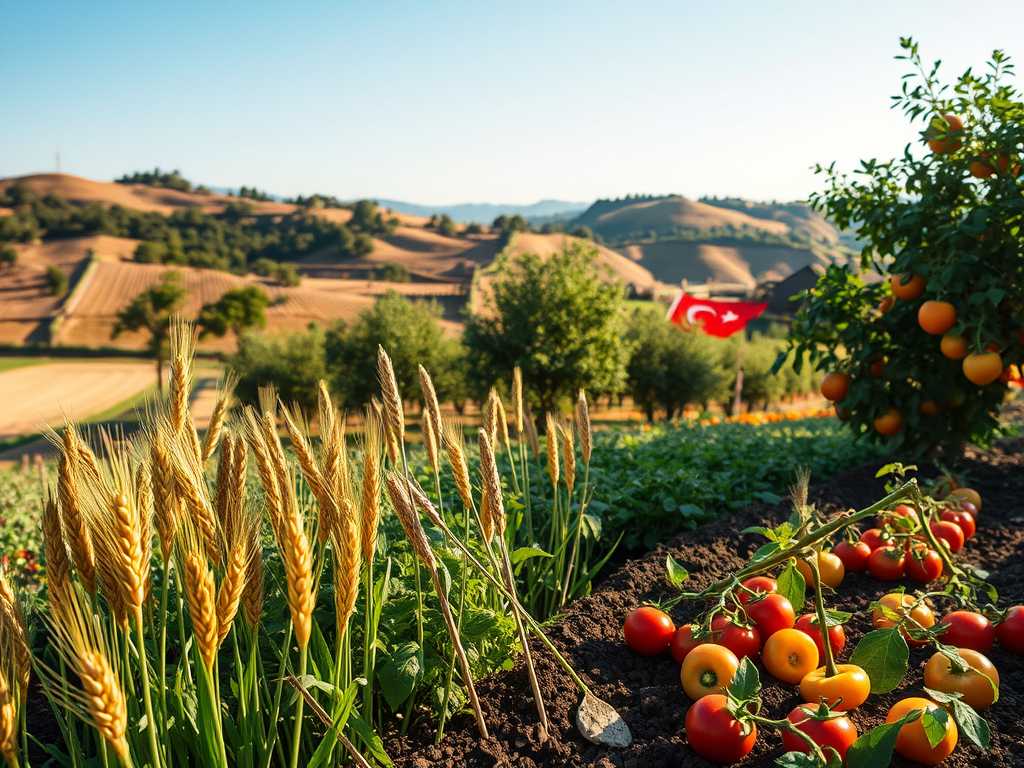
Strength, Self-Sufficiency and a Growing Global Role
Turkey’s food production system is remarkably resilient and diverse, thanks to its fertile soils, climate variety and rich agricultural heritage. Food production plays a central role in its economy and culture, with millions of people depending on farming, fishing and related industries for their livelihoods. Over the years, the country has blended traditional practices with modern techniques to build a strong, multifaceted and increasingly sustainable food landscape.
How Self-Sufficient Is Turkey?
Turkey enjoys a high degree of self-sufficiency in many staple foods — but not all. Recent figures show that it often produces more than it needs for key agricultural products:
- Cereals overall have a sufficiency ratio of over 110%, meaning Turkey typically has a surplus in its cereal production.
- Wheat stands out, with self-sufficiency well over 100%, especially for durum wheat, where production can be more than double domestic needs.
- Vegetables also show strong self-sufficiency, with production over 110% of national consumption for many vegetable types.
- On the other hand, certain oilseeds are much less self-sufficient — for example, soybeans meet only a small fraction of domestic demand (around 4 % in recent years).
These numbers mean that while Turkey is very secure in many of its basic food supplies, it still depends on imports for key feed and processing inputs like soy and other oilseeds.
What Does Turkey Export?
Turkey is renowned for exporting high-value agricultural products. Its most significant exports include:
- Hazelnuts, a global market leader
- Dried fruits, especially figs, raisins and apricots
- Wheat flour and pasta, shipped around the world
- Fresh fruits and vegetables, such as citrus fruits, grapes, cherries and tomatoes
- Olives and olive oil, especially from the Aegean region
These exports demonstrate Turkey’s capacity not only to feed itself but to compete strongly on global food markets.
Key Agricultural Sectors
Crop Farming
Cereals like wheat and barley are staples of Turkey’s fields. Fruit and vegetable production is extremely diverse — from tomatoes and apples to peppers and grapes — and nuts such as hazelnuts, pistachios and almonds are among the country’s signature crops.
Livestock and Dairy
Animal husbandry remains a cornerstone of Turkish agriculture. The dairy sector, alongside poultry and meat production, supplies both local and export markets. Sheep and goat farming, especially in rural regions, continues to be significant.
Processed Foods
Turkey’s food-processing industry is developed and varied: it produces flour, pasta, tomato paste, canned goods, dried fruit and many value-added products. This gives Turkey strong export capacity beyond just raw agricultural produce.
Orchard & Plantation Agriculture
Olive groves, citrus plantations, vineyards and tea fields contribute strongly to Turkey’s agricultural identity. These sectors are vital both for domestic consumption and for export.
Fishing and Aquaculture
Beyond its rich farmland, Turkey’s long coastlines — along the Black Sea, Aegean, Mediterranean and the Sea of Marmara — support a thriving fishing and aquaculture industry.
- Wild Fishing: The country’s coastal waters are home to anchovy, bluefish, mackerel, bonito and sardines. Local fishing communities depend on these catches for both income and local food supply.
- Aquaculture: Turkey has rapidly expanded its fish-farming operations, especially for species like sea bass, sea bream and trout. These are farmed in coastal regions and increasingly exported, bolstering both domestic consumption and trade.
- Seafood in the Diet: Fish is deeply embedded in Turkish cuisine, particularly in coastal areas, featuring in everything from seafood mezes to grilled fish sandwiches.
A Look at Turkey’s Agricultural History
Agriculture has been deeply rooted in Anatolia for millennia. In modern Turkey, land reform, expanded irrigation and mechanisation have transformed farming. Over decades, small family farms have gradually adopted modern machinery, while government support and private investment have pushed agricultural production into new, more efficient directions.
In recent years, greenhouse farming, precision agriculture and smarter water-management systems have become more common. These advances, paired with a supportive policy environment, continue to modernise Turkey’s food sector.
Challenges Facing Turkish Agriculture and Fishing
Turkey’s food systems, while strong, are not without challenges:
- Water Scarcity: Agriculture is highly water-intensive, and climate change is placing increased pressure on water resources.
- Small, Fragmented Farms: Many farms remain small and dispersed, which can hinder large-scale efficiencies and mechanisation.
- Environmental Concerns: Soil degradation, nutrient runoff and overuse of fertilisers are real issues in some regions. In fisheries, there are risks of over-fishing in certain zones.
- Dependence on Imports for Key Inputs: Low self-sufficiency in oilseeds and some feed ingredients exposes producers to global price fluctuations.
- Rising Costs: Energy, fertiliser and transport costs continue to increase, squeezing producers’ margins.
Future Direction and Opportunities
Looking ahead, there are many promising directions for Turkish food production:
- Smart Water Management: Investing further in efficient irrigation and water-conservation techniques will be essential.
- Greenhouse and Controlled-Environment Farming: These methods can boost productivity and reduce water use, particularly for vegetables and fruits.
- Sustainable Aquaculture: Expanding fish farming in an environmentally responsible way offers great potential.
- Premium, Value-Added Products: Turkey can further capitalise on its strengths in nuts, olive oil, dried fruit and processed foods.
- Digital and Precision Agriculture: Technologies that optimise inputs and monitor yields will help both small and large farms.
- Export Strategy: By positioning itself as a regional food hub, Turkey can deepen its reach into Europe, the Middle East and Eurasia.
- Support for Farmers: Continued financial and technical support for smaller farms will be vital in ensuring inclusive growth.
Conclusion
Turkey’s food production system is an exceptional blend of tradition and modernity. With strong self-sufficiency in many staples, a world-class export portfolio, a dynamic aquaculture sector, and a deep-rooted agricultural heritage, the country is a central player in global food systems. While challenges remain — notably around water, farm structure and import dependence — Turkey’s commitment to innovation, sustainability and value-added production makes its agricultural future very promising.






Leave a Reply