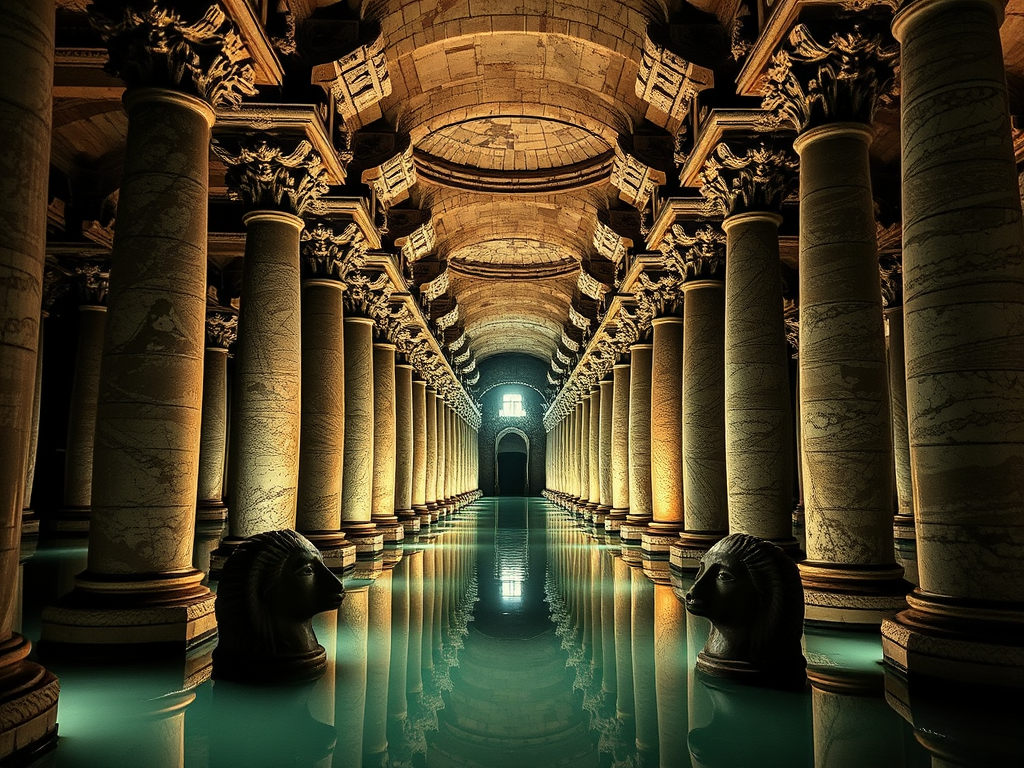
Hidden beneath the bustling streets of Istanbul lies one of the city’s most mysterious and atmospheric landmarks, the Basilica Cistern. Known in Turkish as Yerebatan Sarnıcı, which means “the Sunken Cistern”, this vast underground structure is located in the heart of the historic Sultanahmet district, just a short walk from Hagia Sophia, the Blue Mosque and Topkapı Palace. It is one of the most extraordinary remnants of the Byzantine Empire, offering a glimpse into the advanced engineering and architectural brilliance of the 6th century.
The Basilica Cistern was built during the reign of Emperor Justinian I around 532 AD. It was designed to supply water to the Great Palace of Constantinople and other important buildings in the area. Water was transported to the cistern through aqueducts from the Belgrade Forest, more than 19 kilometres away. The reservoir measures approximately 140 metres by 70 metres and is supported by 336 marble columns arranged in 12 rows. Many of these columns were recycled from earlier Roman temples, each with unique carvings and capitals, giving the cistern a striking and somewhat otherworldly appearance.
During the Ottoman period, the cistern continued to provide water, mainly to the Topkapı Palace gardens, though over time its use declined and it eventually fell into obscurity. For centuries, its existence was almost forgotten until it was rediscovered in the 16th century by a Dutch traveller, Petrus Gyllius, who was researching Byzantine relics in Istanbul. Local residents had told him that they could draw water, and sometimes even catch fish, through holes in their basements. Following his investigation, Gyllius revealed to the world this massive subterranean structure hidden beneath the city.
In later centuries, the cistern suffered from neglect and periods of disrepair. Restoration work began in the 1960s under the supervision of the Istanbul Municipality, when it was cleaned and reopened to the public in 1987 as a museum. Further renovations have been carried out since then, including modern lighting and walkways that allow visitors to explore the dimly lit forest of columns while listening to soft music echoing off the water.
Among the most famous features of the Basilica Cistern are the two Medusa heads that form the bases of two columns in the northwest corner. Their origin and positioning remain a mystery. One is placed upside down, the other sideways, leading to numerous legends and interpretations. Some believe they were used simply for structural reasons, while others see them as a symbolic gesture to neutralise the mythical power of Medusa’s gaze.
Today, the Basilica Cistern is one of Istanbul’s most visited and photographed landmarks. It offers a rare combination of history, architecture and atmosphere, transporting visitors back to the days of Byzantium. Its cool, dimly lit corridors and reflections of columns on the shallow water create an unforgettable experience that captures both the majesty and the mystery of ancient Constantinople beneath the modern city.
İstanbul’un hareketli sokaklarının altında, şehrin en gizemli ve büyüleyici simgelerinden biri olan Yerebatan Sarnıcı gizlenmiştir. İngilizcede “Basilika Sistern” olarak bilinen bu ad, “Batık Sarnıç” anlamına gelir. Bu devasa yer altı yapısı, tarihi Sultanahmet semtinin kalbinde, Ayasofya, Sultanahmet Camii (Mavi Camii) ve Topkapı Sarayı’na yalnızca kısa bir yürüyüş mesafesinde yer alır. Bizans İmparatorluğu’ndan günümüze ulaşan en etkileyici kalıntılardan biri olan sarnıç, 6. yüzyılın gelişmiş mühendislik ve mimari dehasına dair eşsiz bir bakış sunar.
Yerebatan Sarnıcı, İmparator I. Justinianus döneminde, yaklaşık 532 yılında inşa edilmiştir. Sarnıcın amacı, Büyük Saray ve çevresindeki önemli yapılara su sağlamaktı. Su, Belgrad Ormanı’ndan getirilen kemerlerle, yaklaşık 19 kilometrelik bir mesafeden taşınıyordu. Yaklaşık 140 metreye 70 metre ölçülerinde olan bu devasa su deposu, 12 sıra halinde düzenlenmiş 336 mermer sütun üzerine kuruludur. Bu sütunların çoğu, eski Roma tapınaklarından getirilen yapılardır ve her biri kendine özgü oymalar ve başlıklarla süslenmiştir. Bu da sarnıca hem etkileyici hem de gizemli bir görünüm kazandırır.
Osmanlı döneminde sarnıç, özellikle Topkapı Sarayı bahçelerine su sağlamaya devam etti, ancak zamanla kullanımı azaldı ve unutulmaya yüz tuttu. Yüzyıllar boyunca neredeyse tamamen unutulan sarnıç, 16. yüzyılda Hollandalı gezgin Petrus Gyllius tarafından yeniden keşfedildi. Bizans kalıntılarını araştırmak için İstanbul’a gelen Gyllius, bazı yerli halkın evlerinin bodrum katlarından su çekebildiklerini ve hatta bazen balık tuttuklarını duymuştu. Yaptığı incelemeler sonucunda, bu devasa yer altı yapısını ortaya çıkararak dünyaya tanıttı.
Sonraki yüzyıllarda sarnıç ihmal edildi ve zamanla harap hale geldi. 1960’larda İstanbul Belediyesi tarafından başlatılan restorasyon çalışmalarıyla temizlenip onarıldı ve 1987 yılında müze olarak yeniden ziyarete açıldı. O tarihten bu yana modern aydınlatmalar ve yürüyüş platformları eklenerek, ziyaretçilerin suyun üzerindeki sütun ormanını loş bir atmosferde keşfetmesi sağlanmıştır.
Yerebatan Sarnıcı’nın en ünlü özelliklerinden biri, kuzeybatı köşesinde yer alan iki sütunun altında bulunan Medusa başlarıdır. Bu heykel başlarının kökeni ve neden o şekilde yerleştirildiği hâlâ bilinmemektedir. Bir tanesi ters, diğeri yan konumda durur; bu durum sayısız efsane ve yoruma yol açmıştır. Kimileri bu yerleştirmenin sadece yapısal bir tercih olduğunu söylerken, kimileri de Medusa’nın bakışlarının lanetli gücünü etkisiz hale getirmek için sembolik bir anlam taşıdığına inanır.
Bugün Yerebatan Sarnıcı, İstanbul’un en çok ziyaret edilen ve fotoğraflanan tarihi eserlerinden biridir. Tarih, mimari ve mistik atmosferin eşsiz bir birleşimini sunarak ziyaretçileri Bizans dönemine götürür. Loş ışıklar altında parlayan sütunlar ve sığ suya yansıyan görüntüler, hem kadim Konstantinopolis’in görkemini hem de modern İstanbul’un altındaki gizemli güzelliği yansıtan unutulmaz bir deneyim sunar.




Leave a Reply