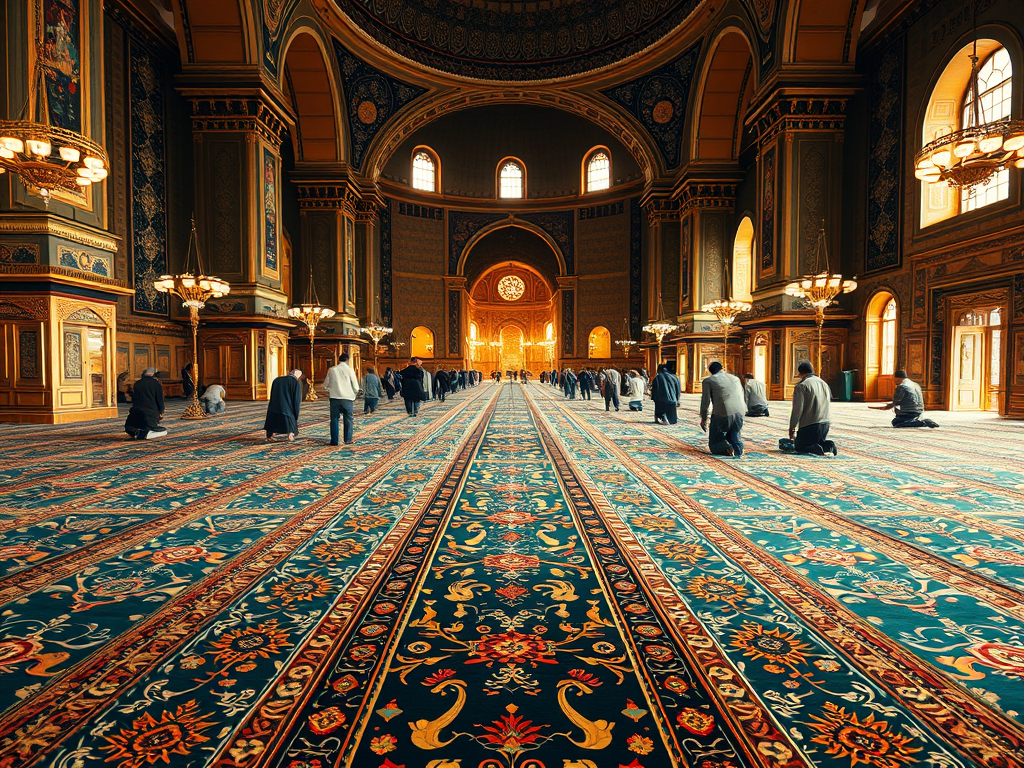
Mosque carpets, known in Turkish as cami halısı, are specially designed floor coverings created to meet both the functional and spiritual requirements of worship spaces. Unlike ordinary household carpets, mosque carpets are produced in large rolls to cover wide, continuous areas where many people gather to pray. Their patterns help worshippers form straight rows, known as saff, ensuring order during prayer. Comfort, durability and design are all carefully balanced so that these carpets can endure heavy foot traffic, daily use and frequent cleaning while maintaining their beauty and sense of reverence suitable for a sacred environment.
The materials used in mosque carpets can vary according to budget and purpose. High-quality carpets are often made from pure wool, prized for its natural softness, resilience and warmth, while more economical versions are made from acrylic or polypropylene fibres that offer good durability and easy maintenance. Regardless of material, the essential features remain consistent and include the following:
Key Features:
- Non-slip backing for safety and stability
- Flame retardant and anti-bacterial materials
- Easy-to-clean, stain-resistant surfaces
- Dense weaving for long-lasting durability
- Pattern orientation towards the qibla (direction of prayer)
- Saff line or mihrab pattern options for alignment
- Comfortable pile height suitable for kneeling and standing
Design plays a major role in the production of mosque carpets. The colour and pattern of each carpet are chosen to harmonise with the mosque’s interior, its domes, arches and lighting. Traditional Ottoman, Seljuk and geometric motifs are commonly used, while some modern designs favour minimal lines and soft tones that blend with contemporary architecture. In larger mosques, the design often incorporates directional motifs that point towards the mihrab, helping worshippers align correctly during prayer.
Turkey has long been one of the world’s leading producers and exporters of mosque carpets, blending centuries of weaving tradition with modern technology. The country’s well-established textile industry and skilled craftsmanship have made Turkish mosque carpets highly sought after in both domestic and international markets. Turkish manufacturers produce carpets in a wide range of materials, patterns and price points, offering options that suit small local mosques as well as grand architectural projects abroad.
Reasons for Turkey’s success in mosque carpet exports:
- Strong tradition of carpet weaving dating back centuries
- Modern production facilities capable of mass manufacturing
- Skilled craftsmanship and design expertise
- Competitive pricing combined with high quality
- Wide choice of materials including wool, acrylic and blended fibres
- Experience in exporting and custom project fulfilment
- Ability to produce custom designs and sizes
Several Turkish companies are recognised internationally for their mosque carpet production. Özkul Halı, one of the oldest manufacturers, has been producing carpets since the early 1900s and is known for its 100 per cent wool mosque carpets certified by Woolmark and Wools of New Zealand. TheCarpet and Çalışkan Halı, both based in major textile centres, are known for their large-scale production capacity, supplying mosque carpets to many countries. Çelebizade Halı and Ferahnur Halı specialise in advanced technical features, including non-flammable, anti-allergic materials and custom installation services. Each of these companies demonstrates the diversity and strength of Turkey’s carpet manufacturing sector.
For importers and distributors, mosque carpets represent a stable and growing export opportunity. As new mosques and Islamic centres are built worldwide, demand continues to increase for high-quality, durable and aesthetically refined carpets. Turkish producers are well equipped to meet this demand, offering not only products but complete solutions including design, production, packaging and international shipping.
Practical considerations for importers:
- Confirm material type and quality (wool, acrylic or blended fibres)
- Specify pile height, roll width and pattern orientation
- Check fire safety, hygiene and anti-slip certifications
- Request product samples and production specifications before purchase
- Verify export and delivery terms such as FOB or CIF
- Ensure proper packaging for long-distance shipping
- Arrange after-sales support for maintenance and replacement if required
The global market for mosque carpets continues to expand, and Turkish manufacturers remain at the forefront due to their heritage, innovation and reliability. Whether adorning the grand mosques of Istanbul or community prayer halls abroad, Turkish mosque carpets continue to combine comfort, practicality and timeless design. They stand as a symbol of Turkey’s enduring craftsmanship and cultural contribution to Islamic art and architecture, ensuring that each place of worship retains both beauty and purpose for generations to come.
Appendix: Importing Mosque Carpets into the United Kingdom
Importing mosque carpets into the UK requires several key documents and compliance with customs regulations. The importer must hold a valid EORI (Economic Operators Registration and Identification) number and use the correct commodity code for carpets, typically within HS heading 5703. A full commercial invoice and packing list are needed, along with a customs declaration made through the UK’s Customs Declaration Service. These documents must clearly state the description, value, and origin of the carpets. In some cases, a certificate of origin may be required, particularly if the importer wishes to benefit from preferential tariff rates under a trade agreement.
Most mosque carpets do not require special import licences unless they contain restricted materials, but it is always advisable to confirm this before shipping. Import VAT is usually charged at the standard rate of 20%, while customs duty depends on the carpet’s material and country of origin. Under the UK Global Tariff, many textile goods attract duty between 0% and 8%. Carpets classified under HS code 5703—such as tufted or woven types—typically fall within this range.
Importers should retain all customs documentation, invoices, and proof of payment for a minimum of four years. For carpets destined for public spaces such as mosques, compliance with UK product safety and fire-resistance regulations may also be required. If the carpet is produced in a country with a trade agreement with the UK, the importer may qualify for reduced or zero customs duty, provided valid proof of origin is submitted.
This process ensures that mosque carpets imported into the UK meet both fiscal and regulatory obligations, allowing them to be traded, installed, and used without complications.





Leave a Reply