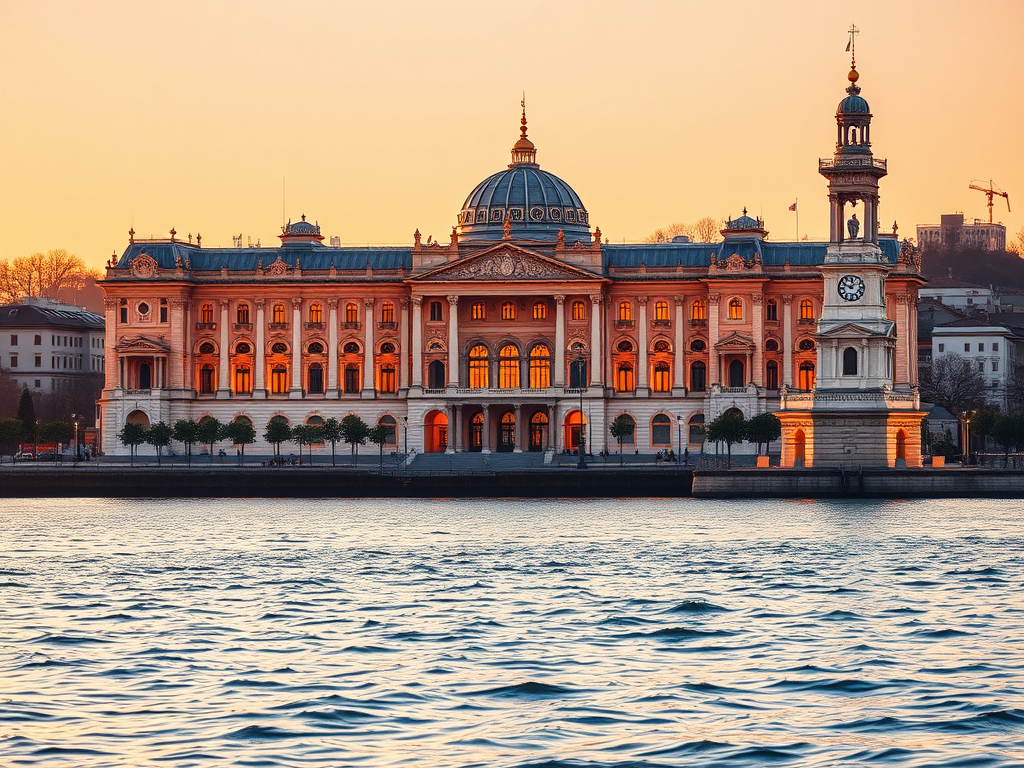
Dolmabahçe Palace is one of the most magnificent landmarks in Istanbul, standing proudly along the European shore of the Bosphorus. Located in the Beşiktaş district, it lies just a short distance from the Beşiktaş football stadium, forming an impressive stretch of architecture and history against the shimmering waters of the strait. The palace marks a defining period in Ottoman history when the empire embraced European influence and sought to modernise while still maintaining its imperial splendour.
The construction of Dolmabahçe Palace began in 1843 under the orders of Sultan Abdülmecid I and was completed in 1856. The sultan wanted a residence that would rival the grand palaces of Europe and reflect the changing face of the Ottoman Empire. The result was a stunning blend of Baroque, Rococo and Neoclassical styles fused with traditional Ottoman elements. It replaced Topkapı Palace as the main royal residence, symbolising the empire’s shift from its old, medieval character to a more modern and cosmopolitan identity.
Inside, Dolmabahçe Palace is a vision of opulence. The interiors are lavishly decorated with crystal chandeliers, marble staircases, gilded ceilings and handwoven silk carpets. The palace contains 285 rooms, 46 halls, and 68 toilets, all meticulously designed to impress foreign dignitaries and showcase the empire’s grandeur. The most famous feature is the Ceremonial Hall with its enormous Bohemian crystal chandelier, weighing 4.5 tonnes and containing 750 lamps. This chandelier, said to be a gift from Queen Victoria, remains one of the largest in the world.
Visitors to the palace today can explore its many halls and chambers, walking through spaces once used by sultans and visiting dignitaries. The palace also holds historical importance as the place where Mustafa Kemal Atatürk, the founder of modern Turkey, spent his final days and passed away in 1938. His bedroom remains preserved as a national memorial, with the clock in the room stopped at the exact time of his death at 9:05 a.m.
Just outside the palace grounds stands the Dolmabahçe Mosque, built between 1853 and 1855 by order of Bezmialem Valide Sultan, the mother of Sultan Abdülmecid I. The mosque mirrors the palace’s elegance with its neoclassical and baroque design, featuring tall, graceful minarets and large windows that flood the prayer hall with light. Its ornate interior and proximity to the Bosphorus make it one of the most picturesque mosques in Istanbul.
Next to the mosque, the Dolmabahçe Clock Tower adds another layer to this grand ensemble. Constructed between 1890 and 1895 during the reign of Sultan Abdülhamid II, the four-storey tower stands proudly at the entrance to the palace. The clock mechanism was crafted by the renowned French clockmaker Paul Garnier and later adjusted by German clockmaker Johann Mayer. The tower’s elegant design and detailed ornamentation reflect the late Ottoman era’s fascination with European aesthetics and precision engineering.
Together, the palace, mosque, and clock tower form a remarkable complex that captures the elegance and transformation of the Ottoman Empire during the 19th century. Their setting along the Bosphorus, with the modern Beşiktaş stadium nearby, offers a striking contrast between Istanbul’s imperial past and its contemporary energy, a vivid reminder that this city continues to bridge history, culture and modern life in one breathtaking scene.
Dolmabahçe Sarayı, İstanbul’un en görkemli simgelerinden biridir ve Boğaz’ın Avrupa yakasında gururla yükselir. Beşiktaş semtinde yer alan saray, Beşiktaş futbol stadyumuna sadece kısa bir mesafede bulunur ve Boğaz’ın ışıltılı suları boyunca uzanan etkileyici bir tarih ve mimari manzarası oluşturur. Saray, Osmanlı İmparatorluğu’nun Avrupa etkisini benimsediği ve modernleşme yoluna girdiği dönemi simgeleyen tarihi bir dönüm noktasını temsil eder.
Dolmabahçe Sarayı’nın inşası, Sultan Abdülmecid I’in emriyle 1843 yılında başlamış ve 1856’da tamamlanmıştır. Sultan, Avrupa’daki büyük saraylarla yarışabilecek, Osmanlı İmparatorluğu’nun değişen yüzünü yansıtan bir konut istemekteydi. Ortaya çıkan eser, Barok, Rokoko ve Neoklasik tarzların geleneksel Osmanlı mimarisiyle harmanlandığı muhteşem bir yapı oldu. Saray, Topkapı Sarayı’nın yerini alarak Osmanlı’nın Orta Çağ karakterinden daha modern ve kozmopolit bir kimliğe geçişinin sembolü haline geldi.
Dolmabahçe Sarayı’nın içi adeta bir ihtişam tablosudur. Kristal avizeler, mermer merdivenler, altın yaldızlı tavanlar ve ipek halılarla süslenen iç mekânlar büyüleyici bir görkem sunar. Sarayda 285 oda, 46 salon ve 68 tuvalet bulunmaktadır. Tüm detaylar, yabancı devlet adamlarını etkilemek ve imparatorluğun gücünü sergilemek amacıyla titizlikle tasarlanmıştır. En ünlü bölümü ise 4,5 ton ağırlığında ve 750 ampul içeren devasa Bohem kristal avizesiyle ünlü Muayede Salonu’dur. Kraliçe Victoria’nın hediye ettiği söylenen bu avize, dünyanın en büyük avizelerinden biridir.
Bugün sarayı ziyaret edenler, bir zamanlar sultanların ve misafir devlet adamlarının kullandığı salonları ve odaları gezebilirler. Saray aynı zamanda, Türkiye Cumhuriyeti’nin kurucusu Mustafa Kemal Atatürk’ün son günlerini geçirdiği ve 1938 yılında vefat ettiği yer olarak da tarihi bir öneme sahiptir. Atatürk’ün yatak odası ulusal bir anı mekânı olarak korunmakta olup, odadaki saat ölüm anını simgeleyen 09:05’te durdurulmuştur.
Sarayın hemen dışında, Dolmabahçe Camii yer alır. 1853 ile 1855 yılları arasında Sultan Abdülmecid’in annesi Bezmialem Valide Sultan’ın emriyle inşa edilmiştir. Cami, sarayın zarafetini yansıtan neoklasik ve barok tarzlarda yapılmış olup, uzun zarif minareleri ve geniş pencereleriyle dikkat çeker. İç mekânın süslemeleri ve Boğaz’a olan konumu, Dolmabahçe Camii’ni İstanbul’un en zarif ve fotojenik camilerinden biri haline getirir.
Caminin yanında, Dolmabahçe Saat Kulesi bu ihtişamlı bütünlüğe bir başka katman ekler. 1890–1895 yılları arasında Sultan II. Abdülhamid döneminde inşa edilen dört katlı kule, sarayın girişinde gururla yükselir. Kuledeki saat mekanizması ünlü Fransız saat ustası Paul Garnier tarafından yapılmış, daha sonra Alman saatçi Johann Mayer tarafından ayarlanmıştır. Saat kulesinin zarif tasarımı ve ince süslemeleri, Osmanlı’nın son dönemlerinde Avrupa estetiğine ve mühendislik hassasiyetine duyduğu hayranlığı yansıtır.
Saray, cami ve saat kulesi birlikte 19. yüzyıl Osmanlı İmparatorluğu’nun zarafetini ve dönüşümünü yansıtan olağanüstü bir kompleks oluşturur. Boğaz boyunca, modern Beşiktaş stadyumuna yakın konumlarıyla, İstanbul’un imparatorluk geçmişi ile çağdaş enerjisi arasındaki güçlü bir tezatı gözler önüne serer. Bu manzara, kentin tarih, kültür ve modern yaşamı tek bir büyüleyici sahnede birleştirmeye devam ettiğinin canlı bir hatırlatıcısıdır.




Leave a Reply