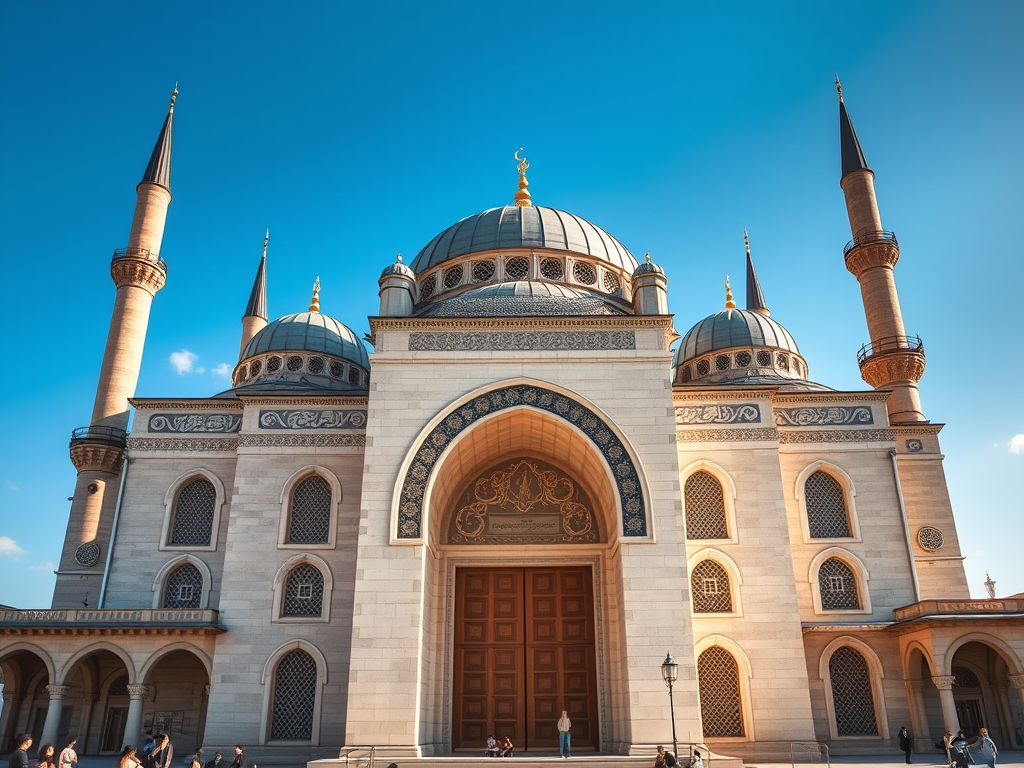
Bursa is renowned for its remarkable collection of historic mosques, each reflecting the city’s importance as the first major capital of the Ottoman Empire and its rich architectural heritage. At the heart of the city stands the Ulu Cami, or Grand Mosque, located in the Osmangazi district near the historic bazaar area. Completed in 1399 under the reign of Sultan Bayezid I, it is a masterpiece of early Ottoman architecture, notable for its twenty domes, massive wooden doors, and intricate Islamic calligraphy. The mosque served as a model for later Ottoman religious architecture and remains a central place of worship and a major tourist attraction.
Bursa was the first major capital of the Ottoman beylik after its capture in 1326, long before the empire’s centre of power shifted to Edirne and later to Istanbul. As the political and administrative heart of the early Ottoman state, the city naturally became a focal point for religious and cultural development. The rulers of the time, along with high-ranking officials and wealthy patrons, commissioned mosques, külliyes or mosque complexes, madrasas, imarets, and tombs. These projects served both spiritual and civic purposes, symbolising piety and prestige while shaping the foundations of Ottoman urban identity.
In the early Ottoman period, mosques were far more than simple places of prayer. They were part of large social and architectural complexes that included schools, mausoleums, public baths, kitchens, and lodgings. These külliyes functioned as centres of education, welfare, and social life, demonstrating the rulers’ commitment to community care and religious devotion. Many of these complexes have survived to the present day, offering a glimpse into the integrated design and social philosophy of the early Ottoman world.
As Bursa grew into a prosperous commercial and political hub, its population expanded rapidly. The demand for new neighbourhood mosques and Friday congregational mosques increased alongside the city’s development. Over time, natural disasters such as earthquakes and fires caused significant damage to many of these structures. However, reconstruction efforts not only restored but often reinterpreted the original buildings, creating layers of history and architectural evolution that can still be seen throughout the city.
The Orhan Gazi Mosque (also called Orhan Camii) is the city’s first major mosque, built in 1339 by Orhan Gazi, the second Ottoman sultan, shortly after Bursa became the Ottoman capital. It is an important example of early Ottoman architecture, featuring a simple, rectangular plan and a single large dome. The mosque is located in the historic center of Bursa, right next to the Ulu Camii (Grand Mosque).
From the earliest Ottoman rulers such as Orhan Gazi, Murad I, Bayezid I, Mehmed I, and Murad II to prominent members of the local elite, Bursa enjoyed strong traditions of charitable endowment known as vakıf. Funding the construction of mosques or külliyes was considered both a moral and spiritual duty. It was also a way to achieve social prestige, ensure community well-being, and contribute to the legacy of the empire. These acts of generosity helped establish the rich religious and cultural landscape that defines Bursa today.
Another important mosque is the Umurbey Camii, situated in the Umurbey neighbourhood to the north of the city centre. Built in the fifteenth century, this mosque is known for its elegant single-dome design and harmonious proportions. Its interior is adorned with traditional Ottoman tilework, and the structure represents the transition from early Ottoman architectural styles to more refined classical designs.
Bursa also became an experimental ground for early Ottoman architecture. Here, the transition from Seljuk and Anatolian Turkish styles to a more distinct Ottoman form began to take shape. Architectural features such as multi-domed roofs, spacious interiors, and intricate tile decoration were refined in Bursa before later being perfected in cities like Edirne and Istanbul. This period of experimentation made Bursa a key chapter in the evolution of Ottoman architectural design.
The Green Mosque (Yeşil Cami) in Bursa is a renowned example of early Ottoman architecture, built between 1419 and 1421 by Sultan Mehmed I Çelebi. It is located in the Yeşil neighbourhood of Bursa, on a hill overlooking the city, forming part of the Yeşil Külliyesi, a larger complex that includes a tomb, madrasa, bath, and fountain. The mosque is famous for its intricate green and turquoise tilework, particularly around the mihrab and minbar, which gives the mosque its name and makes it one of the most visually striking monuments in the city.
Throughout its history, Bursa has faced numerous natural disasters, including a devastating earthquake in 1855, as well as fires and wars that damaged or destroyed many historical structures. Yet each phase of rebuilding preserved traces of the past while introducing new architectural elements, ensuring that Bursa’s mosques reflect a blend of continuity and renewal. These cycles of destruction and reconstruction have enriched the city’s skyline, making it a living record of the Ottoman Empire’s enduring spiritual and artistic heritage.
Together, these mosques, and other significant mosques in the city, offer visitors a fascinating journey through the evolution of Ottoman religious architecture, showcasing a variety of designs from grand domed structures to more intimate neighbourhood mosques. Each mosque is not only a place of worship but also a testament to Bursa’s enduring role as a centre of culture, art, and spiritual life in the early Ottoman period, reflecting both the city’s historical importance and its architectural legacy.
Bursa, Osmanlı İmparatorluğu’nun ilk büyük başkenti olarak önemini ve zengin mimari mirasını yansıtan olağanüstü tarihi cami koleksiyonu ile ünlüdür. Şehrin kalbinde, tarihi çarşı bölgesine yakın Osmangazi ilçesinde yer alan Ulu Cami (Grand Mosque) bulunmaktadır. 1399 yılında Sultan I. Bayezid döneminde tamamlanan bu cami, yirmi kubbesi, devasa ahşap kapıları ve detaylı İslami hat süslemeleriyle erken Osmanlı mimarisinin başyapıtlarından biridir. Ulu Cami, sonraki Osmanlı dini mimarisine örnek teşkil etmiş olup günümüzde hem ibadet yeri hem de önemli bir turistik cazibe merkezidir.
Bursa, 1326’da Osmanlı beyliğinin ilk büyük başkenti olduktan sonra, Edirne ve sonrasında İstanbul’a taşınan imparatorluk merkezinden çok önce Osmanlı devletinin siyasi ve idari kalbi olmuştur. Bu nedenle şehir, dini ve kültürel gelişimin odak noktası haline gelmiştir. Dönemin yöneticileri, yüksek rütbeli görevliler ve zengin hayırseverler camiler, külliyeler (cami kompleksleri), medreseler, imaretler ve türbeler yaptırmıştır. Bu yapılar hem manevi hem de toplumsal amaçlar taşımış, hem dindarlığı hem de prestiji simgelemiş ve Osmanlı kent kimliğinin temellerini şekillendirmiştir.
Erken Osmanlı döneminde camiler yalnızca ibadet yeri değildi. Okullar, türbeler, hamamlar, aşevleri ve misafirhaneler gibi yapıları içeren büyük sosyal ve mimari komplekslerin bir parçasıydı. Bu külliyeler eğitim, sosyal yardım ve toplum hayatı merkezleri olarak işlev görmüş, yöneticilerin topluma ve dini hayata bağlılığını göstermiştir. Bu komplekslerin çoğu günümüze kadar ulaşmış olup, erken Osmanlı dünyasının bütünleşik tasarım ve sosyal felsefesine dair bir bakış sunmaktadır.
Bursa, ticari ve siyasi açıdan gelişen bir merkez haline geldikçe nüfusu hızla artmıştır. Şehrin gelişimiyle birlikte yeni mahalle camilerine ve cuma camilerine olan talep de artmıştır. Zamanla depremler ve yangınlar gibi doğal afetler birçok yapıya ciddi zarar vermiştir. Ancak yeniden inşa çalışmaları, bu yapıları sadece restore etmekle kalmamış, çoğu zaman orijinal yapıların yorumlanmasını da sağlayarak şehrin dört bir yanında tarih katmanları ve mimari evrim oluşturmuştur.
Orhan Gazi Camii, diğer adıyla Orhan Camii, şehrin ilk büyük camisidir. Bursa’nın Osmanlı başkenti olmasının hemen ardından 1339 yılında II. Osmanlı padişahı Orhan Gazi tarafından yaptırılmıştır. Basit dikdörtgen planlı ve tek büyük kubbeli cami, erken Osmanlı mimarisinin önemli bir örneğidir. Cami, Bursa’nın tarihi merkezinde, Ulu Camii’nin hemen yanında yer almaktadır.
Orhan Gazi, I. Murad, I. Bayezid, I. Mehmed ve II. Murad gibi erken Osmanlı yöneticilerinden yerel elitin önde gelen üyelerine kadar Bursa, vakıf geleneğiyle güçlü hayırseverlik örneklerine sahip olmuştur. Camiler veya külliyeler yaptırmak hem ahlaki hem de manevi bir görev olarak görülürdü. Aynı zamanda toplumsal prestij kazanmak, toplumu desteklemek ve imparatorluğun mirasına katkıda bulunmak için de bir yoldu. Bu cömertlik eylemleri, günümüzde Bursa’nın zengin dini ve kültürel manzarasını oluşturmuştur.
Şehrin kuzeyindeki Umurbey Mahallesi’nde yer alan Umurbey Camii de önemli bir camidir. 15. yüzyılda inşa edilen bu cami, zarif tek kubbeli tasarımı ve uyumlu oranları ile bilinir. İç mekanı geleneksel Osmanlı çini süslemeleri ile dekore edilmiştir ve yapı, erken Osmanlı mimari tarzından daha sofistike klasik tasarımlara geçişi temsil eder.
Bursa, erken Osmanlı mimarisi için aynı zamanda bir deney alanı olmuştur. Selçuklu ve Anadolu Türk tarzlarından daha belirgin bir Osmanlı formuna geçiş burada şekillenmeye başlamıştır. Çok kubbeli çatıları, geniş iç mekanları ve detaylı çini süslemeleri gibi mimari özellikler Bursa’da geliştirilmiş, daha sonra Edirne ve İstanbul gibi şehirlerde mükemmelleştirilmiştir. Bu deneysel dönem, Bursa’yı Osmanlı mimari tasarımının evriminde kilit bir bölüm haline getirmiştir.
Yeşil Cami, 1419-1421 yılları arasında Sultan I. Mehmed Çelebi tarafından yaptırılmış, erken Osmanlı mimarisinin ünlü bir örneğidir. Bursa’nın Yeşil Mahallesi’nde, şehre hâkim bir tepe üzerinde yer alır ve türbe, medrese, hamam ve çeşmeden oluşan Yeşil Külliyesi’nin bir parçasıdır. Camii, özellikle mihrap ve minber çevresindeki yeşil ve turkuaz çinileri ile ünlüdür; bu özellik camiye adını verir ve şehirdaki en görsel açıdan etkileyici yapılardan biri haline getirir.
Tarih boyunca Bursa, 1855’teki yıkıcı bir deprem, yangınlar ve savaşlar gibi birçok doğal felaketle karşılaşmıştır ve bu durum birçok tarihi yapıya zarar vermiştir. Ancak her yeniden inşa süreci, geçmişin izlerini korurken yeni mimari unsurlar da kazandırmış, Bursa’nın camilerini süreklilik ve yenilenmenin bir karışımı olarak yansıtmıştır. Bu yıkım ve yeniden inşa döngüleri, şehrin siluetini zenginleştirerek Osmanlı İmparatorluğu’nun kalıcı manevi ve sanatsal mirasının yaşayan bir kaydını oluşturmuştur.
Bu camiler ve şehirdeki diğer önemli camiler, ziyaretçilere Osmanlı dini mimarisinin evrimini keşfetme fırsatı sunar; büyük kubbeli yapılar ile daha samimi mahalle camileri arasında çeşitli tasarımları gözler önüne serer. Her cami yalnızca ibadet yeri değil, aynı zamanda Bursa’nın erken Osmanlı döneminde kültür, sanat ve manevi yaşam merkezi olarak süregelen rolünün bir göstergesidir ve şehrin tarihi önemi ile mimari mirasını yansıtır.



Leave a Reply