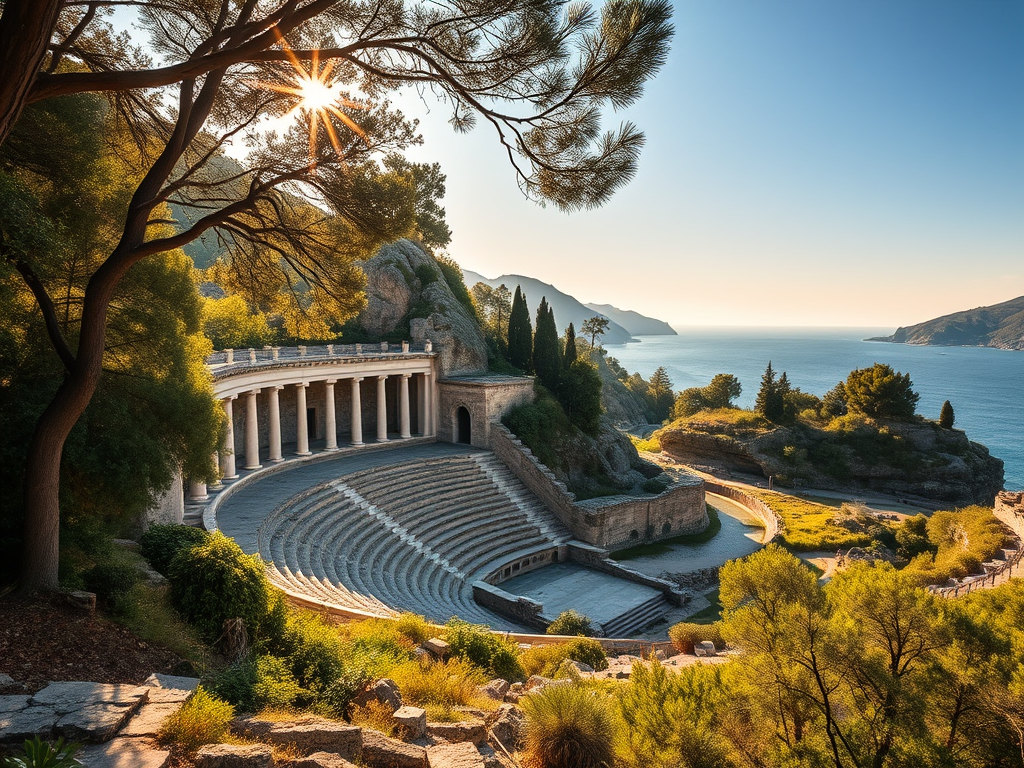
Ancient Olympos is a captivating archaeological site located in the Kumluca district of Antalya Province, along Turkey’s Mediterranean coast. Nestled near the modern village of Çıralı, the ruins are set within a lush, narrow valley that opens out to a stunning beach, part of the protected Beydağları Coastal National Park. The city likely dates back to the 2nd century BCE and was an important member of the Lycian League, a federation of ancient cities in the region of Lycia. Its name derives from the nearby Mount Olympos, or modern-day Tahtalı Dağı, one of several mountains in antiquity named Olympus.
Olympos enjoyed a prominent position during the Hellenistic and Roman periods, largely due to its strategic coastal location and active harbour. However, in its early history, the city also became a notorious pirate stronghold until it was brought under Roman control by the commander Publius Servilius Vatia in 78 BCE. Under Roman rule, the city thrived, as evidenced by its well-developed infrastructure, including baths, temples and a theatre. The city remained active through the Byzantine period, during which time several churches and Christian tombs were added to its landscape.
Today, visitors to Olympos can explore a number of atmospheric ruins spread across both sides of a stream that flows through the valley into the sea. Among the highlights are a small Roman theatre, rock-cut tombs in the necropolis, remains of Roman baths and a basilica from the Byzantine era. The acropolis, perched on a hill above the city, once served as a fortified stronghold. The nearby Chimaera (Yanartaş), a geological phenomenon where natural gas seeps from the earth and burns continuously, has been associated with the myth of the fire-breathing Chimera and adds a mystical layer to the site’s appeal.
In addition to its historical intrigue, Olympos is famed for its natural beauty and laid-back atmosphere. The adjacent beach is a nesting ground for endangered loggerhead sea turtles, making it both ecologically and culturally significant. The area is popular with backpackers and eco-tourists, known for its treehouse hostels and hiking trails. Mount Tahtalı, accessible by cable car, offers spectacular panoramic views of the coastline. Olympos remains a unique blend of ancient heritage and unspoilt nature, making it a memorable destination for anyone exploring the Antalya region.
There are some complaints from visitors about being charged €11 for beach access, but this fee is actually for entrance to the ancient ruins. To clarify, access from the Çıralı end is free, whereas entry from the Olympos side requires passing through the ruins and paying the fee. Although this stretch is often referred to as Olympus Beach, it is in fact just a continuation of Çıralı Beach.
Antik Olympos, Türkiye’nin Akdeniz kıyısında, Antalya ilinin Kumluca ilçesinde yer alan büyüleyici bir arkeolojik alanıdır. Günümüzün Çıralı köyüne yakın bir konumda bulunan bu harabeler, Beydağları Sahil Milli Parkı’nın koruma alanı içinde yer alan, yemyeşil ve dar bir vadide uzanır ve etkileyici bir plajla son bulur. Şehrin MÖ 2. yüzyıla kadar uzandığı tahmin edilmekte olup, Likya bölgesindeki antik şehirlerin oluşturduğu Likya Birliği’nin önemli bir üyesiydi. Adını, yakınlarında bulunan Olympos Dağı’ndan —bugünkü Tahtalı Dağı— alır; bu dağ, antik dönemde “Olympus” adını taşıyan birçok dağdan biridir.
Olympos, Helenistik ve Roma dönemlerinde, stratejik kıyı konumu ve faal limanı sayesinde önemli bir yere sahipti. Ancak erken dönemlerinde şehir, korsanların üssü olarak kötü bir ün kazanmıştı. MÖ 78 yılında Roma komutanı Publius Servilius Vatia tarafından kontrol altına alındı. Roma egemenliği altında şehir, hamamlar, tapınaklar ve tiyatro gibi gelişmiş altyapısıyla refah içinde gelişti. Bizans döneminde de yerleşim devam etti; bu döneme ait kiliseler ve Hristiyan mezarları hâlen görülebilir.
Günümüzde Olympos’u ziyaret edenler, vadi boyunca denize doğru akan bir dereyi ikiye bölen atmosferik kalıntıları keşfedebilir. Bu antik yapılar arasında küçük bir Roma tiyatrosu, kayalara oyulmuş mezarların bulunduğu bir nekropol, Roma hamamı kalıntıları ve Bizans dönemine ait bir bazilika öne çıkar. Şehrin yukarısındaki tepede yer alan akropol, bir zamanlar savunma amaçlı bir kale olarak hizmet vermekteydi. Yakınlardaki Yanartaş (Chimaera) ise, yer altından çıkan ve sürekli yanan doğal gaz sızıntılarıyla oluşan jeolojik bir fenomendir. Ateş püsküren Chimera efsanesiyle ilişkilendirilen bu doğa olayı, bölgeye mistik bir hava katar.
Tarihi dokusunun yanı sıra, Olympos doğal güzelliği ve huzurlu atmosferiyle de ünlüdür. Yanındaki plaj, nesli tehlike altında olan caretta caretta deniz kaplumbağalarının yuvalama alanıdır; bu da bölgeyi hem ekolojik hem kültürel olarak önemli kılar. Olympos, ağaç ev pansiyonları ve doğa yürüyüşü rotaları ile sırt çantalı gezginler ve ekoturistler arasında popülerdir. Teleferikle çıkılabilen Tahtalı Dağı, kıyı şeridinin nefes kesici panoramik manzaralarını sunar. Olympos, antik miras ile el değmemiş doğanın eşsiz bir birleşimini sunarak Antalya bölgesini keşfetmek isteyenler için unutulmaz bir destinasyon olmaya devam etmektedir.
Ziyaretçilerden, plaj erişimi için 11 € ücret alındığına dair bazı şikâyetler gelse de, bu ücret aslında antik kent girişine aittir. Açıklık getirmek gerekirse, Çıralı tarafından giriş ücretsizdir; ancak Olympos tarafından giriş yapmak isteyenler, ören yerinden geçmek ve bu ücreti ödemek zorundadır. Her ne kadar bu kıyı şeridi sıkça Olympos Plajı olarak anılsa da, gerçekte Çıralı Plajı’nın bir uzantısından ibarettir.




Leave a Reply