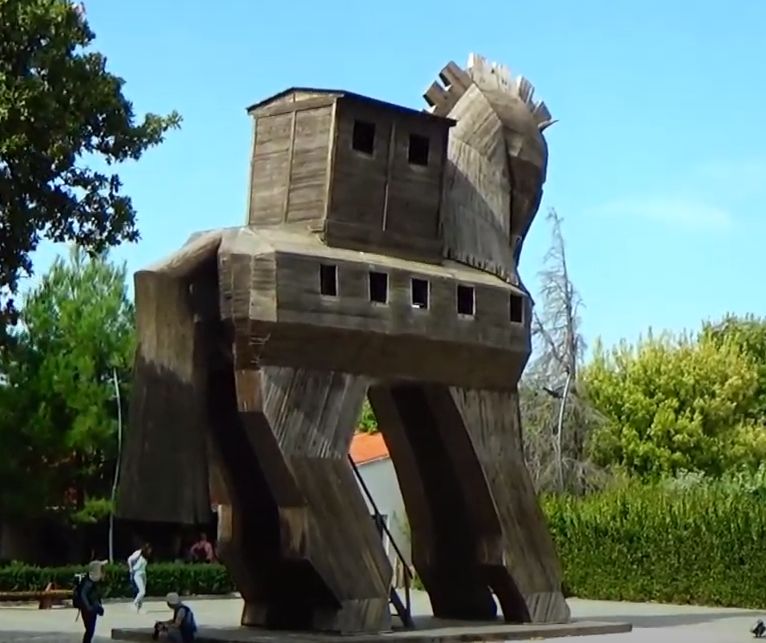
The Wooden Horse of Troy is the stuff of legends. The archaeological site of Troy or Truva is located along the Dardenelles in Turkey. Whilst the site is a little distance from the sea this is only because the land has become silted and the ancient site now lies inland rather than right on the coast. Some visitors to Troy are disappointed with the site and claim that much is left to the imagination rather than being able to see magnificent old buildings they are only able to see at best the foundations and some remaining walls of this once proud and famous city.
Excavations of Troy have not been kind to what remains. In 1865 an English archaeologist by the name of Frank Calvert commenced excavation on fields he had purchased from a local farmer. In 1868 he was joined by Heinrich Schliemann who many claim dug too deep and decimated the structure of this important city. Nevertheless, there is still much to see and you can certainly get an idea as to the size and scale of the city by visiting the ruins at Troy.
The Trojan Wars of the 12th, 13th or 14th centuries have been well documented by Homer’s Iliad. Troia ( Troy ) is so important that it was added to the UNESCO World Heritage list in 1998.
This video has been updated with information about the Troy Museum. The Troy Museum is an archaeological museum located close to the archaeological site of the ancient city of Troy, in northwestern Turkey. Opened in 2018, it exhibits in seven sections of a contemporary architectural building the historical artefacts from Troy and some other ancient cities around and on nearby islands.
Truva’nın Tahta Atı, efsanelere konu olmuş bir semboldür. Truva ya da Türkçe adıyla Truva Antik Kenti, Türkiye’de Çanakkale Boğazı boyunca yer almaktadır. Her ne kadar günümüzde denizden biraz içeride kalsa da, bu durum sadece zamanla deniz kıyısının alüvyonlarla dolarak iç kısımlara çekilmesinden kaynaklanmaktadır. Eski çağlarda Truva sahil kenarındaydı.
Truva’yı ziyaret eden bazı kişiler hayal kırıklığına uğrayabilir çünkü görkemli antik yapıları görmek yerine, çoğunlukla sadece temelleri ve bazı kalmış duvarları görebilmektedirler. Bu nedenle, birçok şeyin ziyaretçinin hayal gücüne kaldığını söyleyenler de olmuştur. Ancak buranın önemi ve tarihî değeri tartışılmazdır.
Truva’daki arkeolojik kazılar, ne yazık ki kalan yapılar açısından pek de nazik olmamıştır. 1865 yılında İngiliz arkeolog Frank Calvert, bir çiftçiden satın aldığı arazide kazılara başlamıştır. 1868 yılında, pek çok kişinin çok derin kazılar yaparak bu önemli şehrin yapısını tahrip ettiğini iddia ettiği Heinrich Schliemann da Calvert’e katılmıştır. Buna rağmen, Truva kalıntılarını ziyaret ettiğinizde kentin büyüklüğü ve ölçeği hakkında oldukça iyi bir fikir edinebilirsiniz.
MÖ 12., 13. veya 14. yüzyıllarda gerçekleştiği düşünülen Truva Savaşları, Homeros’un ünlü eseri İlyada Destanı ile detaylı şekilde belgelenmiştir. Truva o kadar önemli bir yerleşimdir ki, 1998 yılında UNESCO Dünya Mirası Listesi’ne dahil edilmiştir.




Leave a Reply