Understanding Enforcement Agencies in Turkey
A Guide for Foreigners and Residents
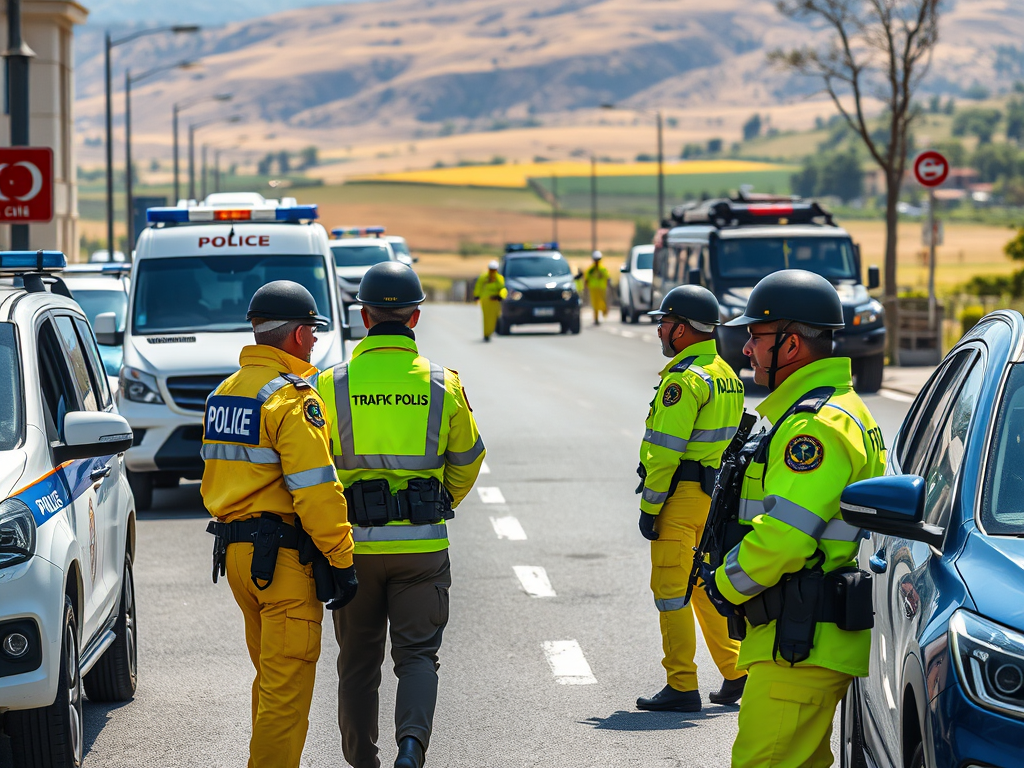
For visitors and new residents, the different enforcement agencies in Turkey can sometimes appear confusing. You might see vehicles marked POLIS, TRAFIK POLIS, ZABITA, or JANDARMA, each with different uniforms, colours, and duties. This guide explains the main public-order and enforcement organisations in Turkey, what they do, and what a foreigner should know if stopped for an ID check or road control.
POLIS – The General Police Force
The Polis (Police) operate mainly in cities, towns, and urban areas. They are part of the Ministry of Interior and are responsible for:
- General law enforcement
- Criminal investigations
- Public safety and crime prevention
- Urban traffic control (with dedicated units)
- Emergency response
- Anti-terror operations in cities
- Issuing residency permits (via the Göç İdaresi / Migration Office working alongside the police)
Appearance:
- Vehicles are usually white with blue POLIS markings.
- Officers wear navy blue uniforms.
Powers:
The Polis have full police authority, including the power to stop individuals, request identification, detain suspects, file criminal reports, and conduct investigations.
Trafik Polis – Traffic Police
The Trafik Polis are a specialised branch of the Police. They deal exclusively with road safety and traffic enforcement within urban areas.
Their responsibilities include:
- Conducting road checks and seatbelt inspections
- Document checks (insurance, licence, vehicle papers)
- Accident investigation
- Speed control
- Drink-driving enforcement
Appearance:
- Often wear bright yellow or reflective uniforms
- Vehicles marked TRAFIK POLIS
They have the same legal authority as the Polis but work only on traffic-related matters.
Jandarma – Rural Law Enforcement
The Jandarma is a gendarmerie-style force responsible for policing villages, rural areas, highways outside towns, and small settlements. They fall under the Ministry of Interior in peacetime but also maintain a military structure.
Why Jandarma instead of Police in rural areas?
Turkey has vast rural territories, and historically it was more efficient for a militarised force with extended mobility to patrol and secure them. Therefore, rural policing remains a Jandarma responsibility.
Their duties include:
- Law enforcement in rural areas
- Traffic control on intercity and rural roads
- Serious crime investigation outside urban zones
- Public order in villages
- Emergency response and search and rescue
- Counter-smuggling and border-related duties
- Supporting disaster response (earthquakes, fires)
Appearance:
- Vehicles usually blue, marked JANDARMA
- Uniforms can be navy, camouflage, or high-visibility depending on duty type
Do the Jandarma have the same powers as the Police?
Yes. Within their jurisdiction, the Jandarma have full police authority, including arrest, investigation, identity checks, and criminal enforcement powers.
Zabita – Municipal Enforcement
The Zabita is not a police force but a municipal enforcement unit that operates under local councils (Belediye). Their work focuses on:
- Market and shop inspections
- Hygiene checks for restaurants and food vendors
- Enforcing municipal bylaws
- Street vending controls
- Noise complaints
- Public space regulations
- Building and zoning inspections
Appearance:
- Light blue or dark blue uniforms
- Vehicles marked ZABITA
They cannot conduct criminal investigations or arrest individuals, but they can issue fines, confiscate goods, and report serious offences to the police.
Other Enforcement Bodies You May See
Bekçi (Night Watchmen)
A recently reinstated neighbourhood patrol unit working under the Police, mostly active at night. Their role includes patrolling streets, preventing petty crime, and assisting the Police.
Coast Guard (Sahil Güvenlik)
Responsible for maritime safety, rescue, and border protection on Turkish waters.
Customs Enforcement (Gümrük Muhafaza)
Handles smuggling, customs violations, and border control at ports and airports.
Why Are There Road Checks in Turkey?
Road checks, often by the Trafik Polis or Jandarma, are routine and help enforce:
- Driving licences and vehicle documents
- Insurance and inspection compliance (TÜVTÜRK)
- Seatbelt and mobile phone laws
- Drink-driving regulations
- Anti-smuggling and anti-terror safety measures
- Holiday traffic controls (very common during Bayram periods)
These checks are normal, safe, and not a cause for concern for law-abiding drivers.
What Should a Foreigner Present if Stopped?
Foreigners should always carry identification in Turkey.
If stopped by the Police or Jandarma, you may be asked to show:
Mandatory:
- Passport or official foreign ID
- Residence permit card (if you have one)
- Valid driving licence
- A foreign licence is accepted, but long-term residents may require a Turkish licence
Vehicle Documents:
- Car rental contract (if rented)
- Vehicle licence document (Ruhsat)
- Insurance (Trafik Sigortası)
- International insurance (for foreign-registered vehicles)
Checks are usually quick and polite. Officers may ask where you are travelling and perform a brief safety inspection.
Do’s and Don’ts for Foreigners During a Road Check
Do:
✓ Stay calm and stop immediately
✓ Keep hands visible
✓ Present documents when requested
✓ Be polite and cooperative
Don’t:
✗ Leave the vehicle unless asked
✗ Take photos of officers or checkpoints
✗ Argue — calmly ask for clarification instead
Conclusion
Turkey has several enforcement agencies, each with distinct roles, uniforms, and responsibilities. Understanding the difference between Polis, Trafik Polis, Zabita, and Jandarma makes daily life clearer and helps foreigners feel more confident when travelling. Whether in urban streets or rural roads, Turkey’s enforcement bodies work together to maintain safety, order, and public services.



Leave a Reply