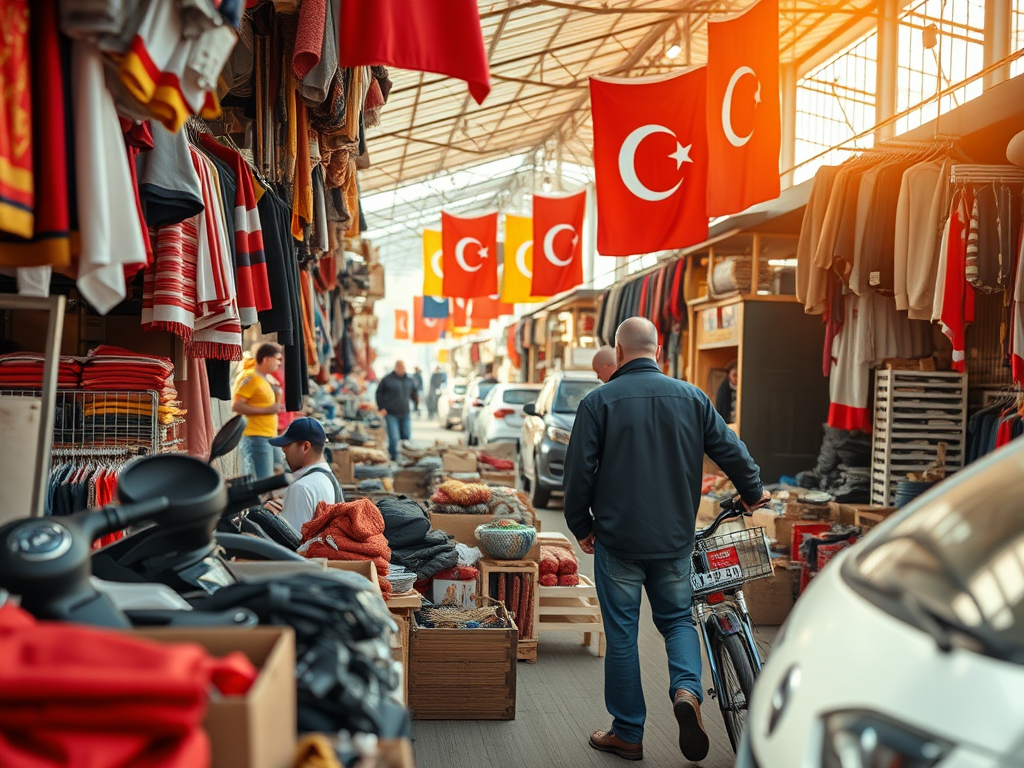
The Turkish Economy: Strengths, Challenges and Prosjections
Introduction
The economy of Türkiye is a rapidly emerging market, strategically located at the crossroads of Europe and Asia. As a member of the G20 and the OECD, Turkey has leveraged its position, large domestic market, and diversified industrial base to play a significant role in manufacturing, exports, and tourism. Despite these advantages, the country faces structural challenges, including high inflation, currency volatility, low real wages for many working‑class families, and a persistent trade deficit. This article explores the strengths and weaknesses of the Turkish economy, highlights its top export sectors, presents key trade‑partner figures, and assesses the long‑term outlook for Turkish industry.
Strengths of the Turkish Economy
Turkey has developed a strong industrial and manufacturing base, particularly in vehicles, machinery, home appliances, and textiles. The country benefits from its strategic location, connecting Europe, the Middle East, and Asia, as well as its membership in the EU Customs Union, which strengthens trade ties with Europe. A large, young labour force and a growing domestic market provide a competitive advantage in labour-intensive industries. Turkey has also seen record levels of exports, reaching approximately US$262 billion in 2024, demonstrating resilience despite macroeconomic headwinds. Key sectors include tourism, agriculture, textiles, electronics, and defence goods, highlighting the economy’s diversity.
Weaknesses and Challenges
One of Turkey’s most pressing challenges is high inflation, which reached nearly 38% in 2025, eroding the purchasing power of households. Real wages remain relatively low, with the minimum wage around US$630 per month, leaving many working-class families under financial pressure. Turkey also faces a goods trade deficit, with imports exceeding exports by around US$27 billion in 2023. Slower GDP growth, structural productivity gaps, and a need for reforms in labour markets and high-value manufacturing are additional challenges that the country must address to maintain economic momentum.
Top Export Sectors
- Automotive & Vehicles: Cars and automotive parts are among Turkey’s largest exports.
- Refined Petroleum & Mineral Fuels: A significant portion of exports comes from energy products.
- Machinery and Mechanical Appliances: Machinery exports remain a strong contributor to trade.
- Electrical & Electronic Equipment: Growing steadily, moving Turkey up the value chain.
- Textiles and Apparel: Historically a core sector, still significant for employment and export diversification.
- Precious Metals and Jewellery: A valuable contributor to export revenues.
Top 5 Trading Partners
| Partner | Exports from Turkey (US$) | Exports ~£ | Imports to Turkey (US$) | Imports ~£ |
|---|---|---|---|---|
| Germany | 21.1 bn | 16.7 bn | 28.7 bn | 22.6 bn |
| United States | 16.7 bn | 13.2 bn | 15.4 bn | 12.2 bn |
| China | — | — | 45 bn | 35.6 bn |
| United Kingdom | 15.3 bn | 12.1 bn | 22.8 bn | 18.0 bn |
| Russia | — | — | 45 bn | 35.6 bn |
Long‑Term Projection for Turkish Industry
Turkey’s industrial sector has strong potential but faces challenges. Opportunities include a large domestic market, strategic trade location, and an export-oriented manufacturing base. Policy programmes targeting macroeconomic stability, higher-value manufacturing, green transformation, and innovation are promising for long-term industrial growth.
Challenges remain, including currency and inflation volatility, cost of finance, and mid-level manufacturing that needs upgrading to higher value-added production. Continued investment in infrastructure, skills, and technology is essential. GDP growth is forecast at around 3–3.5% in the near term, but with macroeconomic stability and productivity improvements, Turkish industry could outpace many European peers over the next decade.
Summary
Türkiye’s economy combines strengths and vulnerabilities. A large domestic market, strategic location, and diversified industrial base position Turkey to seize global trade and manufacturing opportunities. However, high inflation, low real wages, and trade deficits remain challenges. Key export sectors such as automotive, machinery, electronics, textiles, and precious metals demonstrate Turkey’s competitive edge. Its main trading partners—Germany, the United States, China, the United Kingdom, and Russia—reflect the country’s global integration. If Turkey can stabilise its economy, move up the value chain, and strengthen its industrial base, the nation has the potential for strong industrial and export growth over the next decade.






Leave a Reply