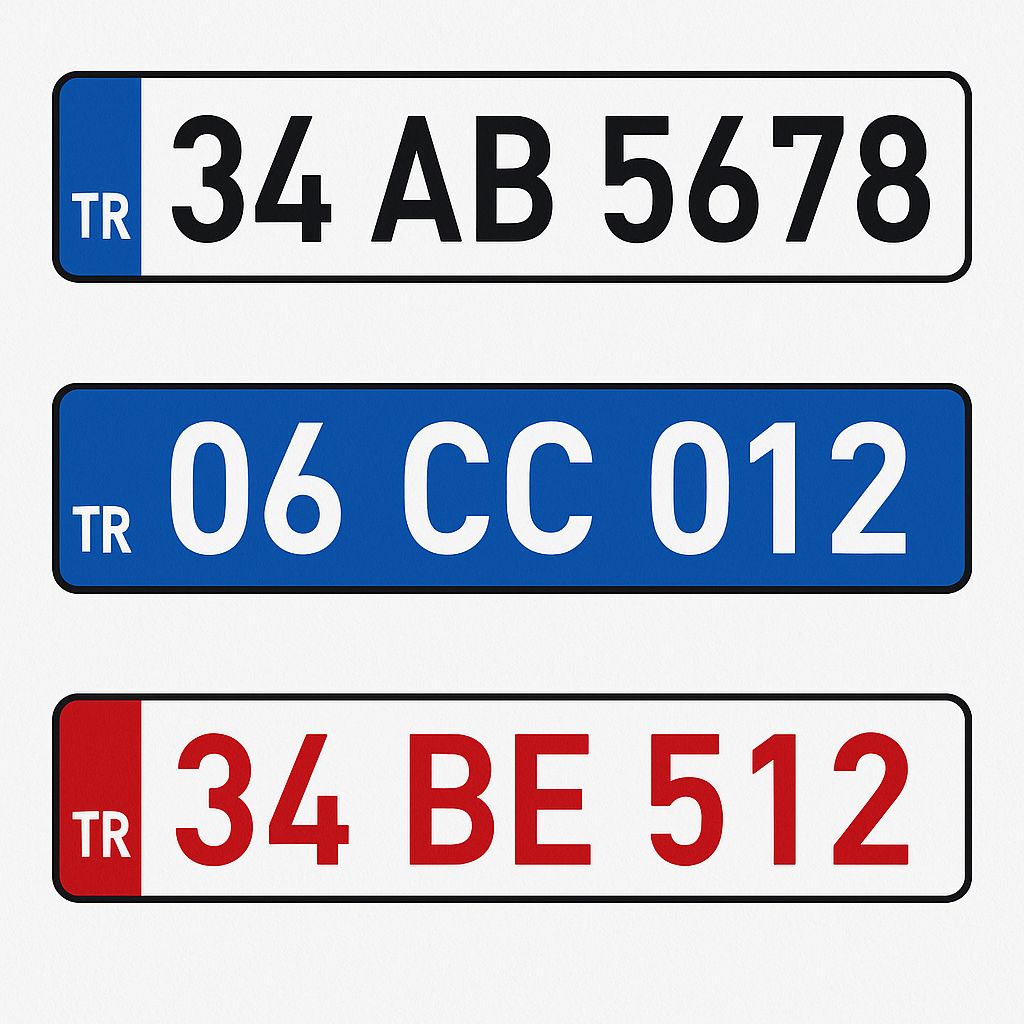
🚗 Turkish Car Registration Numbers — Origins and Development
The Turkish vehicle registration system uses a two-digit code at the beginning of the number plate to indicate the province in which the vehicle is registered. This system was introduced in 1962 when Turkey had 67 provinces, and the numbers were assigned largely in alphabetical order according to the names of the provinces at that time. For example, 01 is Adana, 06 is Ankara, and 34 is Istanbul. The two-digit provincial code is followed by letters and numbers that identify the individual registration within that province.
As Turkey expanded administratively and created new provinces, the list of registration codes grew beyond 67, with new numbers being added sequentially rather than alphabetically. Today, the full list runs from 01 to 81, covering every province in the country.
The system provides an easy way to identify where a vehicle was originally registered. Although cars often move between provinces, the plate number does not usually change unless ownership is transferred and the new owner registers the vehicle in a different province.
Special categories of plates exist for different uses. Diplomatic plates are typically blue and feature unique numbering, while government vehicles, trade plates, and temporary import plates have their own formats and colours. Despite these variations, the two-digit provincial code remains the defining feature of Turkish licence plates.
📋 Full List of Province Codes (01–81)
| Code | Province |
|---|---|
| 01 | Adana |
| 02 | Adıyaman |
| 03 | Afyonkarahisar |
| 04 | Ağrı |
| 05 | Amasya |
| 06 | Ankara |
| 07 | Antalya |
| 08 | Artvin |
| 09 | Aydın |
| 10 | Balıkesir |
| 11 | Bilecik |
| 12 | Bingöl |
| 13 | Bitlis |
| 14 | Bolu |
| 15 | Burdur |
| 16 | Bursa |
| 17 | Çanakkale |
| 18 | Çankırı |
| 19 | Çorum |
| 20 | Denizli |
| 21 | Diyarbakır |
| 22 | Edirne |
| 23 | Elazığ |
| 24 | Erzincan |
| 25 | Erzurum |
| 26 | Eskişehir |
| 27 | Gaziantep |
| 28 | Giresun |
| 29 | Gümüşhane |
| 30 | Hakkâri |
| 31 | Hatay |
| 32 | Isparta |
| 33 | Mersin |
| 34 | İstanbul |
| 35 | İzmir |
| 36 | Kars |
| 37 | Kastamonu |
| 38 | Kayseri |
| 39 | Kırklareli |
| 40 | Kırşehir |
| 41 | Kocaeli |
| 42 | Konya |
| 43 | Kütahya |
| 44 | Malatya |
| 45 | Manisa |
| 46 | Kahramanmaraş |
| 47 | Mardin |
| 48 | Muğla |
| 49 | Muş |
| 50 | Nevşehir |
| 51 | Niğde |
| 52 | Ordu |
| 53 | Rize |
| 54 | Sakarya |
| 55 | Samsun |
| 56 | Siirt |
| 57 | Sinop |
| 58 | Sivas |
| 59 | Tekirdağ |
| 60 | Tokat |
| 61 | Trabzon |
| 62 | Tunceli |
| 63 | Şanlıurfa |
| 64 | Uşak |
| 65 | Van |
| 66 | Yozgat |
| 67 | Zonguldak |
| 68 | Aksaray |
| 69 | Bayburt |
| 70 | Karaman |
| 71 | Kırıkkale |
| 72 | Batman |
| 73 | Şırnak |
| 74 | Bartın |
| 75 | Ardahan |
| 76 | Iğdır |
| 77 | Yalova |
| 78 | Karabük |
| 79 | Kilis |
| 80 | Osmaniye |
| 81 | Düzce |
📝 Notes and Observations
The Turkish licence plate format is remarkably consistent and easily recognisable. The first two digits instantly identify the province of registration, while the letters and numbers that follow indicate the specific sequence assigned to that province.
When new provinces were established after 1962, they were simply given the next available number, which explains why the codes from 68 to 81 are not in strict alphabetical order. The expansion reflects the country’s administrative growth rather than any change in system design.
Vehicle plates in large provinces such as Istanbul, Ankara, and Izmir tend to have longer and more complex combinations due to the high volume of registered vehicles. Smaller provinces typically have shorter, simpler sequences.
✅ Summary
Turkey’s vehicle registration system is one of the most straightforward in Europe. Established in 1962, it assigns a two-digit code to each province, making it easy to identify a car’s place of registration anywhere in the country. Originally based on an alphabetical list of 67 provinces, the system expanded as new provinces were created, ending with 81 Düzce. Whether you are travelling on the highways of Anatolia or the streets of Istanbul, a quick glance at the first two digits of a number plate will tell you exactly where the car comes from.
🚦 Special Turkish Licence Plate Types
In addition to the standard provincial plates, Turkey has a number of special plate categories that serve different purposes. These plates often have unique colour schemes, letters, or number sequences to distinguish them from private vehicles.
1. Diplomatic Plates
Diplomatic plates are issued to foreign embassies, consulates, and international organisations. They are typically blue with white letters. The format usually begins with “CD” (Corps Diplomatique), followed by a sequence of numbers indicating the country and vehicle registration order.
Example plates:
- 34 CD 001 (Istanbul, first diplomatic vehicle)
- 06 CD 045 (Ankara, forty-fifth diplomatic vehicle)
These plates are instantly recognisable and grant certain legal privileges, including special parking and immunity from some traffic fines.
2. Consular Plates
Consular plates are similar to diplomatic plates but are issued to consular staff rather than ambassadors. They usually begin with “CC” and follow a similar number system.
Example plates:
- 06 CC 012
- 34 CC 078
3. Government & Official Plates
Government vehicles, such as police cars, municipal vehicles, and other official service vehicles, have white plates with red letters. They may also include special letter sequences indicating the department, such as “ÖZ” for security vehicles or “BE” for municipal vehicles.
Example plates:
- 06 ÖZ 2023 (Ankara, police vehicle)
- 34 BE 512 (Istanbul, municipal vehicle)
4. Military Plates
Military vehicles have a black plate with white letters and numbers, often using the prefix “TSK” (Turkish Armed Forces).
Example plates:
- 06 TSK 3012
- 07 TSK 1278
These plates are used exclusively for army, navy, and air force vehicles.
5. Trade or Temporary Plates
Vehicles in transit, for export, or temporarily imported into Turkey receive red plates with white letters and numbers. The format often begins with “TR” or a combination of numbers indicating the registration sequence.
Example plates:
- 34 TR 2025 (Istanbul, temporarily imported car)
- 35 TR 018 (Izmir, vehicle in transit to export)
6. Rental or Commercial Plates
Rental cars and taxis usually carry yellow plates with black letters, making them easy to identify. Taxi plates sometimes include a T or other local marker.
Example plates:
- 34 T 5001 (Istanbul taxi)
- 07 R 1123 (Antalya rental vehicle)
7. Temporary or Tourist Plates
Some vehicles that are imported temporarily for tourism purposes are issued plates with green text on white background, valid for a limited number of months.
Example plates:
- 06 9988 TT (Ankara, tourist vehicle)
- 48 4522 TT (Muğla, tourist vehicle)
📝 Notes and Observations
- Colour coding and prefixes make it easy for authorities to recognise special vehicles at a glance.
- Diplomatic and consular vehicles enjoy legal privileges that private vehicles do not.
- Government and military plates help quickly identify vehicles belonging to official organisations.
- Temporary, trade, and tourist plates are carefully monitored to prevent abuse of the registration system.
- Realistic plate sequences follow the format rules of their province code plus letters and numbers.
✅ Summary
Turkey’s special licence plate system complements the standard provincial codes, allowing clear identification of diplomatic, consular, government, military, trade, and rental vehicles. By looking at the colour, letters, and number sequence, you can immediately understand the type of vehicle and its privileges. The system is designed to be simple yet effective, and even tourists can recognise the difference between a private car, a taxi, a municipal vehicle, or a diplomatic car.






Leave a Reply