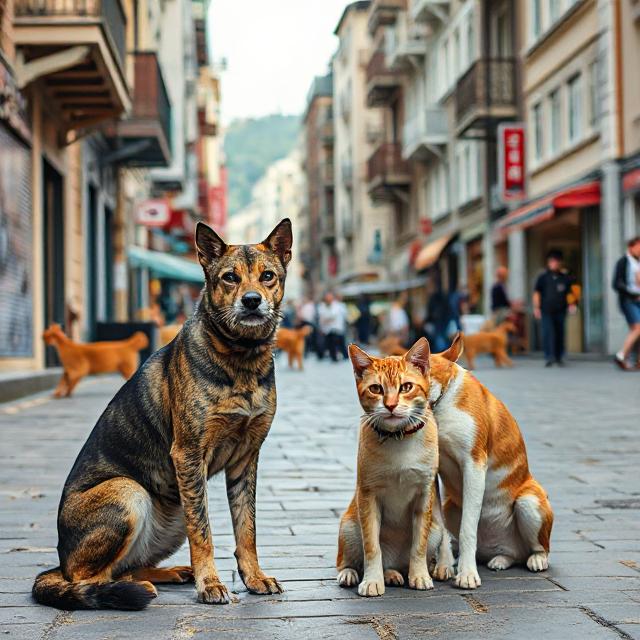
There has seen considerable publicity recently regarding the treatment of stray dogs in Turkey. Activists have accused the Turkish government of overreacting in efforts to control the dog populations, and the news has spread internationally, with some tourists threatening to cancel their holidays in protest.
The ruling AKP party claims there are four million stray dogs in the country, though opposition MPs have questioned the evidence supporting this figure. The government’s initial proposal called for euthanising unadopted dogs after 30 days, citing public safety concerns and the failure of current sterilisation efforts. However, the plan sparked a strong public backlash.
A KONDA survey revealed widespread opposition to euthanasia, with most respondents favouring humane alternatives. Many local councils also pledged not to implement the policy. In response, the AKP scaled back the proposal. Euthanasia will now be limited to dogs that are dangerously aggressive, terminally ill, or pose a serious health risk.
In some towns and cities, there have been issues with stray dogs forming packs and occasionally becoming aggressive. There are recorded instances of children being mauled and some horific injuries. The core of the problem lies in the logistical challenge of sterilising such a vast number of animals. It’s always striking to hear opinions from those outside Turkey who believe they fully understand the situation. In truth, most European countries use euthanasia as a method of population control for strays — Turkey is not unique in this regard.
A few distressing videos circulating on platforms like YouTube have been used as evidence of widespread cruelty in Turkey. However, these do not reflect the broader reality. From a local perspective, things often look quite different. Across Turkish cities, it’s common to see outdoor kennels and people regularly feeding stray dogs, often purchasing food specifically for this purpose. In general, municipalities behave responsibly. While sterilisation would undoubtedly help, the scale of the issue makes it an enormous challenge. Ironically, the problem has partly been caused by human kindness: with ample food and little control, the stray population has grown.
That’s not to say everyone loves dogs — there are certainly those who dislike them — but in most cases, this doesn’t translate into cruelty.
Turkey has a distinctive approach to managing its stray animal population, particularly cats and dogs. Unlike many Western countries where strays are routinely captured and placed in shelters, Turkey has developed a more integrated relationship with its free roaming animal populations. In Turkish cities like Istanbul, Ankara, and Izmir, stray animals especially cats often enjoy a special status as “community pets.” Many urban residents leave food and water for neighborhood strays, and some municipalities have implemented systematic programs for their care.
Since the early 2000s, Turkish municipalities have increasingly adopted TNR (Trap-Neuter-Return) programs. In cities, this typically includes veterinary care and vaccination, ear tagging for identification, sterilization to control population growth, and designated feeding stations in parks and public areas. Istanbul’s municipal approach stands out, with over 100,000 dogs having received care through city programs. Many urban dogs wear yellow ear tags indicating they’ve been vaccinated and neutered.
The relatively positive treatment of strays in Turkish cities stems partly from Islamic traditions that view kindness to animals as virtuous, combined with secular urban traditions of animal care. Cats hold a particularly privileged position, with historical connections to Islamic culture and Ottoman heritage.
The situation differs considerably in villages and rural areas, where resources are more limited. Rural strays often lack access to the medical care available to their urban counterparts. Veterinary clinics are scarce, and many villages lack the infrastructure to implement TNR programs effectively.
In rural settings, relationships with strays tend to be more utilitarian. Village dogs may serve as unofficial guards, while cats are valued for controlling rodent populations. Their care is often contingent on this perceived usefulness. Rural strays face particular hardship during harsh winters, with fewer sheltered spaces and less consistent feeding compared to urban areas.
Despite progress, significant issues remain in the care of stray animals across Turkey. These include limited public resources for comprehensive programs, occasional political tensions over animal management approaches, tourist areas experiencing seasonal fluctuations in stray populations, and abandonment continuing to contribute to stray numbers.
While Turkey’s approach to strays is notable for its emphasis on community care rather than mass euthanasia, the quality of life for these animals varies significantly between urban and rural settings. Urban strays generally receive more consistent care and attention, benefiting from both formal municipal programs and informal community support networks.
Rural strays, while often accepted as part of village life, typically receive less systematic care and face more significant challenges to their welfare. Addressing these disparities remains an important challenge for animal welfare advocates and policymakers in Turkey.
If you want to find out more about how you can help then visit the website thkd.org.tr.en/ which is in English and Turkish and help support those who really care about stray cats and dogs in Turkey.
Meet Boji in Istanbul:






Leave a Reply