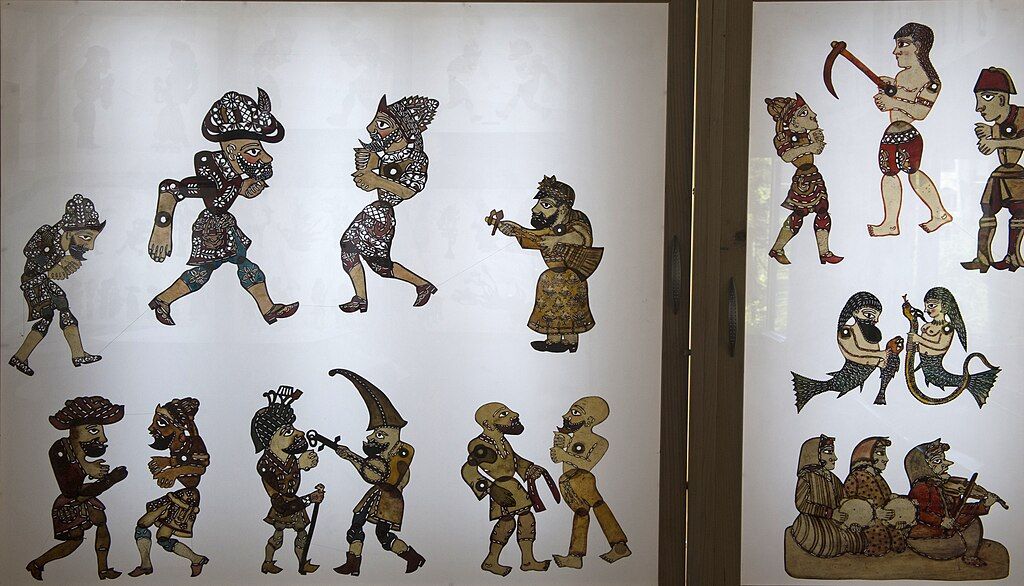
Turkey’s Funniest Shadow Duo and the Tradition That Refuses to Fade
If you’ve ever wondered what Turkish people did for entertainment before Netflix arrived, look no further than Karagöz and Hacivat—a pair of squabbling, colourful shadow puppets who have been causing laughter, chaos and the occasional moral lesson for centuries. These two are the original odd couple: one loud, impulsive and gloriously daft; the other educated, polished and utterly exasperated. Together, they’ve become one of Turkey’s most beloved cultural treasures.
Where It All Began – The Legend (and the Reality)
The origins of Karagöz and Hacivat are wrapped in as much mystery as Karagöz’s understanding of basic logic. According to the most famous legend, the two characters are based on real men: Karagöz (Kambur Balı Mahmut) and Hacivat (Hacı İvaz), construction workers involved in building Bursa’s Ulu Cami during the 14th century. Their constant chatter and joking slowed down the entire project so badly that the Sultan supposedly ordered their execution. Feeling rather guilty afterwards—as you might—he commissioned performances using leather puppets to honour their memory.
Whether this story is historically accurate or simply a great excuse for centuries of comedy is up for debate. What is known for certain is that the Karagöz shadow theatre took shape during the Ottoman era, blending folk humour, improvisation and skilled craftsmanship into one timeless form of entertainment.
The Characters – A Turkish Comedy Duo for the Ages
Karagöz and Hacivat may be the stars, but they are joined by a whole cast of eccentric supporting characters representing different regions, classes and cultures of the Ottoman world. Expect everything from bumbling Albanian guards and snobbish Istanbul gentlemen to romantic dandies, mischievous gypsies, fortune tellers and, of course, mothers-in-law who always know best.
A traditional show includes:
- Hacivat beginning the play with elegance and poetic greetings.
- Karagöz barging in, misunderstanding absolutely everything, and causing entire conversations to fall apart.
- A series of chaotic scenes involving different characters.
- A final moral lesson which Karagöz almost certainly ignores.
The comedy relies heavily on wordplay, accents, misunderstandings and that timeless favourite—Karagöz doing something idiotic.
How They Are Made – The Puppets Themselves
Traditional Karagöz puppets are made from camel or water buffalo leather, scraped thin until it becomes semi-transparent. They are coloured with vibrant dyes so that when the lamp behind the screen lights up, the characters glow beautifully. Each puppet is jointed, allowing expressive movement—including the occasional slap, flail and exaggerated bow.
The “puppet master”, known as the Hayalî, stands behind a cloth screen, using rods to manipulate the figures while providing all the voices, songs and sound effects. Watching an expert Hayalî perform is like witnessing a one-person theatrical tornado.
Where They Are Still Performed Today
Although the golden age of shadow theatre has passed, Karagöz and Hacivat are far from retired. You can still find performances in:
- Bursa, the duo’s legendary birthplace
- Istanbul, especially during Ramadan festivals and cultural events
- Ankara, at state theatres and cultural centres
- Eskişehir, home to the Karagöz Museum
- Tourist centres across Turkey offering traditional folklore shows
- Special events, including children’s festivals, national holidays and cultural celebrations
During Ramadan, tents pop up across Turkish cities offering free evening shows—complete with sugary snacks and a crowd that laughs just as hard as audiences did 400 years ago.
Keeping the Tradition Alive – One Shadow at a Time
In the age of smartphones and streaming services, you might assume Karagöz and Hacivat have shuffled off into retirement somewhere sunny. Absolutely not. The tradition is being kept alive through:
- State-supported theatre groups performing classic plays
- Cultural foundations training new Hayalî puppeteers
- Workshops teaching children how to make and perform with shadow puppets
- Museums that preserve original puppets and scripts
- Schools incorporating shadow theatre into art and drama programmes
- Digital adaptions, including animations, short films and online performances
- Tourist shows, helping visitors experience authentic Turkish folklore
There are even modern reinterpretations of the characters tackling contemporary issues—because if anyone can explain urban planning or climate change in a thoroughly confusing way, it’s Karagöz.
Why They Matter Today
Karagöz and Hacivat are more than shadows on a screen. They showcase:
- The humour of everyday Turkish life
- The creativity of Ottoman folk culture
- The art of storytelling
- The value of satire and social commentary
- The joy of shared laughter across generations
Their ongoing popularity proves that even in a world of 4K streaming and AI-generated cartoons, two sarcastic shadow puppets arguing about absolutely everything can still steal the show.
A Tradition Too Good to Lose
Thanks to passionate puppeteers, cultural programmes and an enthusiastic public, the world of Karagöz and Hacivat continues to thrive. Whether you’re watching a traditional Ramadan performance, visiting a museum or catching a modern adaptation, the spirit of Turkey’s funniest shadow duo remains wonderfully alive.
And honestly—if Karagöz can survive centuries of misunderstandings, political changes, technological revolutions and Hacivat’s lectures, he can probably survive anything.





Leave a Reply