


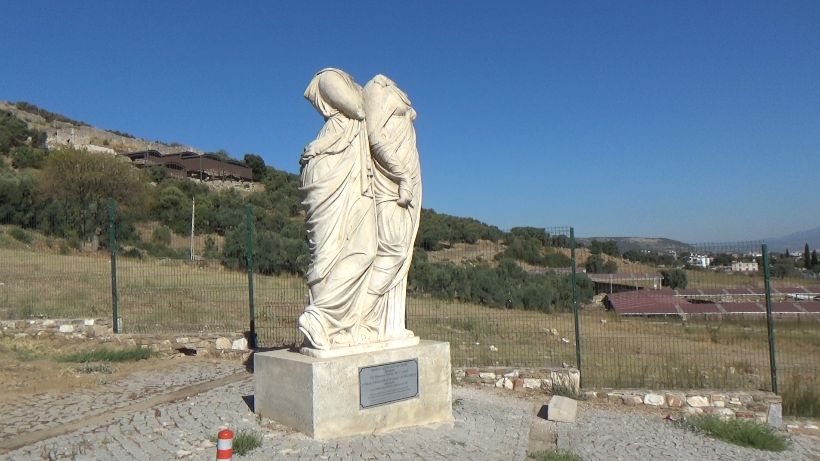

The site of the ancient city of Metropolis is some 14 km outside of the city of Torbali. Surprisingly, for such an important classical city, you would think that it would be a busy destination for tourists. However, when we were there in mid September there was no one else around.
There are ample parking spaces and a dedicated car park but be prepared for some rigorous walking. The site is on a hillside so you will need to be prepared for climbing a lot of steps or using the steep track to reach some of the main key areas.
You will need your own transport to visit Metropolis. It is situated near the village of Yeniköy. There have been settlements here since Neolithic times but the main civilisations have been Greek, Roman, Byzantine and Ottoman. There is some evidence too that possibly the Hittite Kingdom may have settled here. Artifcats found, namely a seal or official stamp stamp, albeit undeciphered, are similar to the writings of the Hittites. This makes sense since the Hittite Kingdom was established at Apasas ( now Ephesus ) which is just 30 km away.
Metropolis went on to become part of the Hellenistic Kingdom of Pergamun. There is evidence of a temple which paid homage to the war God Ares. Just bear in mind that when you visit this ancient site there are layers of different civilisations and cultures. Part of what you see is ancient Greek but also Roman. Add to this the Byantine remains too and it can become a little confusing.
The city is known as the City of Mother Godess, and the structure that is the most impressive is the theatre. There is also a Parliament building, a stone column gallery and some bath structures which were built during the Roman Empire. There is a hall where mosiaics were found, a sports arena, and houses and cisterns. The city was first founded in the 3rd century BC. The statue of the mother godess was found during excavations. The city would have been an influential centre during the Hellenistic period.
The city is known to have expanded further during the times of the Roman Empire. The Atrium, the Roman House, the Temple of Zeus were built here during this period. Under the Byantine Empire, the city declined due to wars and economic reasons. It never recovered to its former glory but continued as a settlement right up to Ottoman times. In the 14th century the Ottomans constructed the castle walls again. They did not stay here very long though and became established in nearby Torbali, known then as Kizilhisar.
A lot of historical artifacts have been found here. Everything from coins, ceramics, glass, figurines, sculptures, jewellery and everyday utensils have been unearthed. These important finds can be seen in the Selcuk Ephesus Museum and also the Izmir Archeology Museum and the Izmir Museum of History and Art.
The theatre, built originally in the Hellenistic period, is the main centre piece at Metropolis. It is situated on a hillside and has a commanding view of the countryside around it. It would have been the main social hub of the city and had a seating capacity of around 8000. Constructed from marble, it features a stage, seating for the public, and thrones for special dignatories and important visitors. The Romans also added a stage and used the theatre.
The Roman under floor heating system shown in this video clearly illustrates how well preserved this site is. There are also some amazing mosaic floors in good condition. One thing to mention is that the soft soil or banks around the baths and mosaic areas are prone to be nesting areas for the oriental hornets. They can be vicious creatures and they pack a very potent sting as I found out when one of them got me and stung me on the shoulder. Just be mindful that they are around and try to avoid them.
Excavations here are still ongoing and a lot of effort is being made to clean the mosaics and restore them. This archaeological site still has many secrets to reveal.
Metropolis daha sonra Pergamon (Bergama) Krallığı’na dahil olmuştur. Burada savaş tanrısı Ares’e adanmış bir tapınağın kalıntıları da bulunmuştur. Kentte farklı medeniyetlere ait çok katmanlı bir yapı söz konusudur: Yunan, Roma ve Bizans izleri iç içe geçmiş durumdadır.
Şehir, Ana Tanrıça’nın kenti olarak da bilinir. Buradaki en etkileyici yapı Helenistik dönemde inşa edilmiş olan tiyatrodur. Bunun yanında: Parlamento binası, Sütunlu galeri, Roma dönemine ait hamam yapıları, Mozaiklerin bulunduğu salon, Spor alanı (gymnasium), Evler ve sarnıçlar
… gibi birçok yapı da görülmeye değerdir. Kentin ilk kuruluşu MÖ 3. yüzyıla dayanır ve Hellenistik dönemde etkili bir merkez olmuştur. Kent Roma döneminde daha da genişlemiştir. Bu dönemde Atrium, Roma Evi ve Zeus Tapınağı inşa edilmiştir.
Bizans döneminde, savaşlar ve ekonomik sıkıntılar nedeniyle şehir gerilemiş, ancak yerleşim Osmanlı dönemine kadar devam etmiştir. 14. yüzyılda Osmanlılar, şehirde kale duvarlarını yeniden inşa etmiş, ancak daha sonra bölgeyi terk ederek, Kızılhisar (bugünkü Torbalı) bölgesine yerleşmişlerdir.
Burada yapılan kazılarda; sikkeler, seramikler, cam objeler, figürinler, heykeller, takılar ve günlük kullanım eşyaları gibi birçok değerli tarihi eser ortaya çıkarılmıştır. Bu eserlerin çoğu Selçuk Efes Müzesi, İzmir Arkeoloji Müzesi ve İzmir Tarih ve Sanat Müzesi’nde sergilenmektedir.
Metropolis’in en dikkat çekici yapısı tiyatrodur. Yamaç üzerinde kurulu olan bu yapıdan, çevredeki doğa harika bir şekilde izlenebilir. Yaklaşık 8000 kişi kapasiteli tiyatro, mermerden inşa edilmiştir. Halk oturma alanlarının yanında, önemli misafirler için özel tahtlar da bulunmaktadır. Romalılar tiyatroya bir sahne ekleyerek kullanmaya devam etmiştir.
Buradaki Roma yerden ısıtma sistemi, kentin ne kadar iyi korunduğunu gözler önüne seriyor. Ayrıca çok iyi durumda olan mozaik zeminler de görülmeye değerdir. Ancak mozaiklerin bulunduğu alanlardaki yumuşak topraklar, doğu eşek arıları (oriental hornets) için yuvalanma alanı olabilir. Oldukça agresif ve şiddetli sokmalarıyla bilinen bu arılara dikkat etmek gerekir — ben şahsen bir tanesinden omuzumda sokulmuştum.
Kazılar hâlâ devam ediyor ve mozaikler üzerinde titizlikle çalışılıyor. Metropolis, hâlâ birçok sırrı barındıran keşfedilmeyi bekleyen bir antik kent.